


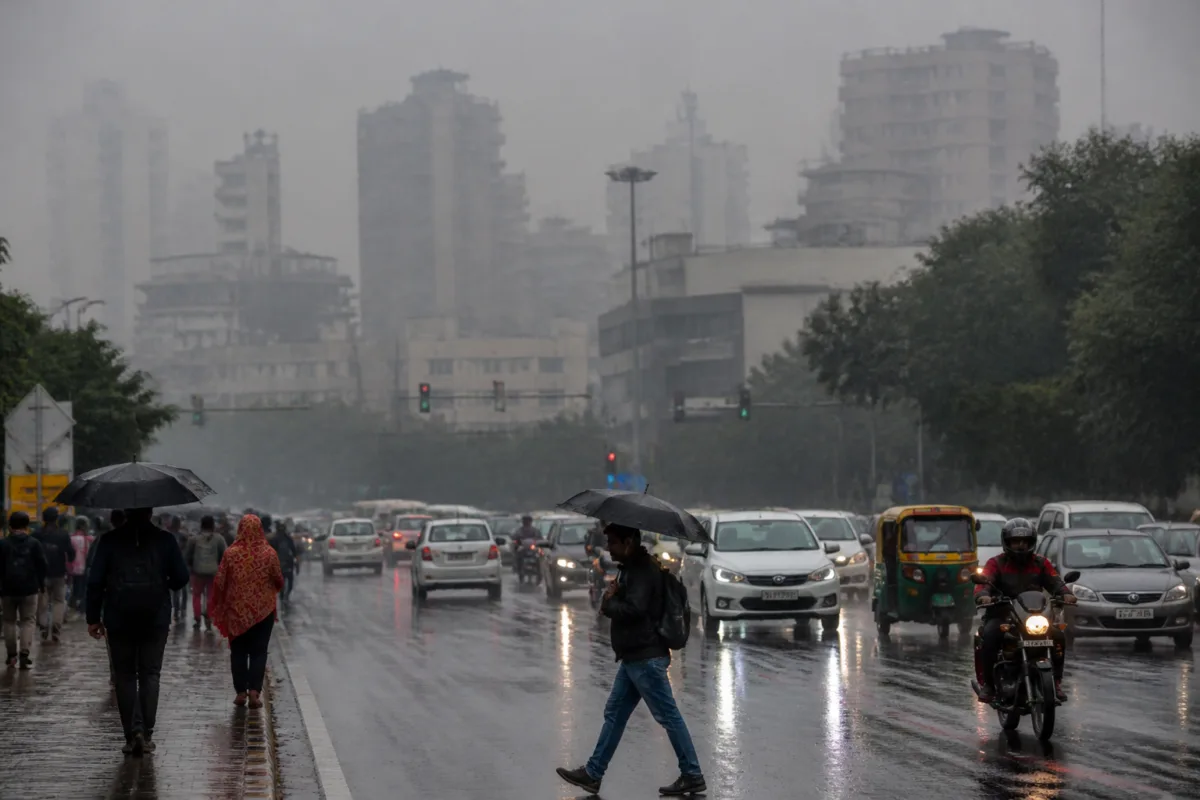
Delhi weather today could bring a limited reprieve from the capital’s severe air pollution, with light drizzle expected in some areas as a western disturbance affects parts of north India. The rain may lead to a modest improvement in air quality, although the outcome will depend on the amount of rainfall and wind speed, according to the weather information reported by Live Hindustan.
The report said 17 areas of Delhi recorded an air quality index above 400 on Saturday, placing them in the severe category. The Central Pollution Control Board recorded Delhi’s average AQI at 367, compared with 373 a day earlier. Although the index stood at 348 at 8 am, pollution levels rose later after wind speeds weakened.
The expected weather change is linked to a western disturbance over the higher Himalayan regions. Its influence may extend to several northern plains, with light rain or drizzle possible in Punjab, Haryana, parts of Rajasthan, Delhi and some areas of western Uttar Pradesh. The report did not specify the quantity of rainfall expected in Delhi or the locations most likely to receive it.
The effect of rain on pollution will depend on local atmospheric conditions. Light rainfall can temporarily reduce airborne dust and particulate matter, while stronger winds can help disperse pollutants. However, the reported improvement in Delhi’s AQI after the morning reading was limited, showing how quickly pollution can build up when wind movement slows.
Temperatures in the capital have remained above normal. The Safdarjung weather station recorded a maximum temperature of 30.4 degrees Celsius on Saturday, which was 1.9 degrees above normal. The combination of relatively warm conditions, weak winds and accumulated emissions has contributed to the persistence of poor air quality in the city.
The report also cited an analysis by Climate Trends of CPCB data on pollution around Diwali. It said Delhi’s average PM2.5 concentration on November 8 was 290 micrograms per cubic metre, compared with India’s 24-hour standard of 60 micrograms per cubic metre. That placed the average level at nearly five times the prescribed limit.
Climate Trends’ analysis found that PM2.5 levels increased by 57 points after Diwali this year, compared with a 146-point increase the previous year. The rise over the preceding week was reported at 25% this year, against 134% last year. The analysis attributed the smaller increase partly to the fact that pollution levels were already high before Diwali.
For Delhi residents, the immediate change in weather may offer only limited relief unless it is accompanied by sufficient rainfall or stronger winds. The India Meteorological Department’s forecast, as reported, points to light drizzle in parts of the capital, while pollution conditions remain dependent on how the weather system develops through the day.

