


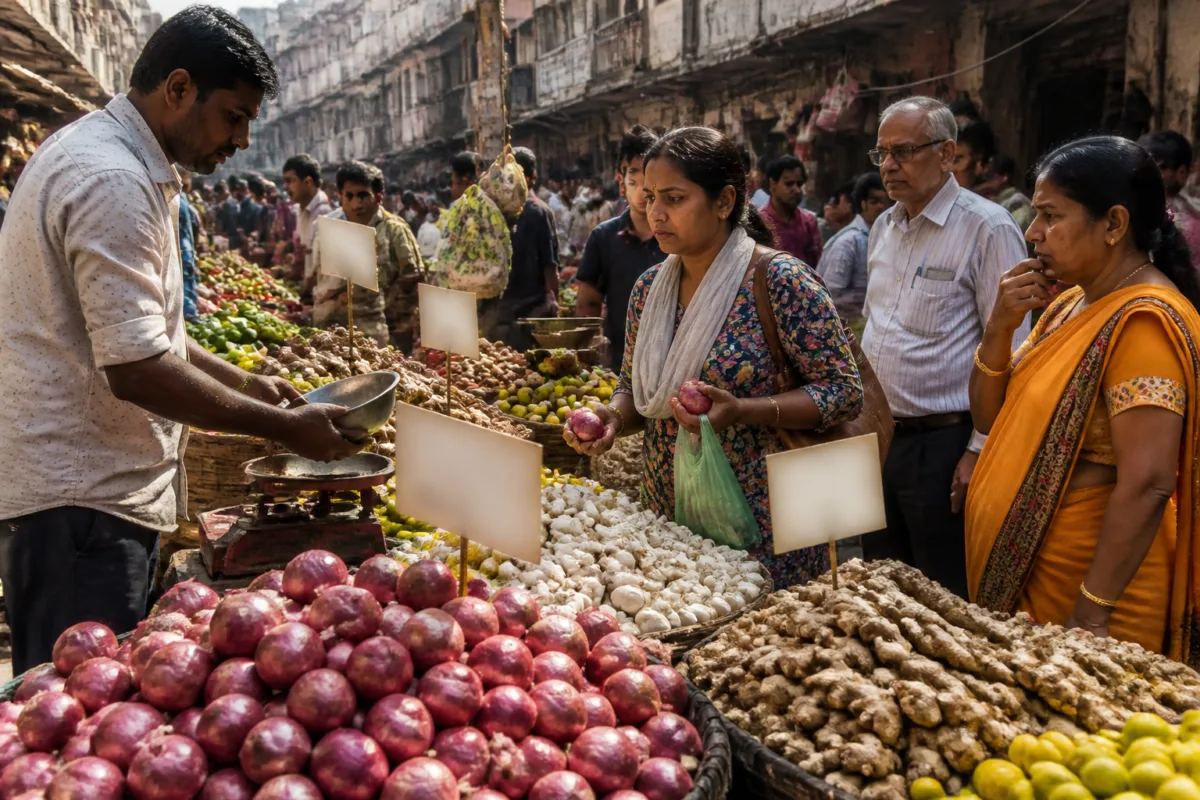
India’s retail inflation rose to 6.09% in October, moving above the Reserve Bank of India’s 6% upper tolerance limit as food prices recorded a sharp increase, according to government data released on Thursday. Consumer Price Index-based inflation stood at 5.54% in September. The October reading marks the 12th consecutive month of increase reported in the data cited by Aaj Tak Business. Food prices were the main driver of the rise. Consumer Food Price Index-based inflation increased to 8.94% in October from 7.74% in September. The pressure was higher in rural India, where food inflation reached 9.09%, compared with 8.68% in urban areas. The figures are significant for cities because food inflation directly affects household spending, even when the broader urban inflation rate remains below the national headline figure. Among individual food items, onion prices recorded the steepest increase, with inflation rising to 116.22% in October from 108.13% in September. Garlic inflation increased from 54.62% to 60.74%, while ginger prices rose by 48.32%. Lemon prices recorded inflation of 47.30%. Some food items moved in the opposite direction. Potato prices declined by 14.24% in October, while cauliflower prices fell by 10.57% and coconut prices dropped by 5.60%, according to the figures reported from the Ministry of Statistics and Programme Implementation data. The rural-urban gap was also visible in overall retail inflation. Rural retail inflation rose from 6.08% in September to 6.63% in October. Urban inflation increased from 4.88% to 5.41% over the same period. This means that although urban inflation remained below the national figure, it still accelerated during the month. The difference between rural and urban inflation reflects the uneven distribution of price pressure across households and markets. In Delhi, rural inflation was recorded at 5.24%, while urban inflation stood at 3.77%. The data also showed a 52.39% increase in the prices of silver jewellery. The RBI’s inflation framework targets consumer price inflation at 4%, with a tolerance band of 2% to 6%. The October reading therefore places retail inflation above the upper boundary cited in the report. The latest figures will be relevant to households, retailers and policymakers because food prices account for a substantial part of everyday consumption. The government data points to a sharper increase in essential food costs than in the headline urban inflation rate. The Ministry of Statistics and Programme Implementation released the October inflation figures on Thursday. Further readings will indicate whether the rise remains concentrated in food items or spreads more broadly across the consumer basket.

