


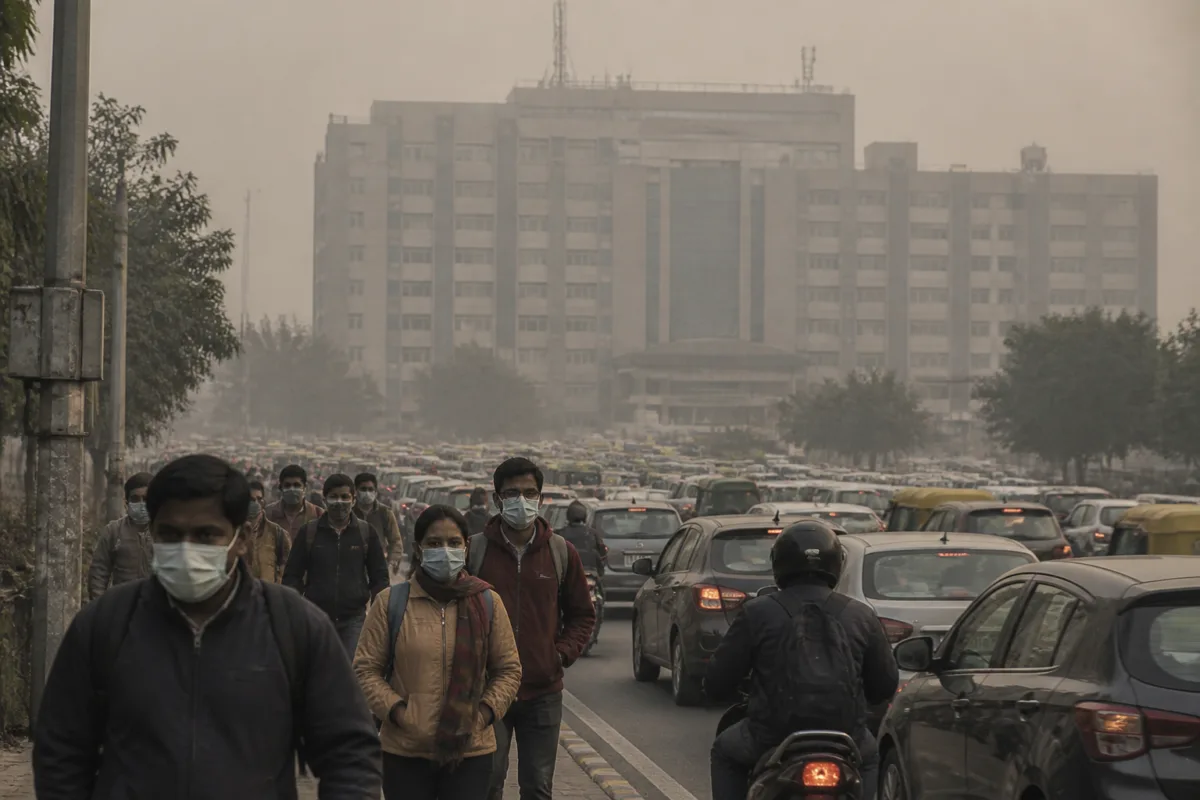
Delhi hospitals are reporting a 10% to 15% rise in patients with breathing and eye-related problems after Diwali, with children, older people and those with pre-existing illnesses among the most affected, according to a report by Jagran – New Delhi.
Hospitals in eastern, western, outer and southern Delhi have seen more patients seeking treatment for breathing difficulty, cough, asthma, eye irritation and allergies. Doctors cited in the report said the increase was being observed in both emergency departments and outpatient departments.
At Deen Dayal Upadhyay Hospital in Hari Nagar, West Delhi, around 200 patients had reached the emergency department and outpatient department with pollution-related complaints. Their symptoms included breathing difficulty, asthma, severe eye irritation and allergies. A larger proportion of those arriving at the hospital were children, older people and patients with existing illnesses.
Baba Saheb Ambedkar Hospital was also receiving more than 200 patients with respiratory and eye-related complaints. The report said that children visiting the hospital were mainly being treated for eye irritation, asthma, bronchitis and pneumonia.
In East Delhi, more than 100 patients a day were reaching Guru Teg Bahadur Hospital with breathing-related problems. Dr Surendra Bisht, head of the paediatrics department at Swami Dayanand Government Hospital, said children were being seriously affected by pollution. He said many of the children arriving at the hospital had asthma, bronchitis and pneumonia.
Dr Bisht also noted that outpatient attendance had remained lower because of the festival period. This means the number of patients could rise further as routine hospital visits resume, according to the report.
The pattern was also visible in South Delhi. Majidia Hospital recorded 42 patients with breathing difficulty on November 9. The hospital usually sees 50 to 60 such patients a day when pollution levels are high, compared with 30 to 40 when pollution is lower.
At Ram Manohar Lohia Hospital, the general respiratory outpatient department had also been recording a rise in patients for about a month. The report did not provide a consolidated figure for the hospital but said the increase had continued over the period.
The reported cases show how deteriorating air quality can quickly translate into additional demand for public hospitals, particularly departments treating respiratory illness and paediatric patients. However, the report does not establish the precise share of cases caused exclusively by pollution or provide citywide hospital data.
The hospitals’ observations come after Diwali, when Delhi typically faces increased pollution-related health concerns. The doctors cited in the report said patient numbers could increase in the coming days. Further outpatient attendance and hospital case figures will indicate whether the reported rise continues after the festival period.

