


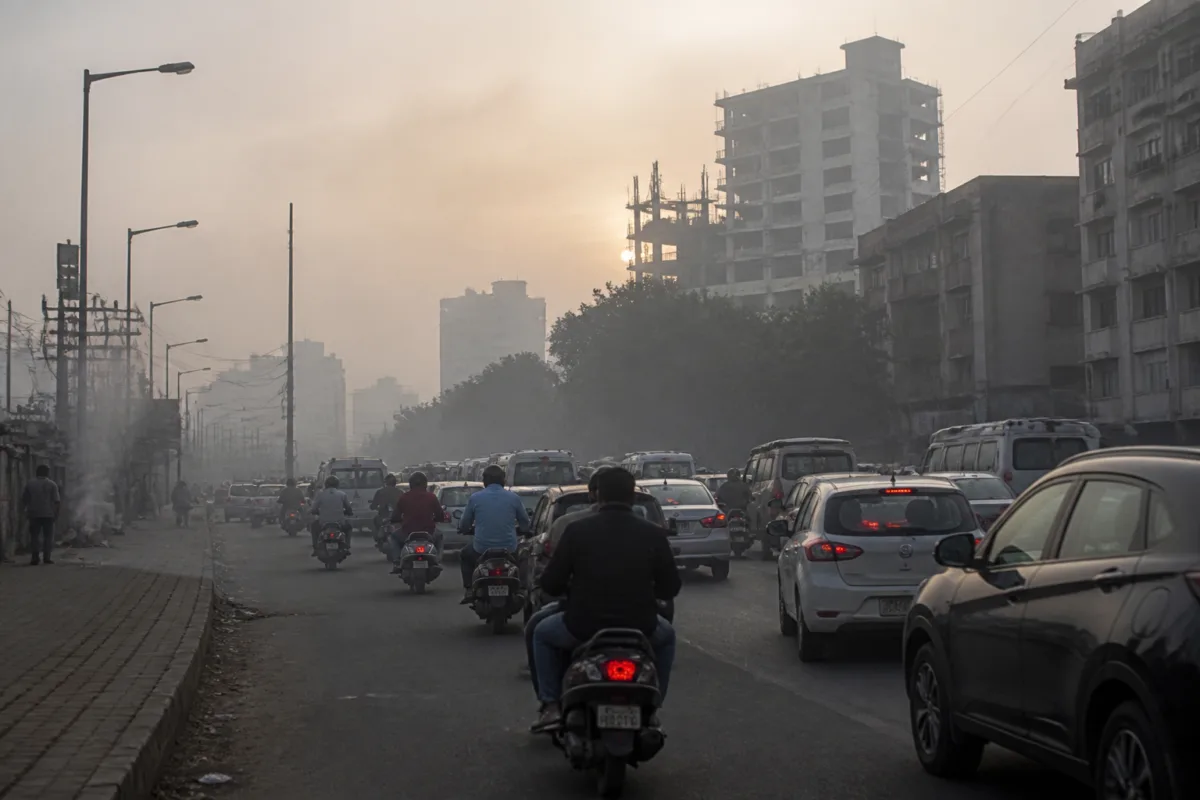
Nashik’s air quality deteriorated from the moderate to the poor category after Diwali celebrations, with the citywide AQI rising from around 150 before Laxmi Pujan to 223 on Monday, according to the Maharashtra Pollution Control Board (MPCB).
MPCB officials attributed the sharp overnight increase to widespread firecracker bursting, heavy traffic and dust from roads. An AQI reading of about 150 falls in the moderate category, while a reading of 223 is classified as poor under Central Pollution Control Board norms. Prolonged exposure to air in the poor category can cause breathing discomfort for most people.
The deterioration was recorded across several monitoring locations. New Indira Nagar reported one of the steepest increases, with its AQI climbing from 119 on Saturday to 286 on Monday. Panchavati’s reading rose from 150 to 221 by 11am on Monday, while Gangapur Road recorded an increase from 188 to 218. All three locations moved into the poor category.
Ambad MIDC was the exception, recording an AQI of 198 and remaining in the moderate category. The MPCB said factories in the industrial area had remained closed since Saturday for the Diwali break, which officials linked to the relatively lower pollution levels there.
“Traffic load was heavy and firecrackers were burst to celebrate Diwali. These factors worsened the city’s AQI,” an MPCB official said. The official also pointed to the condition of Nashik’s roads, saying dust generated by heavy vehicular movement was a concern.
The readings show how multiple short-term pollution sources can combine to worsen air quality across a city. Firecracker smoke added to emissions from traffic, while road dust contributed to pollution in areas experiencing heavy vehicle movement. The variation between monitoring stations also reflected differences in traffic, industrial activity and local conditions.
Environmentalists said the deterioration should not be ignored in a city known for its climate and liveability. One environmentalist said public participation was necessary alongside government action, noting that firecrackers had been used extensively during Diwali.
Environmentalists also identified Nashik’s growing vehicle population as a longer-term contributor to worsening air quality. Roshan Kedar said the increase in vehicles was affecting pollution levels and called for attention to open garbage burning as another source of urban air pollution.
The latest readings place the focus on the combined effect of festival emissions, traffic management, road maintenance and local pollution sources. MPCB monitoring showed that Nashik’s air quality moved into the poor category at several locations after the Diwali night celebrations.

