


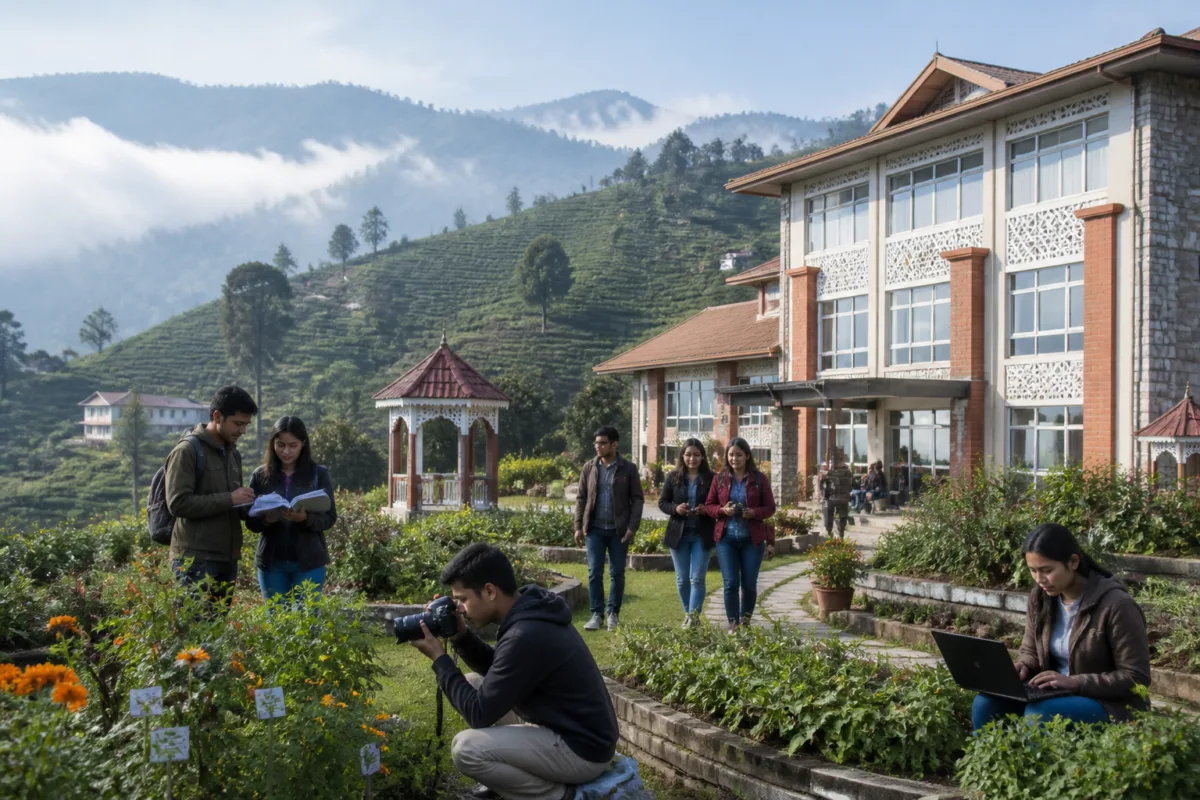
Darjeeling Hills University will introduce diploma and certificate programmes in horticulture, medicinal plants, tourism, heritage management and digital communication in 2027 after the West Bengal higher education department approved the new courses, the university said.
The programmes are intended to attract more students and improve their job prospects by linking higher education with the economic and cultural resources of the eastern Himalayan region, DHU registrar Sujata Rani Rai said.
The university will offer a postgraduate diploma in horticulture and medicinal plants, along with a certificate course in the cultivation of medicinal and aromatic plants. It will also introduce diploma and certificate programmes in travel and tourism management, traditional knowledge and heritage management, digital media and content creation, and digital communication and translation studies.
Rai said horticulture and medicinal plants were closely connected to the hill economy, while tourism and heritage management could help students pursue careers linked to the region’s cultural and natural assets. The digital media and communication courses, she said, would prepare students for emerging work in content creation and digital communication.
The announcement comes as the Bengal government plans to strengthen the tourism workforce in north Bengal. State tourism minister Shankar Ghosh has said that a hotel management institute will be established in the region to create trained manpower for the hospitality industry. The chief minister is expected to formally announce the project, according to a post by Ghosh on his official Facebook page.
Ghosh said several major hotel chains had either established properties in the region or were in discussions with the government about new projects. He said upcoming hotels would create employment opportunities and require trained professionals. The proposed institute is intended to complement the state’s tourism development plans by building a local workforce.
The university’s new programmes therefore place higher education within a wider regional employment effort. The immediate focus is not only on expanding the number of courses, but also on preparing students for sectors that state authorities and industry are identifying as areas of future investment, including tourism, hospitality, horticulture and digital communication.
The state tourism department has also launched an official portal for homestay registration across Bengal. Ghosh previously said the Ambuja Neotia Group, in partnership with the Taj Group, planned to invest around ₹2,700 crore to develop 11 hotels across Bengal over the next five to six years, with eight of them proposed for north Bengal.
According to the minister, the tourism department has received investment proposals worth more than ₹12,500 crore. The figures were cited as evidence of growing interest in Bengal’s tourism potential, although the supplied report does not provide details on the status, financing or implementation timelines of the individual proposals.
Academics in Darjeeling have described DHU’s new courses as part of the university’s broader purpose of addressing the needs of the Darjeeling and Kalimpong hills. One academician said the courses would link education, research and capacity building in the region.
The university has not yet announced admission dates, course fees, intake capacity or the detailed curriculum for the new programmes. The courses are scheduled to begin in 2027, with further operational details expected from the institution.

