


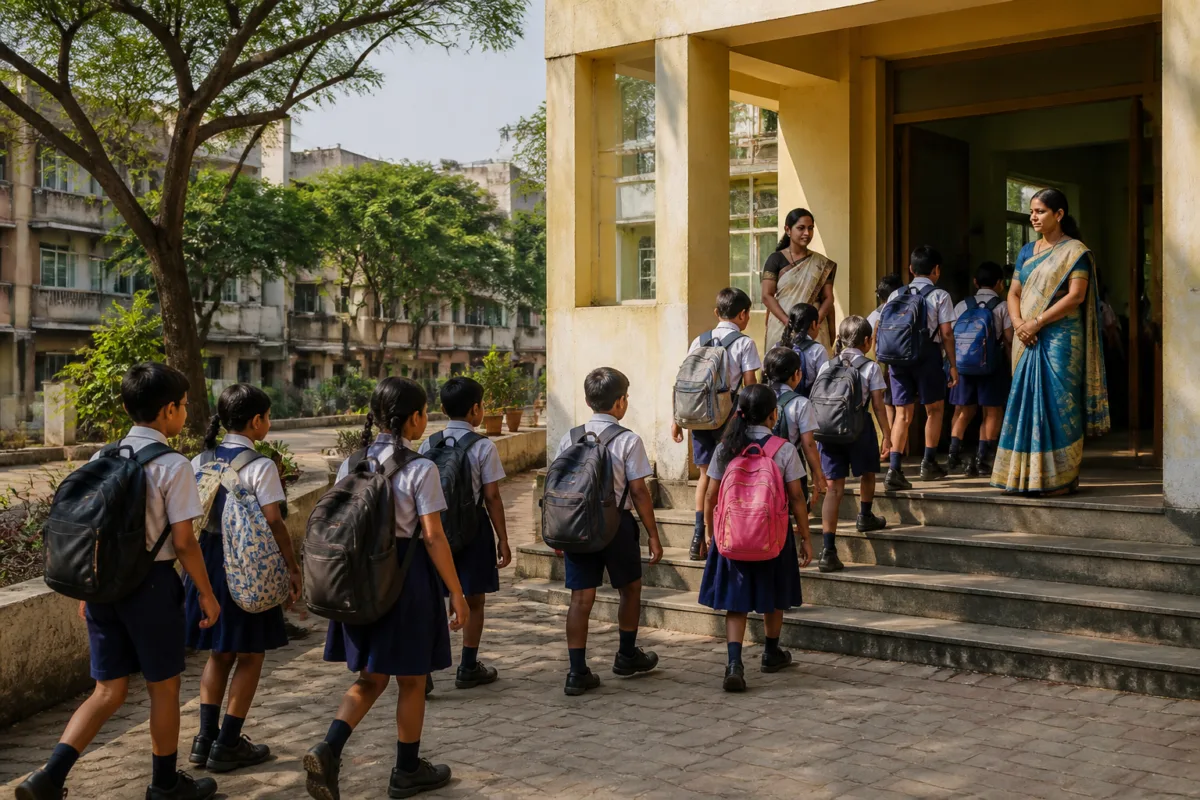
Pune Municipal Corporation has received a no-objection certificate from the Maharashtra government to launch eight new CBSE-affiliated civic schools from the 2027-28 academic year, a move expected to benefit around 17,000 students across the city.
Pavneet Kaur, PMC additional commissioner, confirmed that the state government had cleared the civic body’s proposal to introduce the Central Board of Secondary Education curriculum in the eight municipal schools. The schools will offer an English-medium education aligned with the national academic board.
The schools selected for the transition are Bharat Ratna Dr A P J Abdul Kalam E-Learning School in Karvenagar; 62 B English School in Wanowrie; Late Ramchandra Appa Bankar English Secondary School in Hadapsar-Manjari; Late Babu Jagjivaram English Secondary School, formerly known as Krantiveer Lahuji Vastad Salve School, in Yerawada-Wadgaon Sheri; Late Vitthalrao Tupe English Secondary School, formerly known as 83 B, in Hadapsar-Manjari; 102 G in Dhanori; 203 B in Vadgaon Budruk; and New School in Kondhwa-Undri.
PMC officials said civic school students often face difficulties while preparing for national-level entrance examinations such as the Joint Entrance Examination, the National Eligibility cum Entrance Test and the National Defence Academy examination because they have less exposure to central academic boards. The proposed CBSE schools are intended to provide that exposure within the municipal education system.
Educationists have welcomed the move, particularly because private CBSE schools can be financially out of reach for many families. Deepali Sardeshmukh of the Association of Welfare in Education said meritorious students who could not secure admission to private CBSE schools because of financial constraints would receive a stronger platform through civic schools. She added that wider academic exposure could support students in their further studies and careers.
The NOC is an administrative clearance, but PMC still has to prepare the schools for the curriculum change. A meeting between PMC and state government officials reviewed teacher recruitment, academic policy and infrastructure development for the initiative. These areas will determine how quickly the selected schools can move from approval to operational readiness.
The programme will be implemented within PMC’s existing school network. The civic body currently operates 236 Marathi-medium primary schools, 54 English-medium schools, 31 Urdu-medium schools and two Kannada-medium schools. Its secondary and technical education department has 43 schools.
The eight-school plan therefore represents a targeted expansion of the municipal system’s English-medium and central-board offering rather than a city-wide conversion of all PMC schools. The new CBSE schools are scheduled to begin from the 2027-28 academic year, with teacher recruitment, academic planning and infrastructure preparation forming the next stages of the initiative.

