


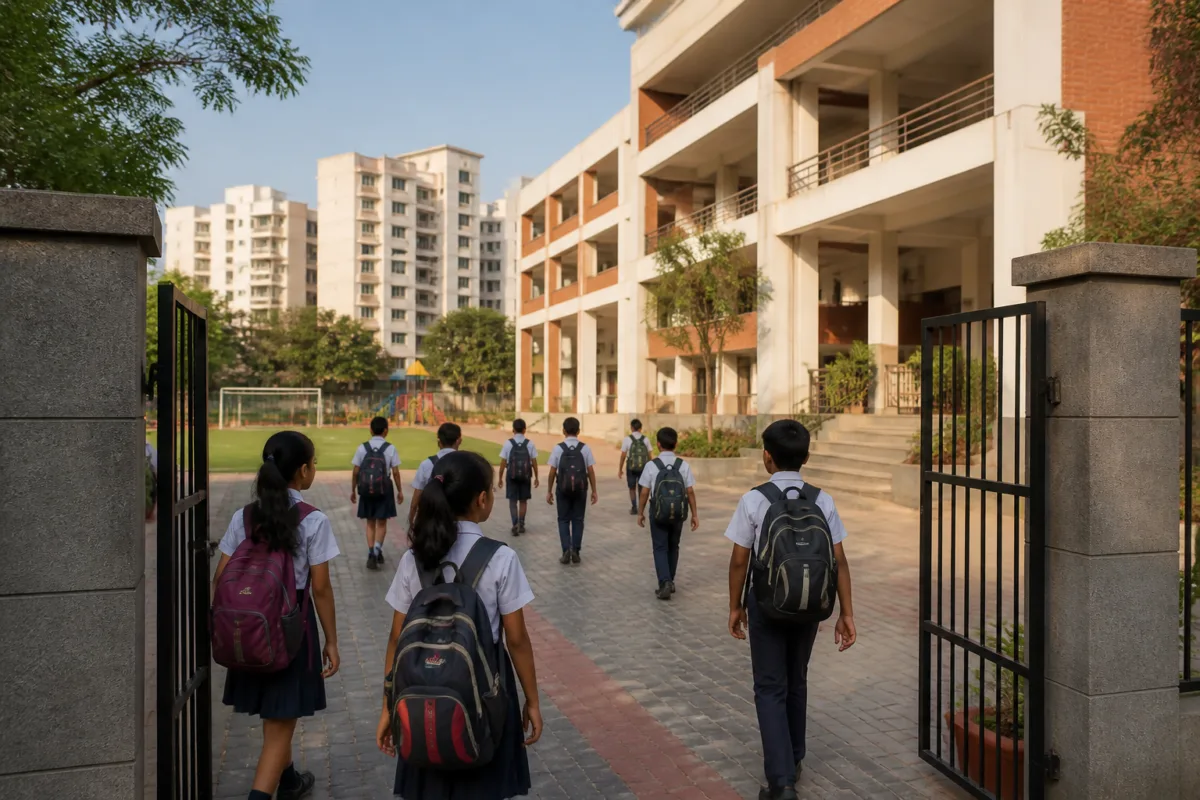
Pune will get eight new CBSE schools under the Pune Municipal Corporation after the Maharashtra Government granted the required No Objection Certificate, a move expected to benefit approximately 17,000 students from the 2027-28 academic year. The schools will offer English-medium education aligned with the national CBSE curriculum across several parts of the city.
The approval covers schools in Warje-Karvenagar, Wanowrie, Hadapsar-Manjari, Yerawada-Wadgaonsheri, Nagar Road-Wagholi, Sinhagad Road and Kondhwa-Undri. The initiative is being implemented by the PMC as part of efforts to strengthen its municipal education system and expand access to nationally recognised academic standards.
Additional Municipal Commissioner Pavneet Kaur said the approval was an important step towards providing students in civic schools with improved academic opportunities. According to Kaur, students from municipal schools can face difficulties when seeking admission to national-level institutions and preparing for examinations because of limited exposure to the national curriculum.
The approved schools are A.P.J. Abdul Kalam School in Karvenagar under the Warje-Karvenagar area; School No. 62 B in Wanowrie; Ramchandra Bankar School in Hadapsar-Manjari; Lahuji Salve School in Yerawada; School No. 83 B in Hadapsar; School No. 102 G in Dhanori under the Nagar Road-Wagholi area; School No. 203 B in Vadgaon Budruk under Sinhagad Road; and a new school in Kondhwa.
The PMC said the CBSE curriculum is expected to strengthen students’ conceptual understanding of core subjects and support preparation for national-level competitive examinations, including the Joint Entrance Examination, National Eligibility-cum-Entrance Test and National Defence Academy examinations. English-medium instruction is also expected to improve communication skills and confidence, while widening access to higher education and future employment opportunities.
A review meeting chaired by Kaur examined preparations for implementing the initiative. Discussions included teacher recruitment and deployment, academic planning, the policy framework, infrastructure development, and school management and administrative arrangements. These elements will determine how the approved schools are prepared to deliver the new curriculum across the identified municipal school sites.
Under the proposed implementation plan, classes at the eight schools will start in phases from the 2027-28 academic year. The PMC’s next work will involve finalising staffing, academic arrangements, infrastructure and administrative systems before the phased launch.

