


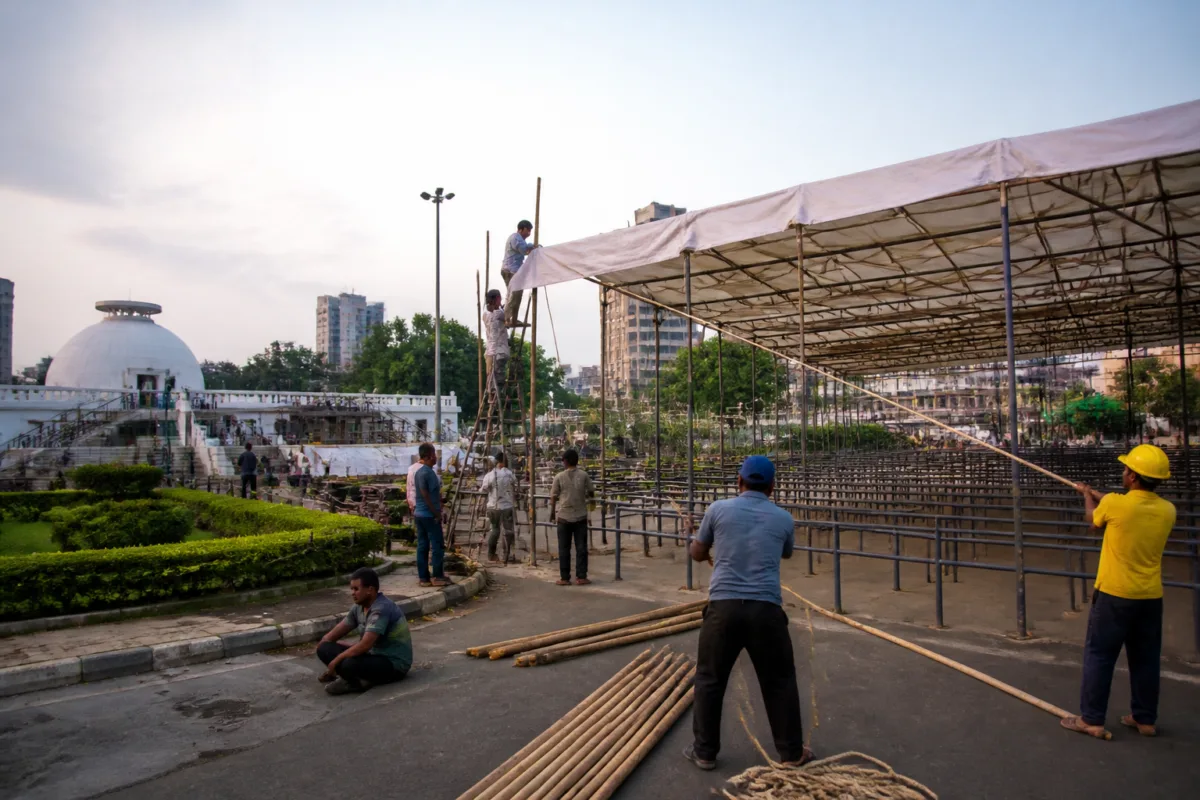
The Brihanmumbai Municipal Corporation has begun preparations for Mahaparinirvan Din on December 6, planning temporary shelters, medical facilities, drinking water, sanitation services and crowd-management infrastructure for lakhs of visitors expected at Chaityabhoomi and Shivaji Park in central Mumbai.
BMC Commissioner Ashwini Bhide reviewed the arrangements at a high-level meeting held at the civic headquarters on Thursday and directed departments to coordinate their work so that followers visiting the sites do not face inconvenience. Officials were asked to identify locations requiring additional facilities and complete the preparations ahead of the annual observance marking the death anniversary of Dr Babasaheb Ambedkar.
The meeting was attended by corporator Anil Kadam, Additional Municipal Commissioner (City) Prajakta Verma-Lawangare, Deputy Municipal Commissioners Prashant Gaikwad, Prashant Sapkale and Manish Valanju, ward-level officials, representatives of various organisations and police personnel.
The BMC plans to carry out painting and beautification work at the Chaityabhoomi memorial, entrance arch, Ashoka Pillar, Bhimjyot and garden area. Floral wreaths will also be arranged for followers paying tribute to Dr Ambedkar.
Queue management is among the key components of the civic plan. Watchtowers and a control room are proposed, while curtains will be installed along both sides of queues near the Bhagoji Keer crematorium. An observation balloon, temporary roofing and seating for people waiting in queues are also planned. The civic body will additionally organise an exhibition of rare photographs of Dr Ambedkar and publish and distribute an information booklet.
The police department will organise a ceremonial guard of honour and a flower shower as part of the observance. The BMC’s arrangements will extend to both Chaityabhoomi and Shivaji Park, where waterproof temporary shelters, information boards and directional signboards will be installed for visitors.
The planned public facilities include purified drinking water, mobile toilets, electricity, fire-safety systems and mobile-phone charging points. The civic body also plans dust-control measures, sanitation facilities, medical services, food-distribution tents and a meditation room for Buddhist monks.
The scale of the arrangements reflects the operational demands placed on Mumbai’s civic and police systems during the annual gathering. The BMC’s plan brings multiple functions together, including crowd movement, temporary public infrastructure, emergency response, waste and sanitation management, and coordination between civic departments and the police.
The commissioner has instructed the concerned departments to coordinate and complete the arrangements before December 6. Further implementation will involve ward-level officials, civic departments, police personnel and participating organisations at the two sites.

