


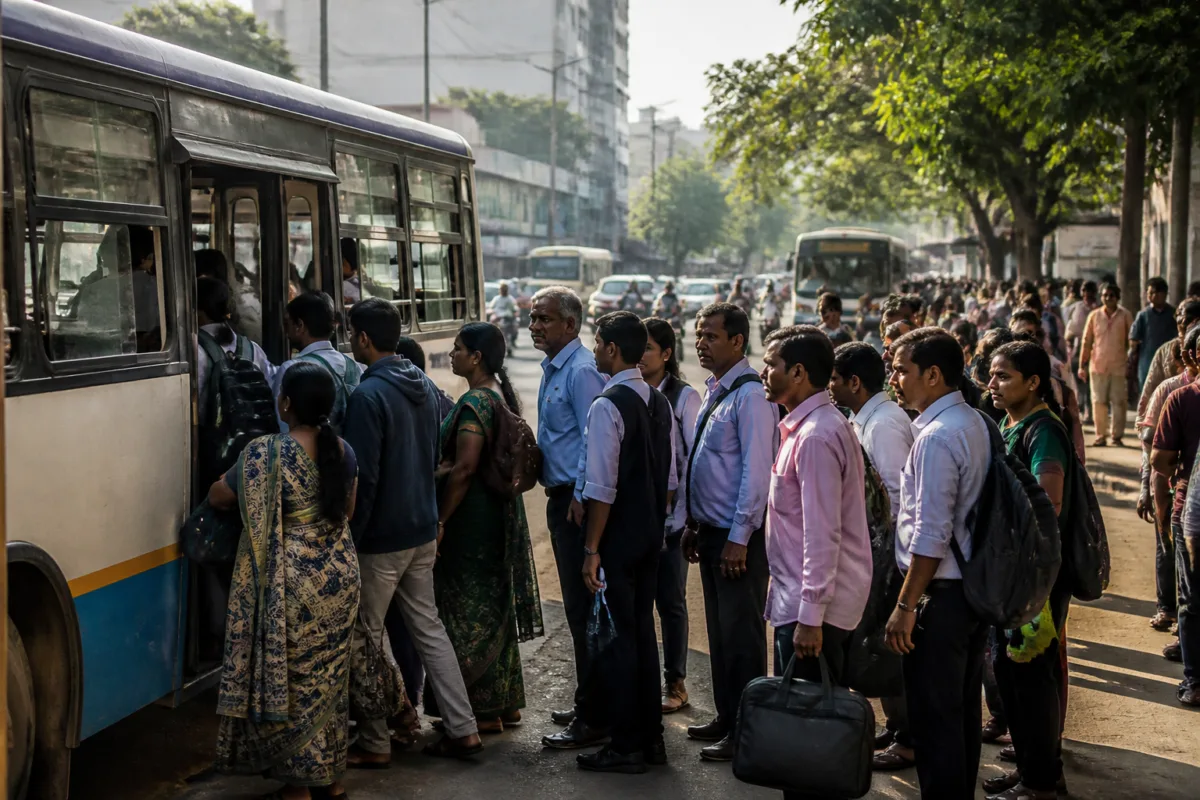
MLC CT Ravi has criticised the Karnataka government over the recent bus fare hike, saying higher public transport costs will add to the monthly expenses of employees, students, workers and rural residents who depend on buses. He also alleged that the state was increasing taxes and user charges while promoting its welfare guarantees.
Speaking in Chikkamagaluru, Ravi demanded that the government publish accounts showing the benefits delivered through its guarantees and the additional revenue collected through taxes and fees. He also called for the withdrawal of what he described as anti-people price increases. His remarks were reported by the Times News Network.
Ravi said the government had recently increased the prices of Nandini milk and curd before raising bus fares. He argued that the cumulative effect of these changes had made daily life more expensive for ordinary households. “The govt which should be a boon has become a bane,” he said.
The criticism places the bus fare increase within a wider dispute over the cost of essential services and mobility in Karnataka. According to Ravi, prices or charges have also risen during the last three-and-a-half years for petrol, diesel, electricity, water, metro travel, property tax, government services, liquor and excise duty. The report does not provide the revised bus fare levels or the government’s stated rationale for the latest increase.
Ravi cited the state’s June 2024 fuel-tax decision, under which the tax on petrol rose from 25.9% to 29.8% and the tax on diesel increased from 14.3% to 18.4%. He said the petrol tax change raised the price by about Rs 3 per litre. Fuel costs affect both private travel and the operation of goods and passenger transport, making them a significant component of household and business expenses.
He also referred to a 70-paise-per-unit electricity tariff increase in 2023 and an increase in Bengaluru Metro’s maximum fare from Rs 60 to Rs 90. These figures were presented by Ravi as evidence of a broader rise in transport and utility costs. The report does not establish whether each increase was introduced by the same authority, nor does it detail the dates or structures of the other charges he mentioned.
The former minister further alleged that higher transport, electricity and fuel costs had raised freight and production expenses, with businesses passing the burden on to consumers. He included construction inputs such as sand and M-sand among the materials whose prices had increased.
The immediate public concern is the effect of bus pricing on people with limited alternatives to public transport. For workers and students making regular trips, even a fare change that appears small per journey can accumulate across daily travel. Rural passengers may also face higher costs when buses are the principal connection to employment centres, schools, markets and public services.
Ravi’s demand for public accounts shifts the political debate from individual fare decisions to the broader relationship between welfare spending, taxation and the cost of government services. The Karnataka government’s response to his allegations, the precise revised bus fares and any implementation details were not included in the supplied report.

