


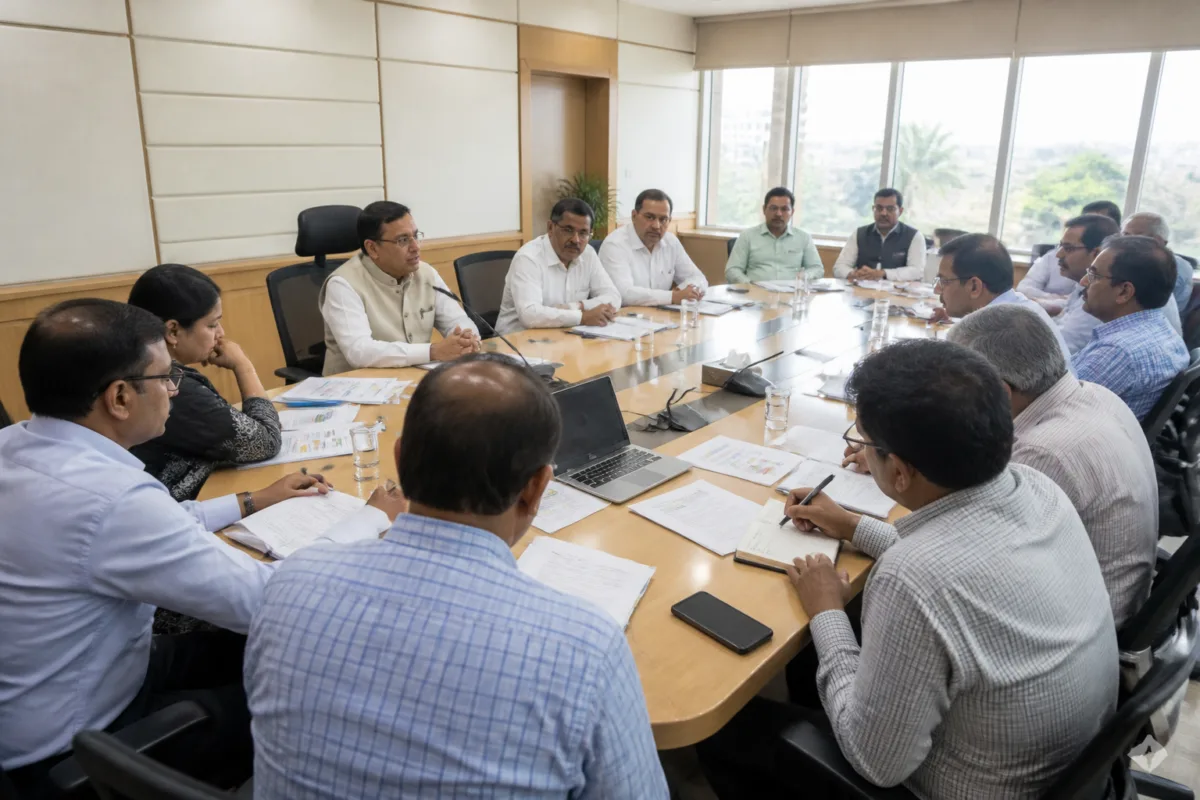
Odisha has begun a new state-level effort to improve the quality, coordination and comparability of official data, with Chief Secretary Anu Garg chairing the first meeting of the State Level Coordination Committee (SLCC) at Lok Seva Bhawan on November 4.
The meeting brought together the Ministry of Statistics and Programme Implementation (MoSPI) of the Government of India and departments of the Odisha government to strengthen the state’s statistical framework. The committee is intended to create a formal platform for coordinating data collection and aligning state-level statistics with national benchmarks.
The discussions covered Gross State Domestic Product (GSDP), District Domestic Product (DDP) and the harmonisation of administrative data. These datasets are used to understand economic activity across the state and its districts, as well as to support planning and the assessment of development outcomes.
According to the report, the SLCC finalised several strategic initiatives during the meeting. However, the specific initiatives, implementation timelines and departmental responsibilities were not detailed in the information available about the meeting.
The creation of the committee reflects the growing administrative importance of consistent and reliable data across government departments. Different departments often generate information for their own operational purposes, while state and national statistical systems require common definitions, methods and reporting standards. Coordination between these systems is therefore central to producing data that can be compared across districts and over time.
The committee’s remit also includes monitoring progress against the Sustainable Development Goals (SDGs). That makes the quality of state and district-level data relevant not only to economic measurement but also to tracking development indicators across sectors. The supplied report does not identify the specific SDG indicators or monitoring arrangements discussed at the meeting.
For Odisha’s urban and regional planning systems, improved administrative data can affect how authorities understand local economic activity, service delivery and development conditions. GSDP and DDP estimates provide economic information at state and district levels, while harmonised administrative records can support the use of departmental data in planning and review processes. The meeting’s focus was institutional and statistical; no new urban project, funding allocation or service-delivery target was announced in the report.
The SLCC is designed as an apex coordination platform rather than a standalone data collection programme. Its stated purpose is to establish operational coordination between MoSPI and Odisha’s government departments and to align regional data collection with national standards. The effectiveness of the arrangement will depend on how its decisions are translated into departmental processes, common reporting practices and regular data reviews.
The meeting is the first reported step under this state-level coordination structure. Further information on the finalised initiatives, their timelines and the departments responsible for implementation will be needed to assess how the committee changes Odisha’s statistical infrastructure in practice.

