


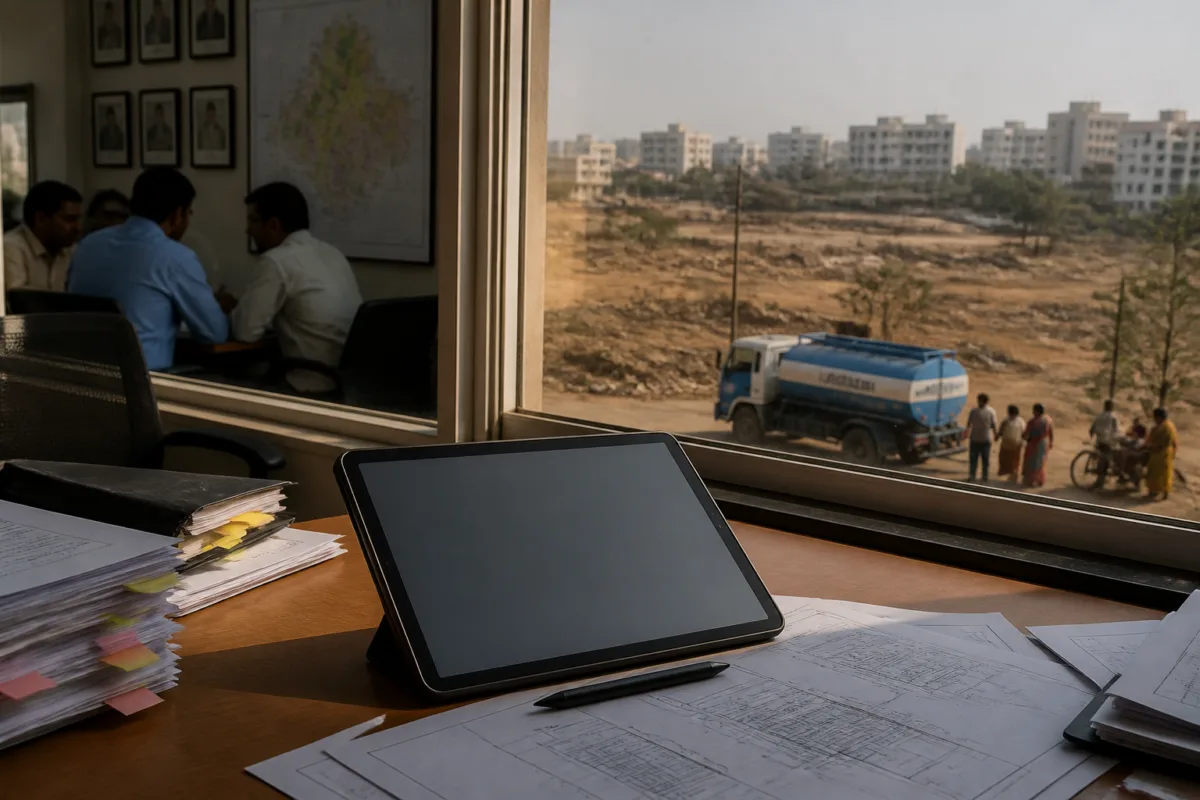
Nagpur Municipal Corporation’s proposed purchase of 365 Android tablets for elected representatives and civic officials has raised questions about spending priorities as the city faces sharply reduced water storage and drought-like conditions. The procurement is estimated to cost Rs 1.48 crore, including taxes, with each tablet priced at Rs 38,999.
According to a report by the Times of India, the proposal was placed before the civic administration through an agenda for a Standing Committee meeting. The report says the meeting was scheduled for Friday, but it also states that the municipal house subsequently approved the procurement proposal. The supplied report does not establish the dates of these developments clearly, leaving the current approval status of the purchase requiring confirmation.
The proposed tablets would be supplied to the mayor, deputy mayor, Standing Committee chairperson, ruling and opposition leaders, corporators from across parties and municipal officials. The list includes department heads, executive engineers and junior engineers. The devices would come with digital pens and would be procured through e-tendering.
The civic body’s information technology department has justified the expenditure by pointing to the growing use of the work module, e-office system, Management Information System portal, video conferencing and other technical software. The department’s position, as reported, is that the devices are required to support online municipal operations. The municipal commissioner reportedly cleared the proposal on October 13.
The proposed procurement is also linked to the discontinuation of an earlier laptop supply service. The civic administration has cited that change as one reason for moving towards tablets. The supplied report does not specify the terms of the earlier laptop arrangement, the number of laptops previously issued or the operational reasons for discontinuing it.
Nagpur’s earlier experience with tablets has become a central concern in assessing the new proposal. During the tenure of former Standing Committee chairperson Avinash Thakre, tablets were purchased and distributed among corporators. The agenda note for the latest procurement reportedly acknowledges that most of those devices stopped working, while several corporators found them difficult to use effectively.
That history makes the new purchase more than a routine technology procurement. A municipal device is not only a one-time capital expense. It also creates continuing costs related to maintenance, software compatibility, repairs, replacement, user training, cybersecurity and asset tracking. The supplied report does not provide details of the proposed warranty, maintenance contract, replacement policy, training programme or system for monitoring whether the devices are being used for official work.
The absence of these details is significant because the earlier procurement appears to have had a weak utilisation record. The agenda note reportedly refers to the failure and non-use of many previous devices, but the new proposal does not explain how the civic body will prevent the same outcome. It also does not state whether the earlier tablets will be repaired, recovered, written off or replaced through the new purchase.
The timing has intensified the public-interest question around the expenditure. Totladoh reservoir, identified in the report as Nagpur’s main water source, had fallen to 31.34% of its live storage capacity on October 31. The corresponding level on the same date the previous year was reported at 92.42%. The comparison indicates a steep year-on-year decline in available storage, although the supplied report does not provide the city’s projected demand, inflow data, rainfall figures or the expected duration of available supply.
In this setting, the tablet purchase has become a test of how the municipal corporation ranks competing needs. Water conservation, leakage control and essential civic infrastructure require administrative attention and public expenditure, while digital tools may also be necessary for a large civic administration. The available evidence does not establish that the tablet proposal would directly reduce funding for water-related work. It does, however, show why the timing and previous utilisation record have generated scrutiny.
The issue also highlights the difference between digitising municipal administration and distributing hardware. E-office systems, online work modules, MIS platforms and video conferencing can improve coordination only when officials have reliable access, adequate training and clear protocols for use. Supplying devices without measurable utilisation standards can turn a technology initiative into an underused municipal asset.
For elected representatives, the proposed distribution raises an additional accountability question. The tablets are intended for corporators and senior office-bearers as well as officials, but the supplied report does not describe the rules governing official use. It is not clear whether the devices would remain municipal property, whether they could be retained after a representative’s term, or how data and documents stored on them would be secured.
A transparent procurement process would therefore involve more than publishing an e-tender. The civic body would need to establish the number of users, technical specifications, lifecycle costs, service responsibilities and performance checks. It would also need to disclose what happened to the earlier tablets and whether an assessment was conducted before proposing another purchase.
The case reflects a recurring administrative challenge in urban governance: municipal institutions often adopt visible technology solutions without publishing enough information about outcomes. A tablet can be easily counted as a delivered asset, but the public value of the expenditure depends on whether it improves decision-making, speeds up file movement, strengthens field monitoring or reduces administrative costs. The supplied report provides the stated operational justification but no performance targets against which the initiative can later be assessed.
The water crisis adds a resource-allocation dimension without resolving the underlying administrative question. A civic body facing falling reservoir levels must manage immediate conservation and supply concerns while continuing routine governance, engineering and digital operations. The relevant test is not simply whether tablets are useful, but whether the proposed procurement has been prioritised, designed and costed with the same discipline expected of other public infrastructure spending.
The immediate facts requiring clarification are the status of the proposal, the date of any municipal house approval, the final number of devices and the result of the e-tender. The corporation’s plan for the earlier tablets, the maintenance terms for the new devices and the safeguards for official use will also determine whether the purchase represents a functional administrative upgrade or a repeat of an earlier underused asset programme. Until those details are established, the Rs 1.48 crore proposal remains both a technology decision and a visible measure of Nagpur’s municipal accountability during a period of water stress.

