


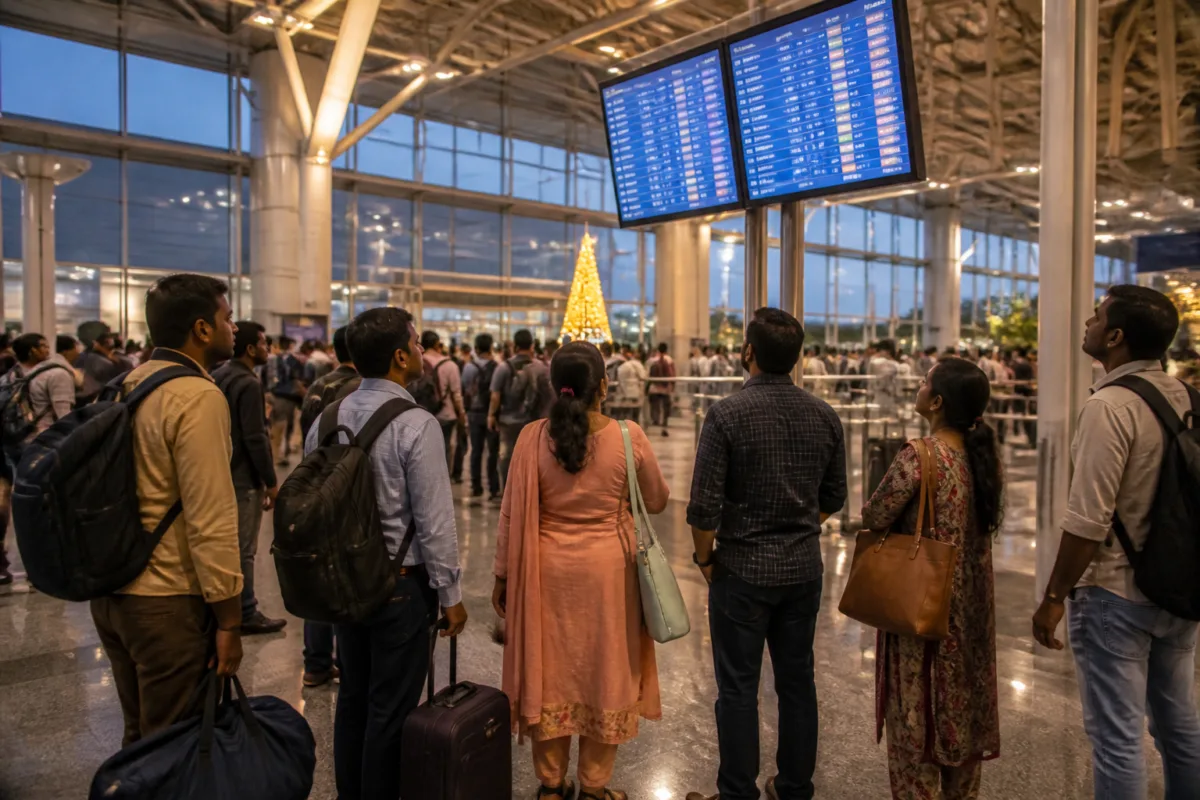
Ranchi airfares from several Indian cities have nearly doubled ahead of Diwali and Chhath Puja, leaving passengers with fixed travel dates facing steep costs even as new government rules mandate greater transparency in airline ticket pricing.
The rules, notified on October 31, require airlines to provide passengers with a detailed break-up of the ticket price at the time of booking. The disclosure must include charges such as cancellation fees and must be available on the airline’s booking website as well as on the ticket issued to the passenger.
The measure has been welcomed as a step towards helping travellers understand the components of their fares. However, it does not provide immediate financial relief to passengers travelling to Ranchi during the festive period, when demand for flights rises sharply.
Srawan Rajgarhia, chairperson of the aviation sub-committee of the Federation of Jharkhand Chamber of Commerce and Industries, said the new disclosure requirement would allow passengers to see how the final ticket price was calculated. He said the rules did not create a mechanism to regulate fares during periods of high demand.
Rajgarhia said airfares had been rising sharply for around six months. According to him, a one-way ticket from Pune to Ranchi was costing about Rs 25,000 ahead of Diwali, compared with the usual fare of around Rs 9,000. Passengers travelling on fixed dates, he said, often had little practical choice but to pay the quoted price.
The rules allow the civil aviation ministry to intervene in airfares during an “extraordinary situation”. However, the provision does not clearly define what would qualify as such a situation. That leaves uncertainty over when the ministry could act during a sudden price surge and what form any intervention might take.
The issue has particular significance for Ranchi, which serves as a major air gateway for residents of Jharkhand and people working in other parts of the country. During Diwali and Chhath Puja, travel demand is linked not only to routine mobility but also to family visits, making fixed-date travel more difficult to avoid.
FJCCI treasurer Navjot Alang said the presence of multiple airlines and online booking platforms had not protected passengers travelling on fixed dates, including during festivals or emergencies. The new disclosure rules may clarify the price structure, but the immediate question for travellers remains whether they can afford the available tickets.
For some passengers, the cost has remained acceptable because of the importance of returning home. Ranchi resident Pratik Kumar said his brother, who works in Delhi, paid Rs 12,000 for a ticket to Ranchi after missing the Durga Puja break. He decided to pay the fare to celebrate the festival with his family.
The new framework therefore addresses the information gap in air-ticket pricing while leaving the question of festive fare escalation unresolved. The next point of uncertainty is how the civil aviation ministry will interpret and apply the extraordinary-situation provision when passengers face sharp, time-bound increases.

