


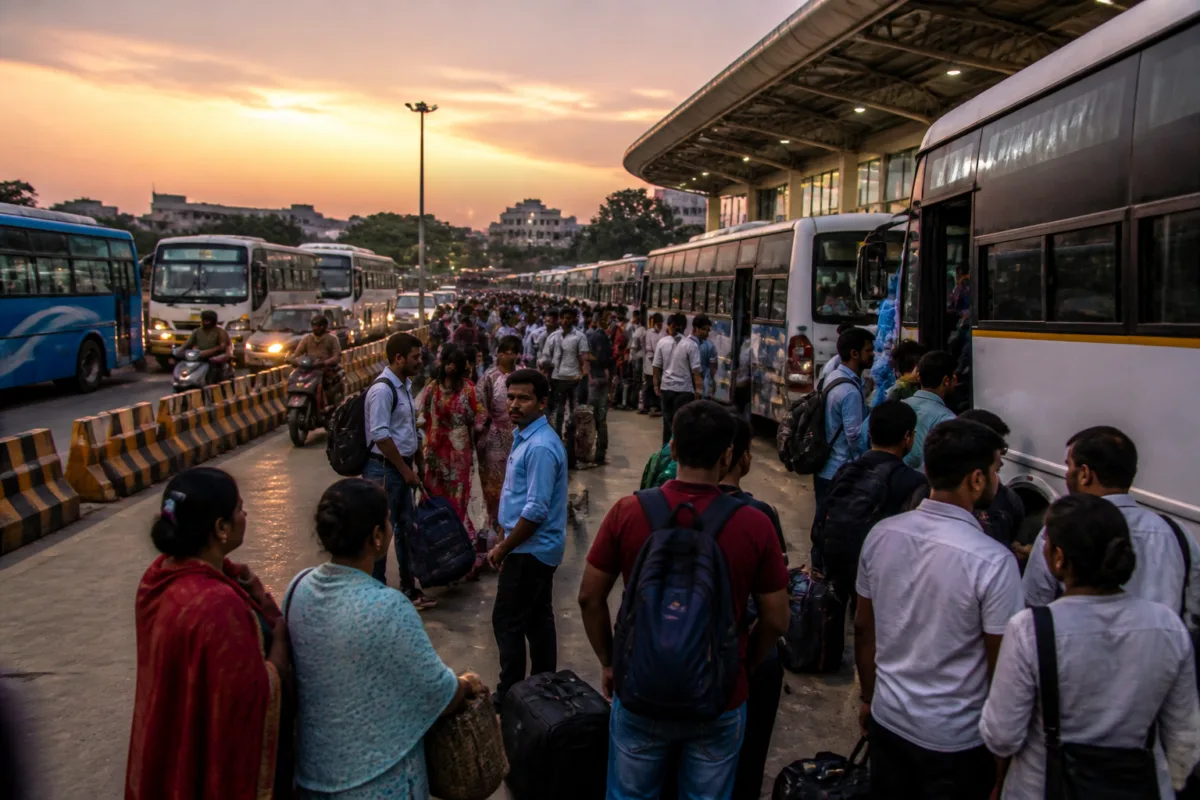
Diwali bus fares from Ahmedabad have reportedly risen sharply on local and interstate routes, with private operators charging up to two or three times the usual price as passengers struggle to find seats on state transport buses.
The fare increase is affecting travellers heading to destinations in Gujarat as well as states including Delhi, Uttar Pradesh, Bihar, Madhya Pradesh and Maharashtra, according to a report by Sandesh – Ahmedabad. The report said migrant workers, local families and other residents who live in Ahmedabad for employment are facing a substantial financial burden while travelling home for the festival.
Passengers are turning to private buses because of heavy crowds and limited ticket availability on Gujarat State Road Transport Corporation services. The resulting demand has allowed private operators to raise fares on several routes during the peak travel period.
For intercity journeys within Gujarat, fares that normally range from Rs 300 to Rs 500 for destinations such as Rajkot, Bhavnagar, Jamnagar and Amreli are reportedly being quoted at between Rs 800 and Rs 1,200 during Diwali. The report said checks of travel company websites showed significant increases on fares calculated according to route distance.
Private bus operators have attributed the higher prices to one-way demand during the festival season. Their stated position is that buses carry passengers towards their home destinations but often return empty, increasing the cost of operating the service. The explanation has not resolved the question of whether passengers should bear fare increases of up to three times the normal level.
The reported price rise is particularly significant for workers and lower-income households, for whom travel costs form a sizeable part of the festival budget. Families travelling together may face several thousand rupees in additional expenditure compared with normal fares, although the exact amount varies by route, operator and booking date.
The report also cited last year’s additional services by the state transport corporation, which generated approximately Rs 1.5 crore in revenue during Diwali. That figure indicates the scale of seasonal travel demand, while also highlighting the pressure on the public transport system when large numbers of residents attempt to leave Ahmedabad at the same time.
The fare situation raises questions about the role of the state transport and regulatory authorities in monitoring private intercity bus services during predictable seasonal peaks. The report called for action against what it described as excessive fare collection, but it did not cite a specific enforcement order, inspection drive or penalty announced by the authorities.
For passengers, the immediate issue remains the shortage of affordable seats as the festival rush intensifies. Any official response would need to address both the availability of additional public transport services and the monitoring of fares charged by private operators. The report did not specify whether the transport department had announced a cap, complaint mechanism or enforcement timetable.

