


India’s pandemic preparedness is entering a more complex phase. National Institute of Virology director Naveen Kumar has said scientists currently lack the tools to establish whether SARS-CoV-2 was artificially engineered or emerged naturally, while warning that Covid-19 is unlikely to be the last pandemic. His remarks point to a larger challenge: preparing for future outbreaks when the origin, timing and transmission pathways of emerging viruses may not be immediately clear.
The issue is not limited to laboratories or vaccine manufacturing. It is connected to how cities expand, how people and goods move across borders, how forests are converted, and how rising temperatures alter ecological conditions. Kumar identified globalisation and cross-border mobility, climate change and rising temperatures, and deforestation as three factors contributing to the emergence of new viral infections. Together, these pressures form a public-health risk that is also an urban planning and governance problem.
The remarks were made at an event organised jointly by Youth4Nation and IISER Pune. Kumar said that 300 to 400 new viruses are added to the list of known viruses every year, which now contains more than 17,000 viruses. The figures, as cited by the NIV director, do not mean that every newly identified virus will cause human disease. They do, however, illustrate the scale of the biological environment that health systems must monitor.
For cities, the importance lies in the speed and density with which risks can move once a virus begins infecting people. India’s urban areas are connected by extensive domestic and international travel, commercial networks and migration. These connections support economic activity, but they can also shorten the time between an infection emerging in one location and appearing in another. Kumar’s emphasis on cross-border mobility places disease preparedness within the same institutional landscape as transport, public health surveillance and emergency administration.
The relationship between ecological disruption and disease emergence adds another layer. Kumar said that deforestation and encroachment into wild-animal habitats have increased human-animal contact. Some viruses may be non-pathogenic in animals but can cause disease when they spill over into human populations. He also said that more than 70% of infectious diseases are transmitted from animals to humans.
This makes land-use change relevant to pandemic preparedness. Expansion into forested or previously less disturbed areas can alter the boundary between human settlements and animal habitats. The supplied report does not establish a direct causal link between any specific urban project and a particular outbreak. It does show, however, why disease surveillance cannot be separated entirely from decisions about land, housing, transport and infrastructure. The more frequently human and animal environments overlap, the greater the importance of detecting unusual infections before they spread through dense settlements.
Climate change further complicates this task. Kumar said rising temperatures are unlocking viruses that have remained frozen for years. The statement places warming within the broader discussion about emerging infections, although the report does not identify a specific virus or outbreak linked to this process. For public institutions, the implication is that preparedness must account not only for known pathogens but also for changing environmental conditions that may expose populations to unfamiliar biological risks.
The question of whether SARS-CoV-2 was engineered illustrates a different preparedness problem: the limits of scientific certainty. Kumar said that modern technology can technically be used to create viruses, but that there are currently no scientific tools to conclusively determine whether the Covid-19 virus was artificially created and deliberately released or emerged naturally. That distinction matters because public-health policy depends on evidence, not on the existence of a plausible theory.
The statement also demonstrates why laboratory capability must be paired with transparent scientific methods. If authorities cannot establish the origin of a virus conclusively, they must still be able to identify the pathogen, understand how it spreads, develop countermeasures and communicate the limits of available knowledge. Preparedness is therefore not only about preventing a future outbreak. It is also about maintaining public trust while evidence is incomplete.
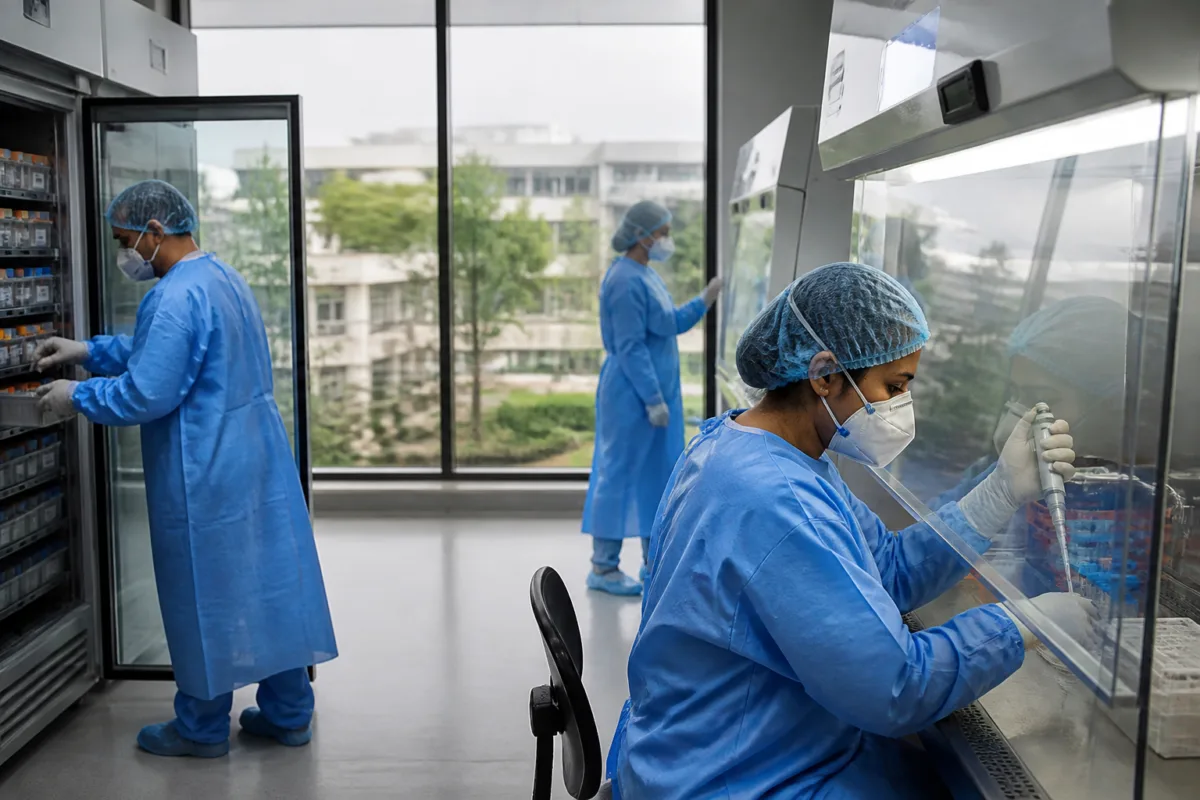
India’s response, according to Kumar, has strengthened since the Covid-19 pandemic. He said the country now has a joint task force and protocols to address future outbreaks. Two additional biosafety level-4 laboratories and four regional National Institute of Virology centres are also under construction. These facilities represent an expansion of the institutional network required to study high-risk pathogens and respond to outbreaks closer to where they emerge.
The distribution of capacity is important. A pandemic response that depends entirely on a small number of national institutions can face delays in sample movement, testing, investigation and decision-making. Regional centres could help extend surveillance and research capacity beyond a single location, although the supplied report does not provide details on their sites, timelines, budgets or operating arrangements. Their eventual effectiveness will depend on how they connect with state health departments, hospitals, universities and local administrations.
The same applies to biosafety level-4 laboratories. Their construction is a visible sign of investment in high-containment research, but buildings alone do not constitute a complete preparedness system. The report does not specify staffing levels, equipment, testing protocols or operational deadlines. What it establishes is that India is adding high-level laboratory infrastructure as part of its post-Covid response.
Vaccine technology is the second major pillar of the preparedness question. Kumar said India meets nearly 70% of the World Health Organisation’s vaccine requirements and exports vaccines and biological products to more than 150 countries. At the same time, he said many technologies used in India are still developed in Western countries, with Indian manufacturers often producing vaccines using those technologies.
This distinction between manufacturing capacity and technology ownership is central. A country may have large-scale production capability and international export reach while remaining dependent on external platforms, patents, inputs or scientific know-how for particular vaccines. Kumar’s call for indigenous vaccine technologies therefore goes beyond increasing manufacturing volume. It concerns the ability to develop platforms for different viruses and adapt them when a new outbreak occurs.
He cited Covaxin, developed in collaboration with Bharat Biotech, as an example of indigenous vaccine technology. Kumar acknowledged that developing vaccines against different viruses remains challenging but said India could become self-sufficient in tackling future pandemics. The report does not provide a timeline or a definition of self-sufficiency, so the extent of that goal remains unspecified. It does establish the policy direction: domestic research and technology development should complement India’s existing manufacturing and export strength.
This policy landscape brings together several institutions. The NIV and its regional centres represent the virology and surveillance component. BSL-4 laboratories provide high-containment research capacity. Vaccine companies and research institutions contribute development and manufacturing expertise. Joint task forces and protocols provide the coordination mechanism described by Kumar. The response will also require local health systems because detection and treatment ultimately occur in communities, hospitals and urban neighbourhoods.
The urban dimension is particularly important because cities are where multiple forms of connectivity converge. International travel, dense housing, workplaces, hospitals, educational institutions and public transport can accelerate transmission once an infection enters a population. At the same time, metropolitan regions are often administratively fragmented across municipal bodies, state agencies and national institutions. The supplied report does not evaluate the performance of these systems, but Kumar’s emphasis on protocols and task forces highlights the need for coordination across them.
The evidence presented at the Pune event points to a preparedness model with three linked requirements. The first is scientific capacity to identify and study emerging viruses. The second is technological independence sufficient to develop vaccines and biological products for unfamiliar threats. The third is institutional coordination that can translate laboratory findings into public-health action. Weakness in any one of these areas can limit the value of the others.
What remains uncertain is how the new laboratories and regional centres will operate, how quickly indigenous vaccine platforms can be developed, and how effectively national preparedness mechanisms will connect with city-level health administration. The report also does not establish whether any specific future outbreak can be predicted from the trends cited by Kumar. Its central message is narrower and more consequential: pandemic risk is shaped by mobility, environmental change and human-animal contact, while preparedness depends on sustained investment in science, technology and public institutions.
India’s post-Covid capacity is therefore being tested on two fronts. It must retain the manufacturing and export strengths that already make the country an important supplier of vaccines, while reducing dependence on technologies developed elsewhere. It must also expand high-containment research and regional surveillance without treating infrastructure construction as the end of preparedness. The next measurable steps will be the completion and functioning of the two BSL-4 laboratories, the four regional NIV centres, and the continued development of indigenous vaccine technologies.

