


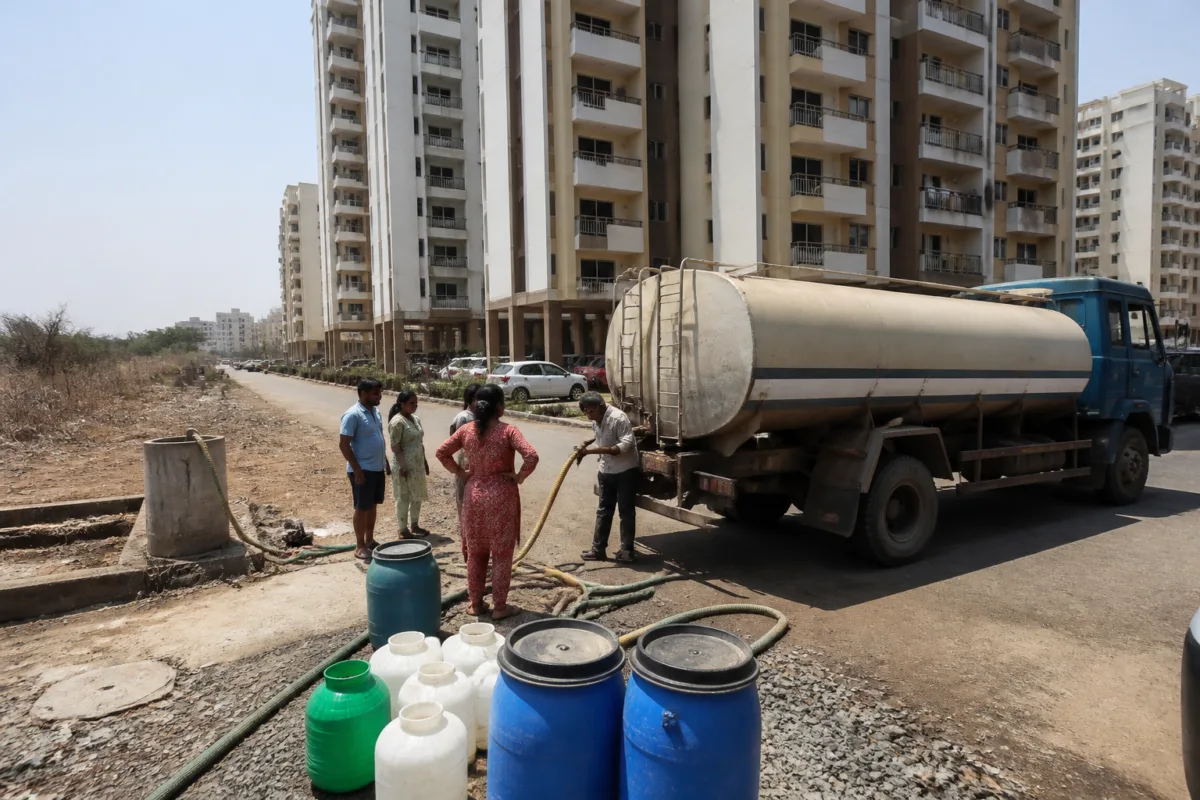
Pune’s private water tanker network is facing an early supply squeeze as borewells that feed operators in several parts of the city begin drying up months ahead of the usual summer decline, raising the risk of shortages and higher prices for housing societies without Pune Municipal Corporation connections.
Tanker operators serving Kondhwa, Mohammadwadi, Bibvewadi and Wagholi have told The Times of India that groundwater availability is already weakening. Sushant Lonkar, an operator serving Kondhwa and Mohammadwadi, said borewell levels traditionally decline around March or April, but depletion had begun much earlier this year.
“ T anker operators depend on multiple privately owned borewells, many of which are already showing signs of stress. If the trend continues, ensuring adequate water supply to housing societies in the months ahead will become a major challenge,” Lonkar said, according to the report.
Operators are examining sources farther from the areas they serve, but longer trips would increase diesel use and transportation costs. Lonkar said tanker charges could rise if the situation continued, although any increase would be an individual operator’s decision. A tanker operator from Bibvewadi also said water availability had become a concern, while noting that he had not yet decided to increase prices.
The pressure is particularly visible in neighbourhoods such as Undri and Pisoli, where several housing societies do not have PMC water connections. Residents in these areas have reported rising daily tanker requirements and are concerned that demand could intensify before summer. Tankers currently cost about Rs700 to Rs800 in these locations, while prices in some parts of the wider tanker network are already higher.
Wagholi residents have also reported reduced supply. Sanjiv Patil, president of the Wagholi Housing Society Association, said a household that previously required about two tankers a day was managing with one or one-and-a-half because operators were struggling to find sufficient water. He said societies currently paid an average of Rs900 per tanker and had been warned that rates could reach Rs1,500.
The operators’ concerns come as an unusually hot October and forecasts of a warmer winter have added to worries about groundwater availability. November and December are usually considered an off-season for tanker operators because demand generally falls. However, operators cited water cuts and drought conditions in parts of Maharashtra as factors that could keep demand elevated this year.
The private tanker system has become an important parallel supply network for housing societies that remain outside the municipal water grid. That dependence also leaves residents exposed to fluctuations in borewell availability, fuel expenses and private pricing. Earlier this year, tanker rates had increased after police directed operators to install CCTV cameras in their vehicles, according to the report.
One operator with five vehicles in Wagholi said a price increase was likely but not immediate. He suggested that the PMC could consider allowing private tankers to draw water from civic facilities because the number of municipal tankers was smaller than the private fleet. He also urged residents to conserve water.
Residents have asked the civic administration to announce an emergency plan for areas without municipal connections. Arvind Shole, a resident of Undri, said the PMC should provide relief before the shortage worsened and called for a detailed plan for affected neighbourhoods.
Calls and WhatsApp messages sent by The Times of India to PMC water supply head Nandkishor Jagtap seeking comment went unanswered, leaving the civic body’s immediate response and any proposed contingency measures unclear.

