


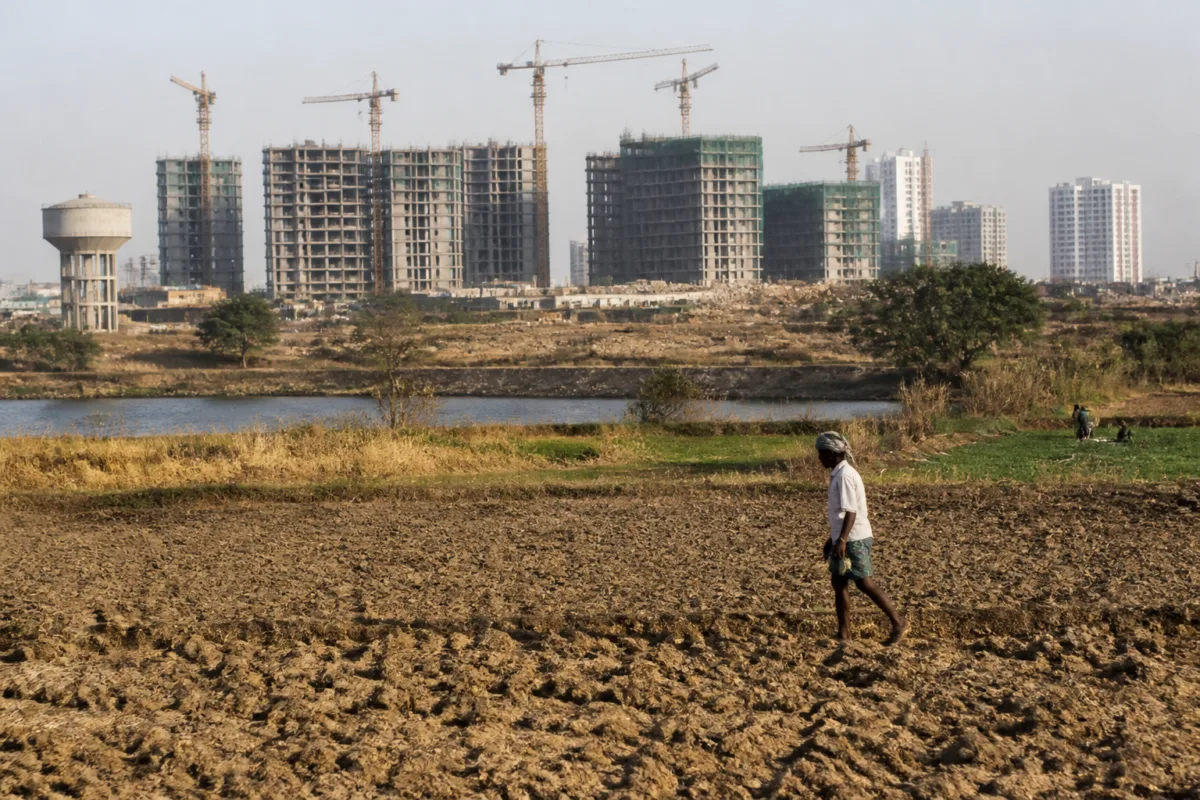
The Telangana economy could lose 1.5 to 2 percentage points of growth if an El Niño-induced rainfall deficit weakens agriculture, rural consumption and government revenues, according to an expert committee appointed by the state government. Its assessment shows that the risk is not confined to farms: the stress could move through construction, real estate, transport, banking and urban tax collections.
The committee submitted its report to the government on October 28 after being constituted to assess the likely impact of El Niño on agriculture and allied sectors and recommend protective measures. It estimated that Telangana’s Gross State Domestic Product, projected to grow by 10 to 10.7 per cent in the current financial year, could face a setback of 1.5 to 2 percentage points if the rainfall deficit persists.
That projection places the climate-linked agricultural shock inside the state’s wider economic system. More than 60 per cent of Telangana’s workforce depends on agriculture and allied sectors, the report said. A decline in farm output and incomes would therefore affect not only agricultural households but also the businesses and workers that depend on their spending.
The committee’s central concern is the movement of stress from production to purchasing power. Lower kharif output and weakening farm incomes could reduce rural consumption, affecting demand for automobiles, electronic goods, fast-moving consumer goods and other discretionary products. The resulting slowdown in business activity could put pressure on the state’s own tax collections.
Although the government achieved its revenue collection targets during the first six months of the financial year, the committee warned that collections could come under pressure in the following months. It estimated that Telangana’s share of Goods and Services Tax collections could decline by 15 to 20 per cent if the consumption slowdown continued.
The projected revenue effect is important for cities because state finances support public services, infrastructure spending and administrative programmes across urban and rural areas. The report does not establish which specific projects would face reductions, but it identifies a broader fiscal vulnerability: a shock that begins with rainfall can eventually affect the government’s capacity to collect revenue from transactions and sustain economic activity.
The most immediate physical constraint is water. The committee warned that declining groundwater levels and reduced storage in reservoirs and irrigation projects could restrict Rabi cultivation to only 30 to 40 per cent of the 70 lakh acres normally brought under crops during the season. The agriculture department’s advisory against water-intensive crops could further reduce paddy and other irrigated cultivation.
This contraction would affect the agricultural supply chain beyond farms. Rice mills and food-processing units could face shortages of raw materials, while reduced activity at market yards could affect loaders, transport workers and drivers. In this chain, rural infrastructure and urban consumption are linked: lower farm output reduces the movement of goods, the income of service workers and the circulation of money through towns and cities.
The report also identifies a direct connection with Telangana’s real estate market. Agricultural land transactions have declined by around 10 per cent compared with previous levels, according to the committee. That decline puts the government’s annual target of ₹18,000 crore from stamps and registrations at risk.
Land transactions and construction are significant channels through which rural and peri-urban economic activity enters the built environment. When land purchases slow, the effect can extend to development approvals, brokerage, site preparation, building activity and the sale of construction materials. The committee said a slowdown in construction could reduce demand for cement, steel, bricks, hardware and other materials, affecting business transactions worth lakhs of crores of rupees.
The employment exposure is also substantial. Nearly 20 lakh workers, including construction labourers, masons and plumbers, could face uncertainty if construction activity weakens, the report cautioned. These workers are part of a labour market that moves between rural, peri-urban and urban projects. A decline in building activity can therefore transmit agricultural stress into housing construction, small contracting businesses and local service economies.
This is where the report’s economic warning becomes an urban governance issue. Revenue from stamps and registrations depends on transactions, while construction-related taxes and business activity depend on confidence and household purchasing power. If both agricultural incomes and real estate transactions weaken, the state could face pressure from lower revenue at the same time that affected households require greater support.
The committee also warned of risks to banks. Lower agricultural production and weaker business activity could reduce the repayment capacity of borrowers, particularly those dependent on agriculture and allied sectors. Banks could consequently see a rise in non-performing assets. The report does not quantify the possible increase, but it links rainfall stress to credit risk through reduced incomes and cash flows.
That transmission mechanism matters because rural borrowers, construction workers and small businesses are connected through local markets. A farm household with lower income may reduce purchases. A trader may see lower turnover. A transport operator may receive fewer trips. A contractor may delay hiring. If these pressures persist, repayment capacity can weaken across several borrower groups rather than in a single sector.
The committee has proposed a response designed to maintain cash circulation. It called for a comprehensive contingency plan, a special financial assistance package and an expansion of employment guarantee works. It specifically recommended direct benefit transfers to farmers, tenant farmers and rural artisans, with the aim of putting money directly into households affected by the rainfall deficit.
It also argued that the existing employment guarantee programme should not be treated as the only tool for reviving rural demand. According to the report, wages under the scheme would largely be spent on essential household requirements and might not generate enough additional demand to sustain rural markets. The committee therefore framed employment support as a cushion, but not a complete solution to the economic contraction it anticipates.
The distinction is significant for implementation. Direct transfers can provide immediate income support to identified groups, while employment works can create additional earning opportunities. But the committee’s assessment suggests that the scale and design of intervention will determine whether support merely protects basic consumption or also helps maintain transactions across rural markets and connected urban sectors.
The evidence supplied in the report establishes the potential chain of impact but does not indicate whether the recommended package has been approved, how much it would cost or which departments would implement each measure. It also does not provide a revised state budget estimate, a district-level assessment or an independent estimate of the likely effect on specific construction projects.
What it does establish is a broad exposure across systems that are often treated separately. Water availability affects crop decisions. Crop output affects farm income. Farm income affects rural demand. Demand affects tax collections and business turnover. Weaker transactions can then affect land markets, construction employment and borrowers’ ability to repay loans. The committee’s warning is therefore less about a single drought-related loss and more about the movement of risk through Telangana’s economic and built environment.
For cities, the key issue is that the effects may not remain in rural areas. Hyderabad and other urban centres are linked to surrounding districts through food processing, transport, construction labour, land markets, consumer demand and state revenue. A decline in these flows would make the rainfall deficit relevant to urban businesses, workers and public finances even where rainfall conditions are not the immediate cause of disruption.
The report leaves the government with a set of defined pressure points: Rabi acreage, groundwater and reservoir storage, agricultural output, rural purchasing power, SGST collections, land transactions, construction employment and bank repayments. The next stage will depend on whether the proposed contingency plan, direct transfers and expanded employment works are adopted, funded and implemented before the projected decline spreads through these connected sectors.

