


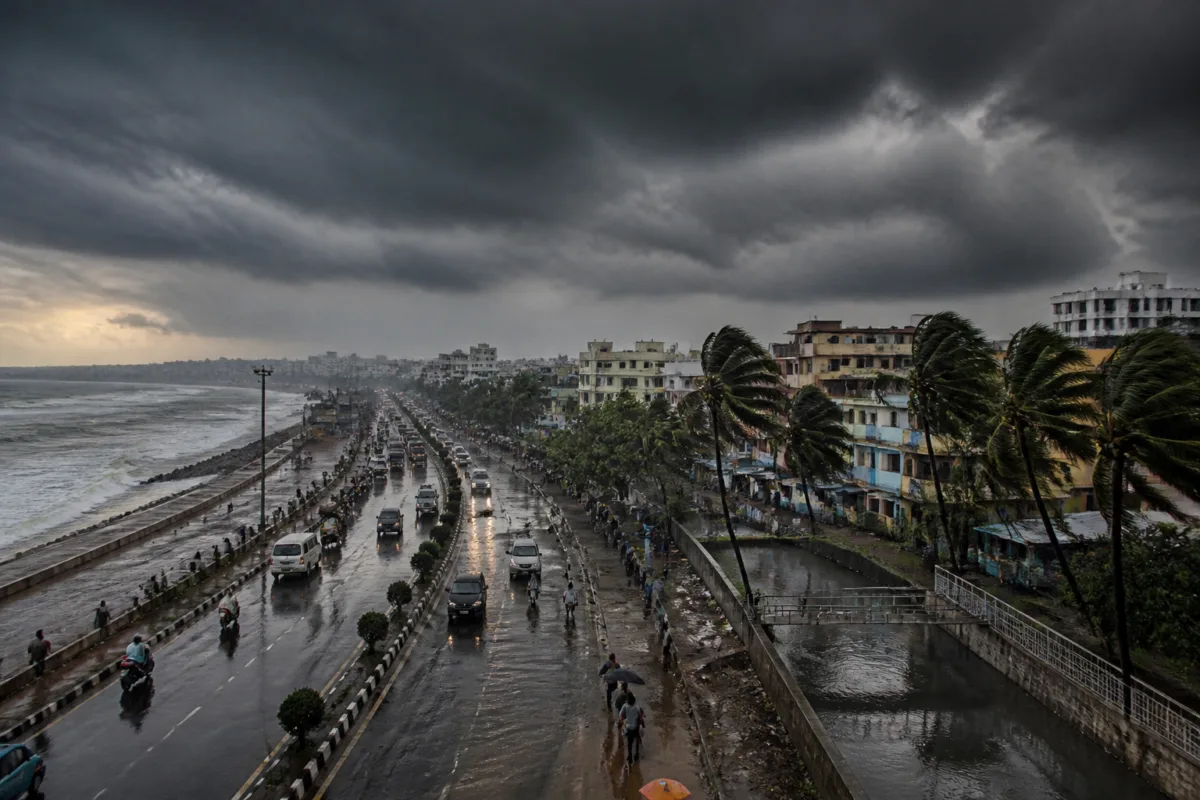
Cyclone Murasu is likely to form over the Bay of Bengal on Sunday and cross the coast near Machilipatnam on November 2, while Chennai and other parts of north coastal Tamil Nadu could experience rain, thunderstorms and lightning, according to the India Meteorological Department forecast reported by Times of India.
The system is expected to bring heavy rain to Andhra Pradesh. In Tamil Nadu, moderate rainfall is forecast over north coastal districts from November 1 to 3, with isolated heavy rain expected in Tiruvallur district. The forecast places Chennai and neighbouring areas within the system’s wider weather influence, although the cyclone is not expected to cross the Tamil Nadu coast based on the information currently available.
V R Durai, director of the Area Cyclone Warning Centre at the Regional Meteorological Centre in Chennai, said the storm’s outer rain bands could extend over north coastal Tamil Nadu. These bands may bring rain and thunderstorms even as the system moves towards the Andhra Pradesh coast.
For Chennai, Sunday’s forecast includes light to moderate rain, with thunderstorms and lightning possible in some areas. The city is expected to see partly cloudy skies, with maximum temperatures of 33-34°C and minimum temperatures of 25-26°C.
The forecast is significant for Chennai’s urban systems because even rainfall associated with a storm passing outside the city can affect roads, low-lying neighbourhoods, traffic movement and routine outdoor activity. The supplied forecast does not specify rainfall totals for Chennai, flooding risks or any civic advisories, and those details will depend on subsequent weather bulletins.
Cyclone Murasu, whose name means a traditional drum, is expected to develop over the Bay of Bengal before its projected landfall near Machilipatnam. The India Meteorological Department’s rainfall outlook for November 1 to 3 will remain the key reference for residents and local authorities as the system approaches the coast.

