


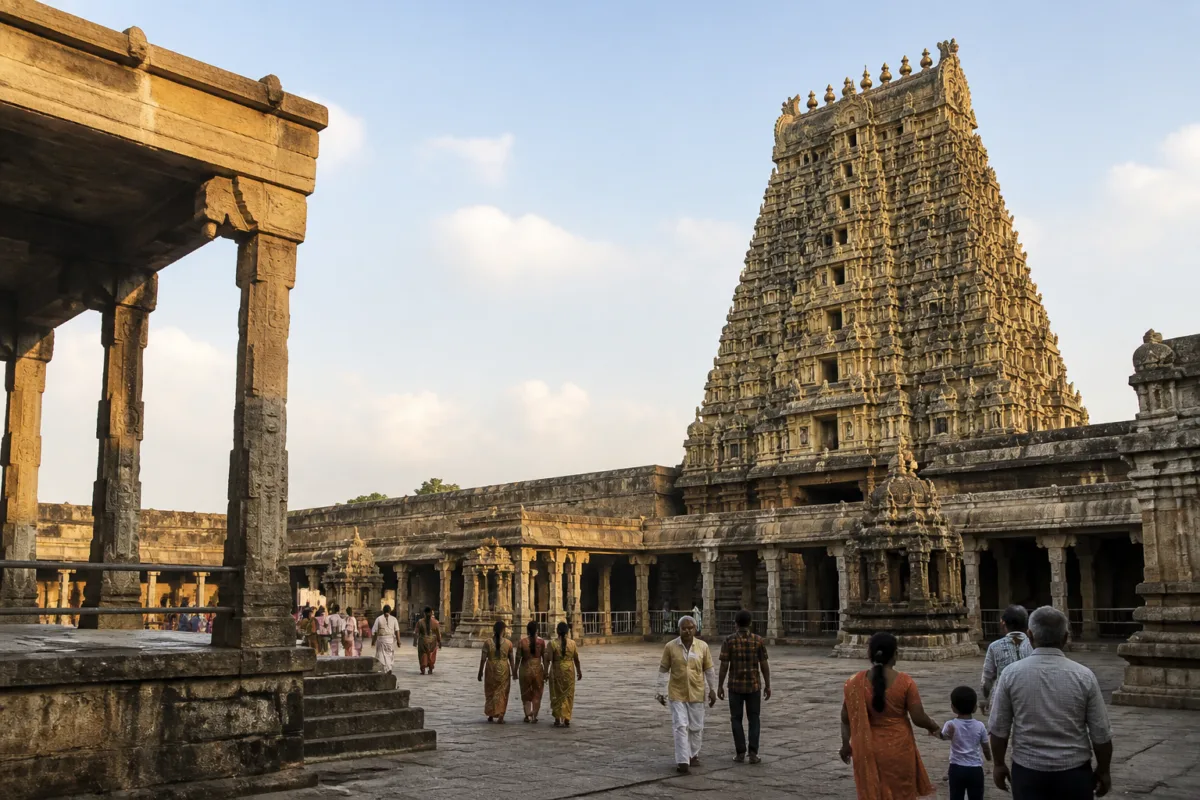
The Madras High Court has constituted an expert board to oversee the administration of Chidambaram’s Thillai Nataraja Temple after recording concerns over damage to its heritage structure, accounting of income and commercial activities on the temple premises.
The division bench of Justice G Jayachandran and Justice E Manoharan said the podhu dikshitars, the temple’s priestly group, had effectively converted parts of the premises into a “food court”. The court cited billboards displaying the menu of the day in connection with donations collected for ‘annadhanam’, along with what it described as non-religious and commercial activities within the temple.
The board will oversee the temple’s administration “till the ill is cured”, according to the court’s observation. It will be chaired by former Madras High Court judge Justice V Bharathidasan, with former judge Justice R Suresh Kumar as co-chairman. Retired IAS officer C Rajendran has been appointed a member. The secretary of the podhu dikshitars and the secretary of the Hindu Religious and Charitable Endowments department will serve as ex-officio members.
The court said the extensive damage to the heritage structure, alleged failure to provide true and proper accounts, collection of donations in the name of ‘annadhanam’ and failure to preserve temple properties warranted judicial intervention. It also recorded that the temple had been ill-maintained under the management of the podhu dikshitars.
The order addresses the division of authority between religious practice and administrative oversight. The court noted that, under a Supreme Court judgment, administration of the temple is vested with the podhu dikshitars. However, it said the group had retained the temple’s entire income for more than 12 years without sharing a true and full account of the income derived from it.
Under the new arrangement, income from temple properties and kattalais, or dedicated funds, must be accounted for separately and submitted to the board of management on the fifth day of every month. The direction places financial reporting at the centre of the court’s interim administrative intervention.
The court also clarified that daily rituals and periodical festivals remain the exclusive prerogative of the podhu dikshitars. These activities must continue without violating established customs and practices, according to the order.
The case therefore separates ritual authority from the financial, property and conservation responsibilities that the court has directed the new board to supervise. The court’s stated objective is to address the temple’s administration while retaining the podhu dikshitars’ role in conducting religious observances.
The next administrative step is for the newly constituted board, which includes former judges, a retired civil servant and representatives of the podhu dikshitars and the HR&CE department, to take over the specified oversight functions and receive the temple’s separate monthly accounts.

