


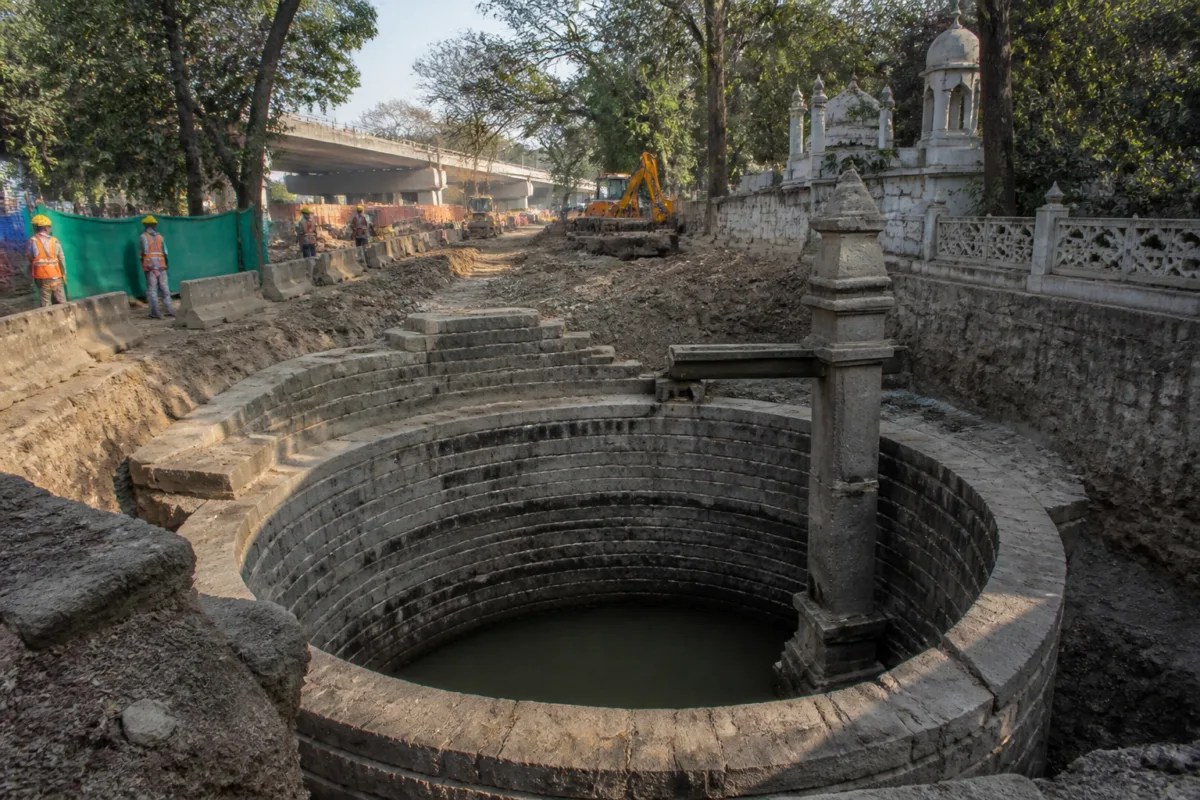
A historic well with active natural springs has been discovered during excavation near the Shahadwal Baba Dargah in Pune’s Yerawada area, where work is under way for a proposed flyover. The discovery has raised concerns that the structure could be filled in as construction progresses.
The well was found during excavation in the Vishrantwadi-Yerawada area. According to a report by Sakal, water is still present in the well and its natural springs remain active. Residents and heritage enthusiasts have questioned whether the structure will be preserved or removed to make way for the transport project.
The issue has significance beyond the well’s historical character. Pune has faced concerns over inadequate rainfall, declining reservoir storage and the expansion of built-up areas. In that context, the reported presence of a functioning natural water source adds a water-conservation dimension to the infrastructure decision.
Researchers from the archaeology department of Deccan College inspected the structure. The report said that three types of stone were identified in different layers of its construction. The uppermost layer appears to be from the British period, while the lowest layer could predate both the British and Peshwa periods, according to archaeologist Dr Sachin Vidyadhar Joshi.
The well also contains evidence of an earlier water-lifting arrangement. A pillar connected to the structure is reported to have supported equipment used to draw water with a mot, a traditional water-lifting mechanism.
Joshi said the well near the Shahadwal Baba Dargah could be older than the Peshwa period. He added that a clearer understanding of its history would require further study of historical references. The reported age of the structure has therefore not been conclusively established.
The immediate question is how the proposed flyover works will account for the discovery. The available report does not specify whether the project design has been altered, whether a formal heritage assessment has been ordered or which authority will decide the well’s future.
For Pune’s rapidly urbanising areas, the case illustrates the challenge of fitting new transport infrastructure around older water and heritage assets. Any decision on the Yerawada well will need to consider both its archaeological value and the fact that its natural springs are reportedly still functioning. Further documentation and an official decision on protection, relocation or construction compatibility have not yet been reported.

