


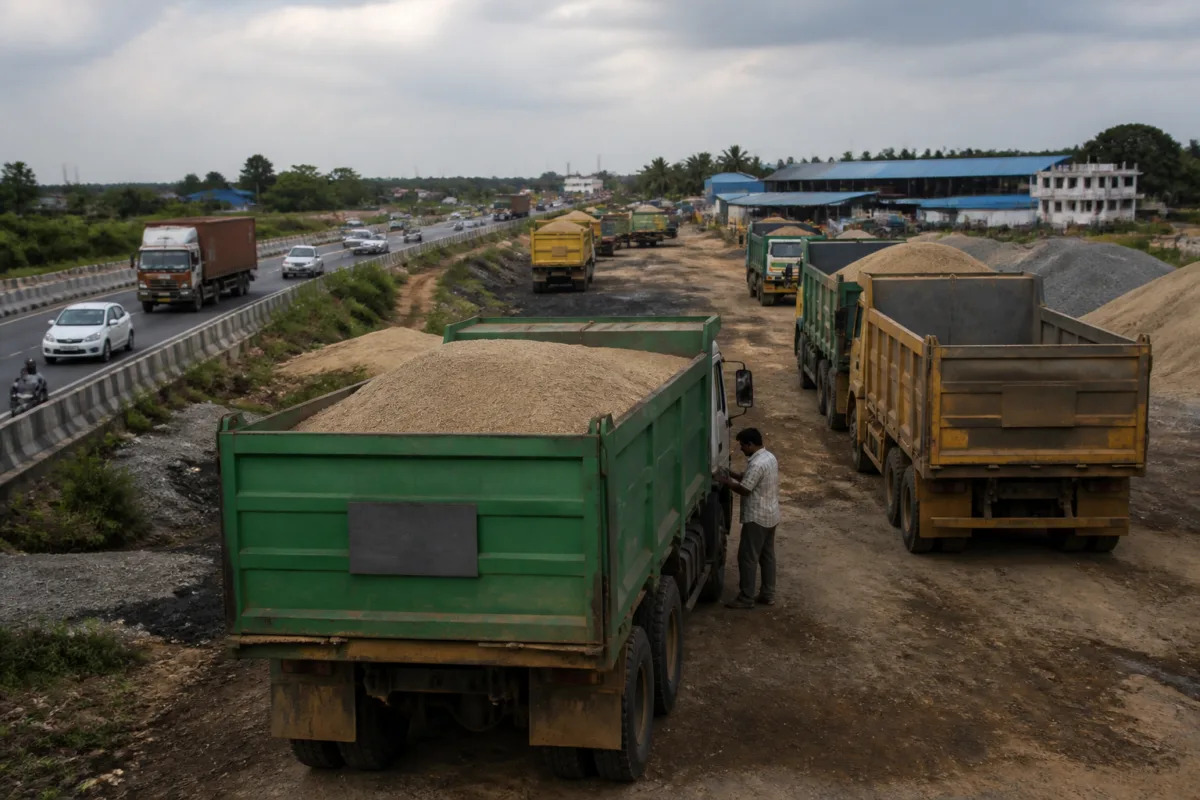
Tamil Nadu sand truck owners have announced a three-day strike from November 1 to 3, raising the possibility of disruption to construction-material transport across the state while demanding tighter action against alleged corruption, illegal mineral movement and selective enforcement of overloading rules.
The Tamil Nadu State Sand Lorry Owners’ Federation said its members would stop overloading their vehicles and refuse to pay monthly bribes to officials during the token strike. The federation said the action was intended to draw the attention of the chief minister and the transport minister to its demands.
The dispute comes as the state continues restrictions on transporting minerals to neighbouring states. Federation president S Yuvaraj said the organisation welcomed the government’s decision to extend a three-month ban on transporting minerals from Tamil Nadu to neighbouring states by another three months. However, he alleged that the restrictions were being violated, with around 300 loads of construction materials transported daily to Karnataka through Hosur from border areas.
The federation’s demands centre on creating a more integrated system for tracking mineral consignments. It has sought an e-way bill system linking the revenue, GST, finance, transport, police, and geology and mining departments. According to the federation, such a system could help authorities detect mineral theft, illegal transportation and tax evasion while reducing the need for police personnel to intercept lorries on roads.
The truck owners have also urged the government to make GPS and vehicle location tracking devices, or VLTDs, mandatory for vehicles carrying minerals. Yuvaraj said truck owners were willing to install the devices and suggested that the geology and mining department should direct that vehicles without GPS should not be loaded from November 1.
The proposed tracking mechanism would shift enforcement from roadside interception towards documented movement of vehicles and consignments. For construction supply chains, that distinction is significant because sand, aggregates and other minerals move between quarries, crushers, loading points and project sites, often across multiple administrative jurisdictions. The federation’s demand, however, would require coordination between departments that currently exercise separate responsibilities over taxation, transport, policing and mineral regulation.
The federation also alleged that more than 3,000 crushers in Tamil Nadu were operating without proper permits and accused the geology and mining department of failing to act against violations. These claims were made by the federation and were not independently established in the report.
Truck owners further alleged that quarry operators force them to accept overloaded consignments and that enforcement agencies selectively book operators who refuse to pay monthly bribes. The federation said cases in overloading violations should be registered against both consignors and consignees, but alleged that this provision was not being implemented.
It called on the government to apply overloading rules uniformly to vehicle owners and the parties loading the materials. The strike is scheduled to run from November 1 to 3, with the federation’s demands focused on digital tracking, accountability across the supply chain and consistent enforcement of mineral-transport regulations.

