


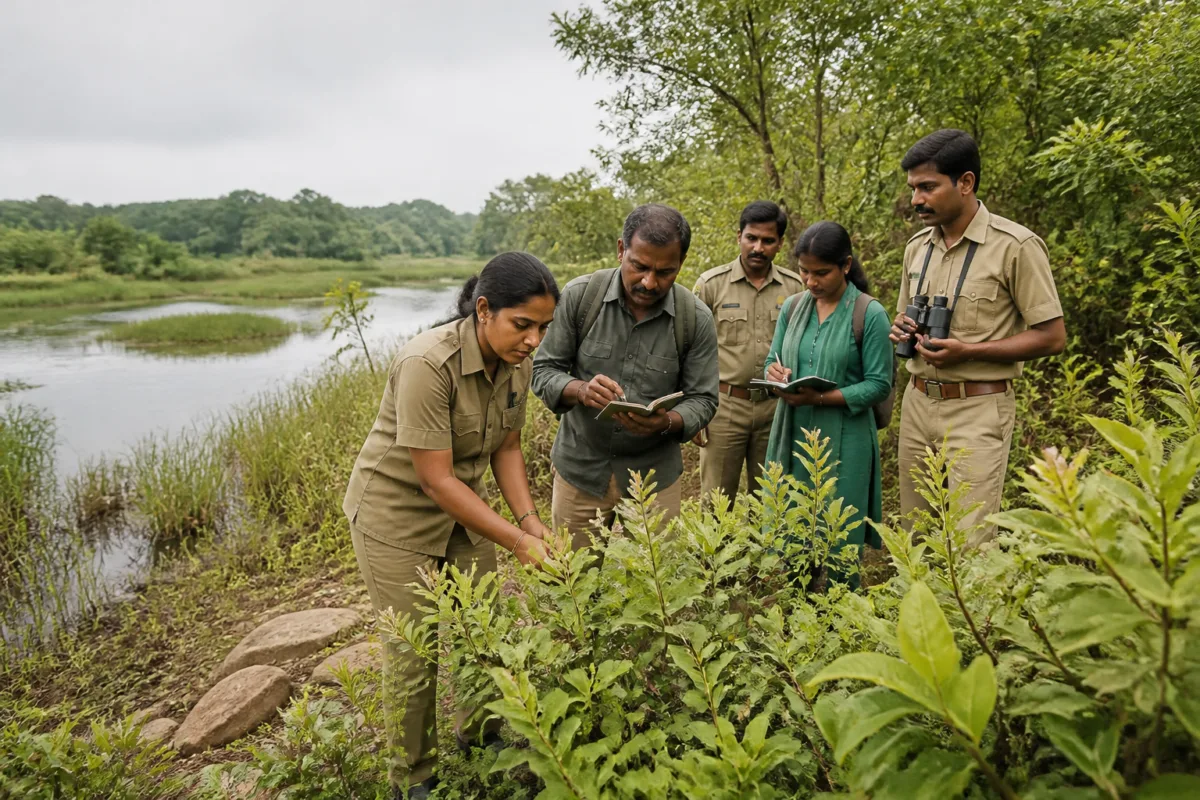
Tamil Nadu has begun preparing a targeted action plan for conserving its endangered and critically endangered species after a two-day workshop in Chennai brought together forest officials, researchers and scientific institutions to identify species-specific recovery measures.
The workshop, titled ‘Species on the Brink – Towards a Meaningful Strategy and Action Plan for Conservation’, was conducted by the Tamil Nadu Biodiversity Board (TNBB) on the occasion of World Sustainability Day. Discussions focused on the threats facing species found across the State, possible mitigation measures and the institutional steps required to move from broad conservation objectives to targeted action.
Forest Minister and TNBB chairperson R.V. Ranjith Kumar inaugurated the workshop and released a Handbook on the Biological Diversity Act for use by Biodiversity Management Committees. He also released a film on the Act in Tamil to create public awareness about biodiversity-related legislation and local conservation responsibilities.
Mita Banerjee, Principal Chief Conservator of Forests and Member Secretary of the TNBB, said researchers and experts from various scientific and research institutions participated in the workshop. Participants worked in separate groups covering flowering plants; other plant groups such as ferns, mosses, algae, gymnosperms and bryophytes; invertebrates including butterflies, odonates and beetles; reptiles and amphibians; freshwater fish; and marine biodiversity.
The groups developed a common template for preparing a further action plan and submitted suggestions for species-specific recovery plans, mission-mode conservation efforts and other strategies for protecting endangered and critically endangered flora and fauna. The process is intended to organise conservation priorities across a wide range of species and ecosystems rather than treat biodiversity protection as a single, uniform programme.
Among the measures suggested at the workshop were the creation of a dedicated threatened plant recovery fund, the establishment of ex situ and in situ conservation centres, protection of specific habitats and micro-niches, and monitoring of amphibian breeding sites. The participants also discussed sustainable use of tradable species.
The proposed measures place habitat protection and long-term monitoring alongside species recovery. Protecting micro-niches, for example, recognises that some species depend on highly specific local environmental conditions, while monitoring breeding sites can help track the health of amphibian populations. The workshop’s separate focus on marine biodiversity, freshwater fish and terrestrial species also reflects the range of ecological systems covered by the State’s biodiversity governance.
The event was attended by PCCF and Head of Forest Force A. Udhayan, Chief Wildlife Warden Rakesh Kumar Dogra, Additional PCCF S. Ramasurbamanian and other senior officials. The TNBB is expected to use the workshop template and group recommendations as the basis for developing the next stage of its action plan.

