


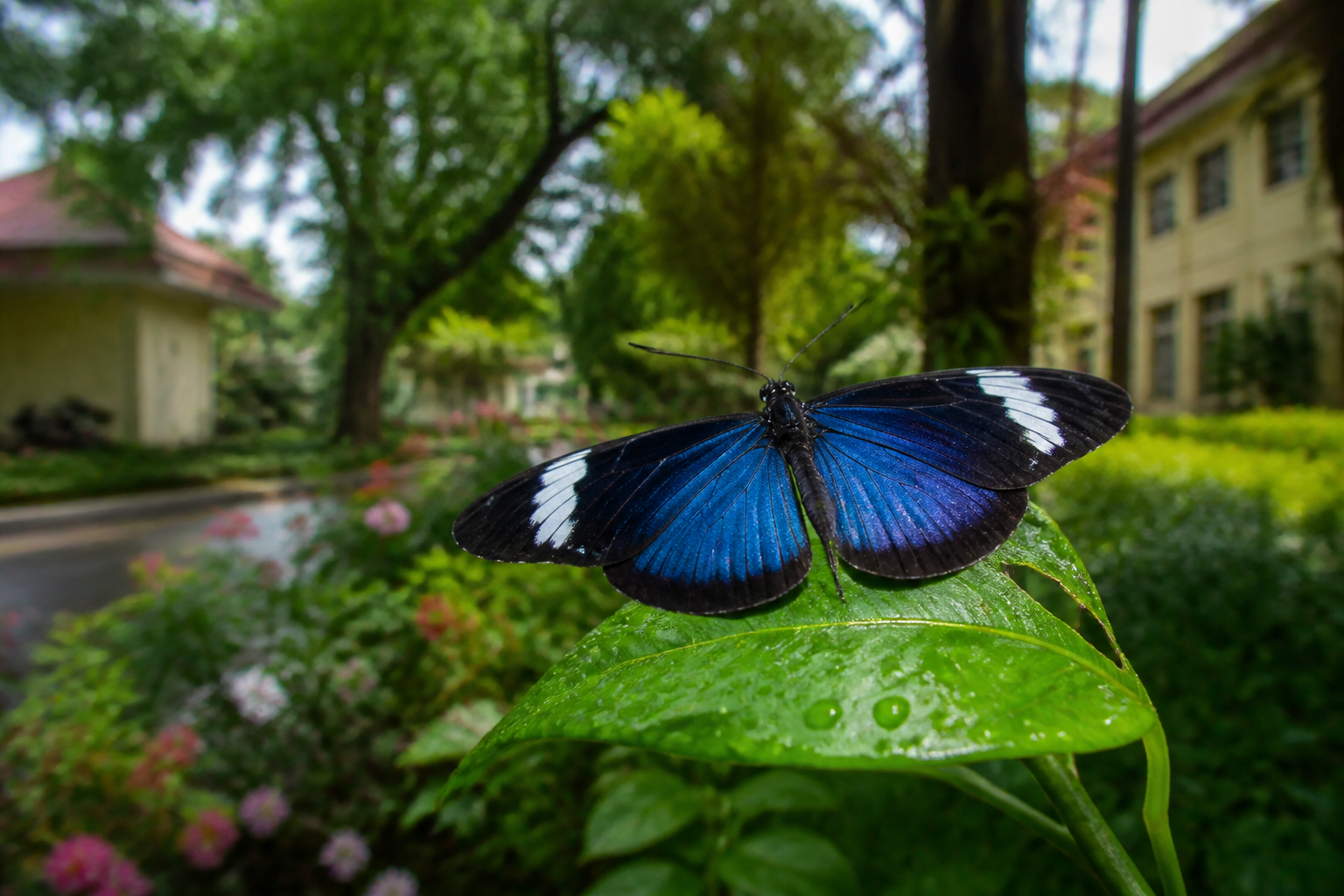
A Mangalore University butterfly survey has recorded 71 species across five major families and identified the Indigo Flash on the campus for the first time, highlighting the ecological value of the institution’s extensive green surroundings.
The five-day butterfly walk was organised recently by the university’s Department of Applied Zoology as part of Big Butterfly Month 2026, a nationwide initiative focused on documenting and understanding butterfly diversity. The survey was conducted under the campus biodiversity register and led by butterfly researcher and Applied Zoology professor Deepak Naik.
More than 25 participants, including students and alumni from different university departments and information technology professionals, took part in the programme. The survey team recorded species belonging to five major butterfly families across the university grounds.
The Indigo Flash, scientifically known as Rapala varuna, was documented on the campus for the first time during the survey. According to experts cited by the university programme, the butterfly has a false-head structure at the rear of its body that can mislead predators.
Common Crow and Lineblue butterflies were among the prominent species observed in the campus habitats, Naik said. The survey also recorded Western Ghats species protected under the Wildlife Protection Act, including the Malabar Banded Peacock, scientifically known as Papilio buddha; Sahyadri Birdwing, or Troides minos; and Tamil Yeoman, or Cirrochroa thais.
The team also reported the presence of the Redspot Duke, or Euthalia evelina, described in the report as a rare species. The findings provide a snapshot of the range of butterfly habitats supported by the university’s green campus, although the report does not specify the total area surveyed, the duration of the biodiversity register or whether the findings will be repeated seasonally.
“Butterflies are excellent biological indicators. Their presence in large numbers highlights the health of the ecosystem on our campus,” Naik said. The observation connects the survey to a wider environmental function: butterfly populations can reflect the availability of host plants, flowering vegetation and relatively undisturbed habitat, although the supplied report does not provide a quantitative assessment of these conditions.
The programme was supported by the Department of Applied Zoology. M. S. Mustaq, head of the department, provided guidance and encouragement for the conservation initiative, according to the report. The university has not announced further survey dates or a separate campus biodiversity management plan in the supplied material.
