


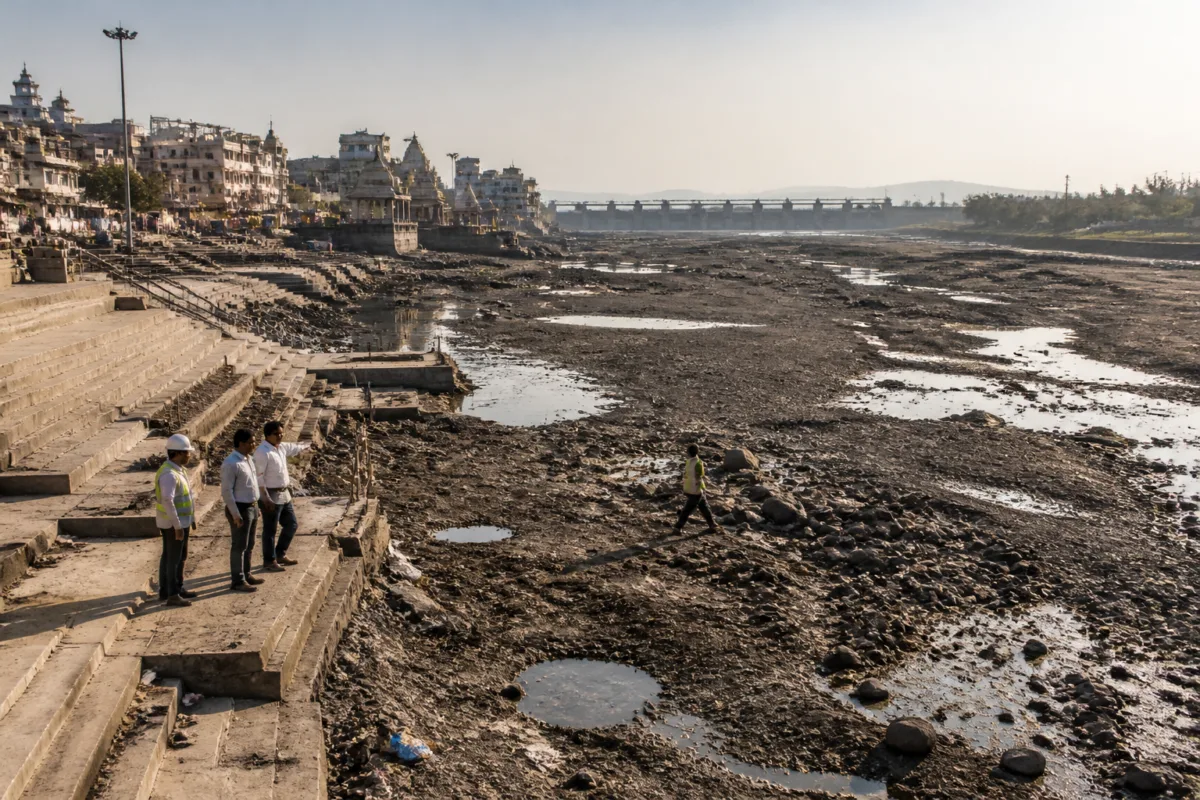
Nashik’s district administration has reserved 6.9 TMC of water for municipal supply but rejected the Nashik Municipal Corporation’s additional demand of 8 TMC, citing drought conditions and competing needs from agriculture and industry. The administration has also ruled out releasing water from the Gangapur Dam complex for the Dhwajarohan ceremony of the Simhastha Kumbh Mela scheduled for October 31.
The decisions were taken at a district-level water reservation committee meeting chaired by guardian minister Girish Mahajan. The ceremony is expected to be performed by President Droupadi Murmu. Mahajan said water would be released only for the Nashik thermal power station, adding that the government does not permit the release of water for religious purposes.
The committee reserved 6,973 million cubic feet, or 6.9 TMC, for the NMC. The allocation is in line with guidelines of the Maharashtra Water Resources Regulatory Authority. The administration rejected the corporation’s request for an additional allocation, while instructing it to take measures to curb water losses.
“Drinking water remains the top priority,” Mahajan said, but added that the requirements of the agriculture and industrial sectors also had to be addressed. He said water rotation from the dams would continue according to the schedule decided by the committee.
The only planned release from Gangapur Dam is for industrial use at the thermal power plant. According to Mahajan, the released water will pass through Ram Kund in Nashik city before moving towards Nashik Road and Eklahara village, where the Nashik thermal power plant is located. The river stretch from Ahilyabai Holkar Bridge to Nashik Road currently has no water, while construction work on ghats is under way in the area.
The reservation for the Simhastha Kumbh Mela includes 635 million cubic feet of water for drinking purposes at Sadhugram. This allocation is separate from the water being reserved for the NMC’s regular municipal supply.
The administration’s decision places the corporation under pressure to manage the available allocation through the coming summer. Mahajan asked the NMC to consider reducing drinking-water supply by one day a week and said the corporation should be prepared for difficult decisions during peak summer.
“We have suggested to the NMC to cut the drinking water supply by one day a week,” Mahajan said. He added that water saved during the current period would help the corporation later. The next steps will depend on the NMC’s water-management measures and the committee’s planned dam-water rotation.

