


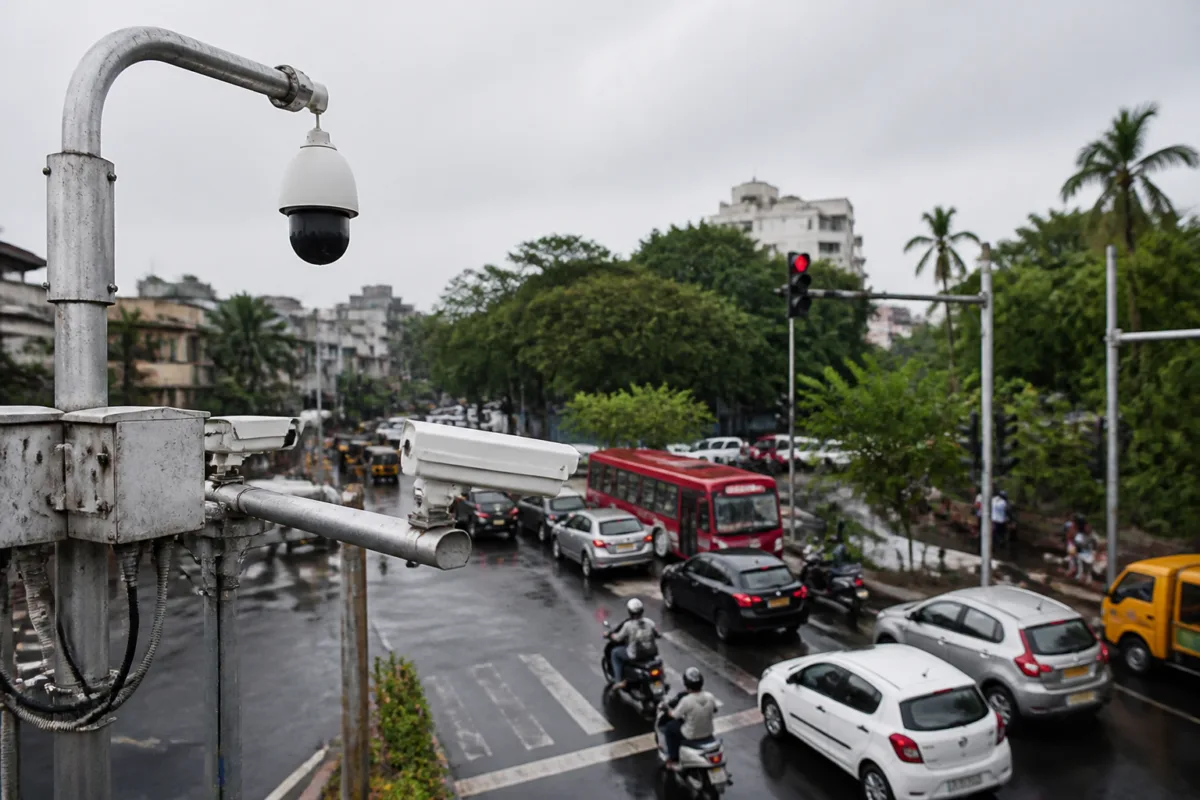
Thiruvananthapuram’s Rs 54-crore smart traffic system remains in limbo after city police refused to take over the infrastructure, citing faulty signals, non-functional cameras and an unresolved funding arrangement for long-term maintenance.
The adaptive traffic control system, installed at 57 junctions under the Smart City project, is intended to automatically adjust signal timings according to traffic density. City police commissioner Arul R B Krishna said the system was not functioning properly and that its malfunctions were confusing motorists and contributing to congestion.
Police personnel are continuing to regulate traffic despite the technical problems, but the commissioner said managing traffic manually was different from taking responsibility for the infrastructure. The police would not accept the system until the signals and cameras were working properly and a clear operation and maintenance arrangement was established.
The police have identified deficiencies in 234 automatic number plate recognition cameras and 46 red-light violation detection cameras. ANPR cameras are used to read vehicle registration numbers, while RLVD cameras detect vehicles crossing the stop line after a signal turns red. According to the commissioner, a police study detailing the deficiencies has been shared with Smart City Thiruvananthapuram Ltd (SCTL).
Around 40 cameras linked to the city police commissionerate have also stopped functioning because internet charges were not paid, the commissioner said. The breakdowns affect not only traffic monitoring but also the enforcement systems intended to support digital penalties and improve compliance at junctions.
The annual maintenance contract for the signals and cameras is with SCTL and is understood to remain valid until 2029. The police have raised concerns about who will fund maintenance after that period if the infrastructure is transferred to them. This leaves the proposed handover dependent not only on technical repairs but also on a clearly defined financial and administrative framework.
A further difficulty involves a self-sustaining model proposed under the Smart City Mission. Under the proposal, revenue from e-challans would support the system’s operation and maintenance. However, the commissioner said challan collections go to the state treasury and are not directly controlled by the police. Without a government order permitting the revenue to be used for this purpose, the police cannot rely on e-challan collections to operate and maintain the system.
An SCTL source said work was under way to address the concerns raised by the police. The non-functional signal at Petta had been restored, while the remaining issues were expected to be resolved before December 2026. The source also said a funding issue involving the contractor was expected to be settled and that SCTL had taken note of the police’s concerns during a recent meeting.
The project covers traffic signals at 57 junctions and approximately 1,047 cameras installed across 110 junctions. Until the technical deficiencies are resolved and responsibility for maintenance funding is clarified, police personnel will continue to regulate traffic manually.

