


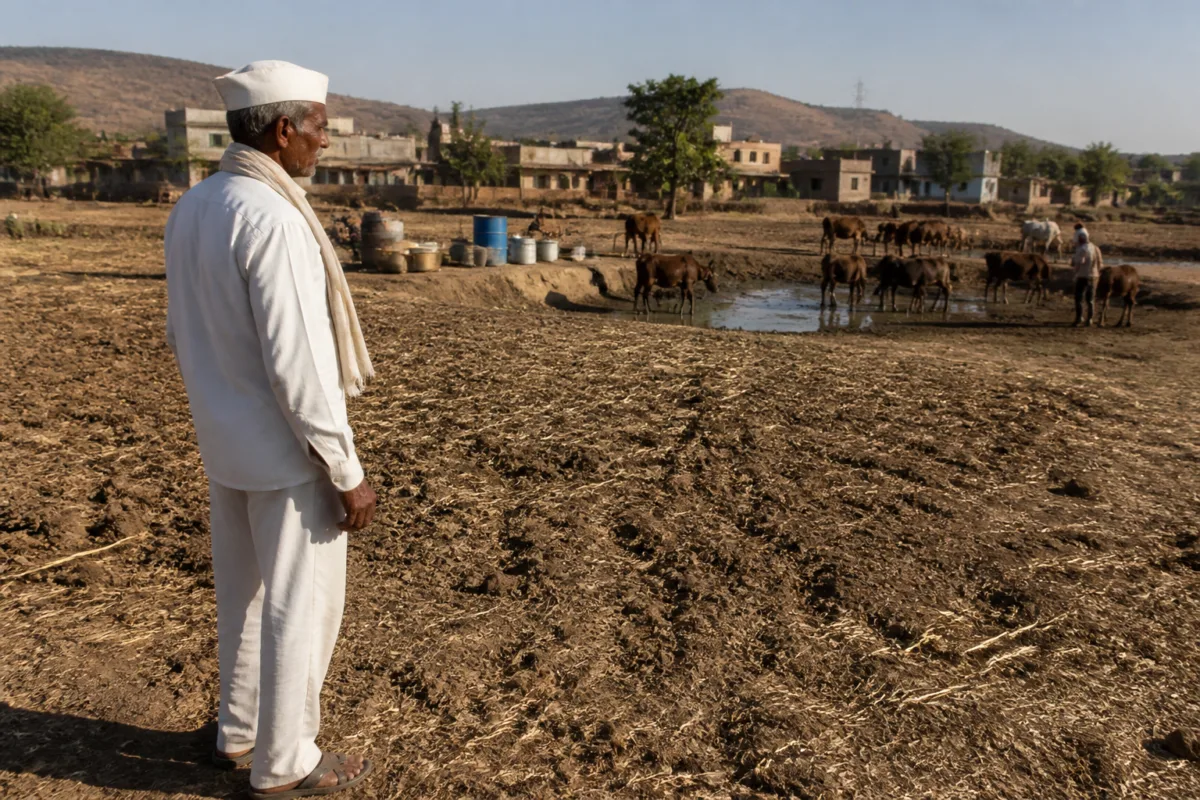
Farmers in rural parts of eastern Haveli taluka are facing a drought-like situation, with shortages of water for drinking and agriculture as well as fodder for livestock, according to a representation submitted to Pune District Collector Jitendra Dudi.
Haveli taluka Shiv Sena office-bearers have demanded that the rural areas of eastern Haveli be officially declared drought-affected and that farmers receive immediate government assistance. The demand was made against the backdrop of worsening difficulties related to farming, drinking water and livestock management in the region.
The representatives asked the district administration to conduct physical inspections of the affected areas and prepare damage assessment records, known as panchnamas. They also sought government assistance for eligible farmers after assessing crop losses, water shortages and the availability of fodder.
According to information provided by the Shiv Sena office-bearers, Collector Dudi assured them that the concerned departments would inspect the situation and prepare panchnamas. Further action on assistance would be taken based on the findings of that assessment, they said.
The representation highlighted three linked problems facing rural communities in eastern Haveli: damage to agriculture, inadequate fodder for animals and shortages of drinking water. The group said the administration should take urgent measures after considering the effect of these problems on farmers and livestock.
The report does not indicate that the administration has already declared eastern Haveli drought-affected. The current demand is for such a declaration to be considered after the affected areas are inspected and the damage is documented. The proposed assessment is therefore expected to determine the extent of the reported crisis and the eligibility of farmers for relief.
Those present during the submission included Haveli taluka chief Vipul Shitole, Pune district organiser Nilesh Kalbhor, District Planning Committee member Alankar Kanchan, advocate Ganesh Maske, Sandeep Kamble and Deepak Lonare. The next stated administrative step is an inspection by the relevant departments, followed by preparation of panchnamas and action on assistance based on the assessment.

