


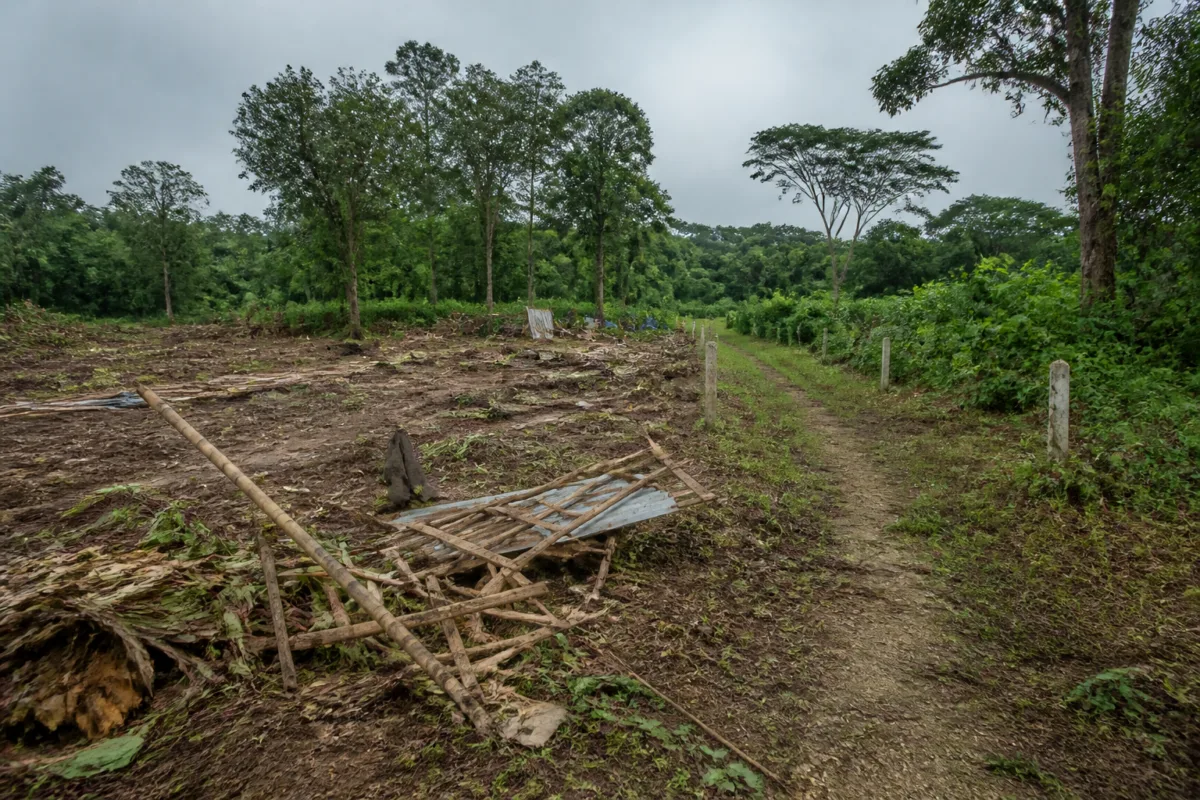
The Lutumari eviction in Assam has become a dispute not only over the removal of 563 families from notified forest land, but also over how the state explains and implements decisions that sit at the intersection of environmental protection, court directions and human displacement. Assam environment and forest minister Jayanta Mallabaruah has described the October 17 and 18 operation as a lawful effort to reclaim 314 hectares of Lutumari Reserve Forest in Nagaon district. Bangladesh opposition leader Shafiqur Rahman, however, criticised the drive as an attack on the rights of Muslim minorities. The minister rejected that characterisation as incomplete and misleading.
The central institutional question is therefore not simply whether an eviction took place. That fact is not disputed in the supplied report. The more consequential question is how the state defines the land, establishes the legal basis for removal, communicates that basis to residents and manages the consequences for families who lose their homes. Mallabaruah’s account presents the operation as an enforcement action concerning notified forest land rather than a community-targeted exercise. The report does not include an independent account from the displaced families or details of any rehabilitation, compensation or resettlement arrangement.
That distinction matters because forest-land enforcement operates through multiple layers of authority. The state forest department is responsible for protecting notified forest areas, while courts can determine how legal proceedings and evictions should be conducted. Residents affected by such action may challenge the process through the judiciary. In the account provided by the minister, all three parts of that institutional chain were involved: the land was notified forest land, the Supreme Court had issued directions on eviction procedures, and petitions filed by those affected were disposed of on September 2.
Mallabaruah also referred to a Supreme Court order dated February 10. The supplied report does not reproduce the order or explain its exact directions. What it records is the minister’s assertion that the operation followed the court’s instructions and that notices were served in advance. That makes the minister’s statement important evidence of the government’s stated legal position, but it does not by itself provide the full documentary record needed to assess the court’s reasoning, the status of individual claims or whether every procedural requirement was met in each case.
The timing described by the minister offers another insight into the state’s stated approach. He said officials waited for the rainy and flood season to end, citing the difficulties that displacement could cause for families. The operation was then carried out over two days, on October 17 and 18. According to his account, occupants were given time to vacate their homes and remove their belongings, and the action proceeded peacefully without reported resistance or the use of force.
These details show how the government is seeking to frame the drive: not as an emergency clearance, but as a scheduled enforcement operation preceded by notice and a waiting period. They also reveal the limits of that framing. A notice period can establish a procedural step, but the supplied material does not say how much time residents were given, whether all households received notices in the same way, what options were available to them or where they went after leaving. Those are not minor details in an eviction involving 563 families; they determine how the legal action was experienced on the ground.
The environmental justification is equally central to the government’s explanation. Mallabaruah said protecting notified forest land was both a legal responsibility and an ecological necessity. He further said the reclaimed area would be restored with indigenous forest species to regenerate wildlife habitats, particularly for elephants, and help reduce human-elephant conflict.
This links the Lutumari operation to a broader challenge in forest administration: protected and notified landscapes are not only ecological zones on a map. They are also spaces where settlement, cultivation, mobility and livelihoods may have developed over time. Once the state decides to restore such land, enforcement becomes the visible part of a longer administrative process involving land records, forest notifications, boundary identification, notices, hearings, court proceedings and restoration plans. The report confirms the government’s position on the forest status of the land, but it does not provide the underlying notification, maps or land records.
The proposed restoration also changes the meaning of the operation beyond immediate clearance. According to the minister, the objective is not merely to remove structures but to return the land to forest cover using indigenous species. That creates a second phase of governance. The success of the stated policy will depend on what happens after the eviction: whether restoration begins, how it is monitored and whether the area remains protected. The supplied report provides no implementation schedule, planting target or monitoring mechanism, so those aspects remain unestablished.
The minister’s reference to elephants places the dispute within Assam’s human-wildlife conflict landscape, but the supplied material does not quantify elephant movement, habitat loss or previous conflict incidents at Lutumari. It is therefore possible to identify the stated ecological rationale without presenting the claimed reduction in human-elephant conflict as an outcome already demonstrated by the operation. At this stage, it is a government objective rather than a measured result in the evidence provided.
The political controversy arose after Shafiqur Rahman, the leader of the opposition in the Bangladesh Parliament and Ameer-e-Jamaat of Bangladesh Jamaat-e-Islami, criticised the eviction in a post on X. He said the Indian government was failing to protect Muslim minority rights and described such actions as contrary to humanity, the rule of law and the values of a civilised society. Mallabaruah responded that the remarks presented an incomplete and misleading picture and said the drive was not directed against any religion or community.
The exchange demonstrates how a local land-enforcement action can acquire a wider political and identity-based meaning. The state’s response attempts to move the issue back to the legal status of the land and the duty to protect forests. Rahman’s intervention places the emphasis on minority rights and the treatment of residents. Neither framing, by itself, answers the full administrative question. A forest-protection order may apply without regard to religion, but the public-interest assessment also requires clarity about who was affected, what process they received and what safeguards were available to them.
That is why the missing information is important. The supplied report does not identify the religious composition of the 563 families, describe the basis on which individual households occupied the land, state whether any households held competing documents or claims, or explain whether relocation assistance was offered. It also does not report statements from residents, local representatives, courts or independent environmental experts. These omissions do not disprove the minister’s account, but they limit what can be concluded about the operation’s social and legal consequences.
The episode also highlights the difference between court-backed enforcement and complete public accountability. Mallabaruah said petitions filed by affected persons were disposed of on September 2 and that the eviction followed Supreme Court directions. For the public to understand the process fully, the relevant orders and administrative notices would need to show what questions the courts considered, what relief was sought, how the land was classified and what instructions governed the removal. Without those documents, the available account establishes the government’s explanation but not the entire evidentiary record.
For Assam’s forest administration, the next test is whether the promised restoration becomes as visible and documented as the eviction. The minister has said indigenous forest species will be planted and wildlife habitat regenerated, especially for elephants. For the displaced families, the unresolved issue is what support, if any, follows the removal. The supplied report does not provide that information. The Lutumari case therefore remains a measure of more than enforcement: it will also test whether forest protection is accompanied by transparent records, accessible legal reasoning and a clearly reported post-eviction plan.

