


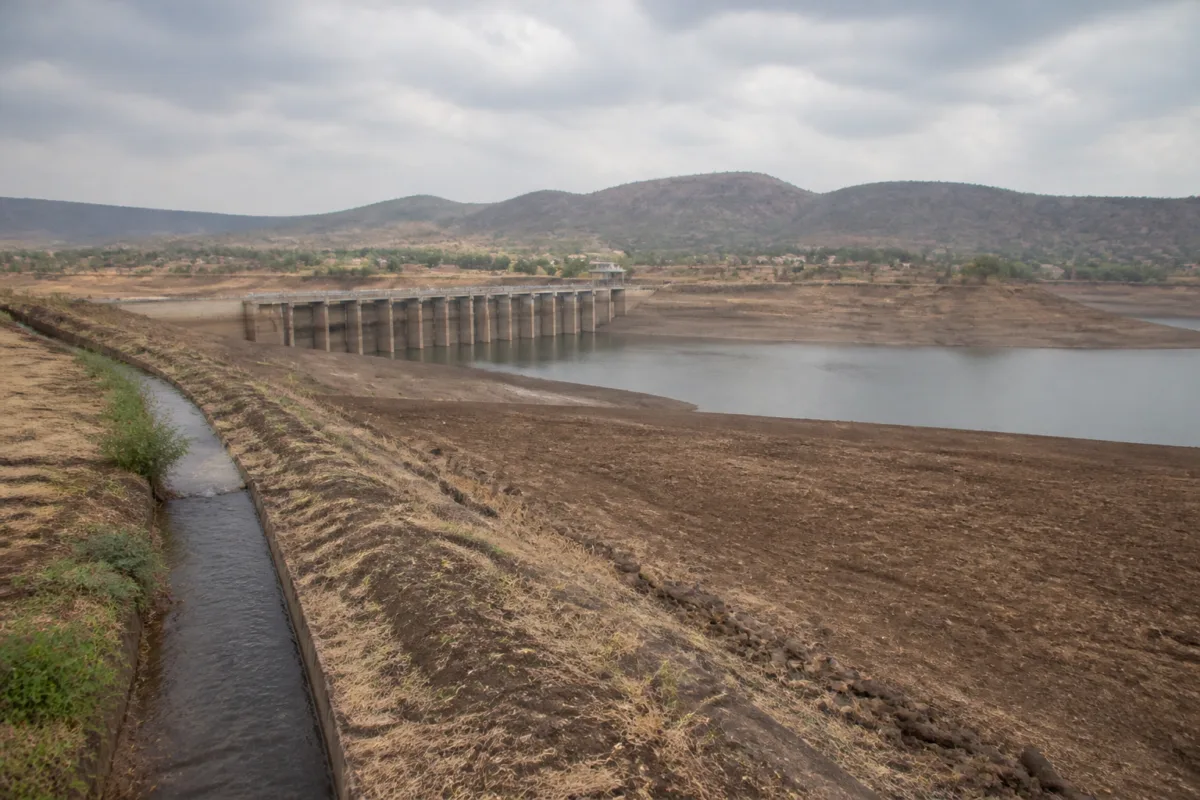
The Pune water crisis has intensified across parts of Pune and Ahilyanagar districts, with streams, canals, bunds and smaller water bodies beginning to dry up and rabi crops facing damage after a prolonged break in rainfall. Former Maharashtra Assembly Speaker and MLA Dilip Walse Patil has urged the state government to release water from the Kukadi, Hutatma Babu Genu-Dimbhe and Chasakaman projects.
Walse Patil made the demand in a letter to Water Resources Minister Radhakrishna Vikhe-Patil, according to a report by Lokmat – Pune. He has also discussed the situation with the minister, seeking an urgent review of the water available in the three projects and a decision on releasing water rotations for agriculture and rural drinking-water needs.
The demand comes after rainfall weakened following July, disrupting the planning of both kharif and rabi cultivation. Crops including paddy and soybean were reportedly affected by the break in rainfall during the kharif season. With soil moisture now declining, rabi crops that were waiting for further rainfall have started to dry up in several areas.
The affected areas include the eastern parts of Pune district and parts of Ahilyanagar, where farming depends substantially on rainfall as well as scheduled releases from reservoirs. The drying of local streams, drainage channels and small bunds has made it harder for farmers to access water for irrigation. Farmers are concerned that a delay in receiving water could increase losses to standing crops.
The issue also extends beyond agriculture. The report says rural drinking-water requirements could become more serious in the coming period if available water stocks are not planned carefully. The request for releases therefore combines an immediate irrigation demand with the need to protect drinking-water supplies in villages before shortages become acute.
Walse Patil has asked the Water Resources Department to assess the available storage in the Kukadi, Dimbhe and Chasakaman projects and release water according to the needs of the affected areas. The timing and scale of any release would need to be determined through the department’s assessment of water availability and competing demands.
The pressure on the reservoirs reflects the dependence of the region’s rural economy on coordinated water management. If standing rabi crops are damaged, the impact would extend to farm incomes and related rural economic activity, the report said. Farmers are now awaiting a decision on the requested water rotation as the dry spell continues to affect cultivation and drinking-water planning.

