


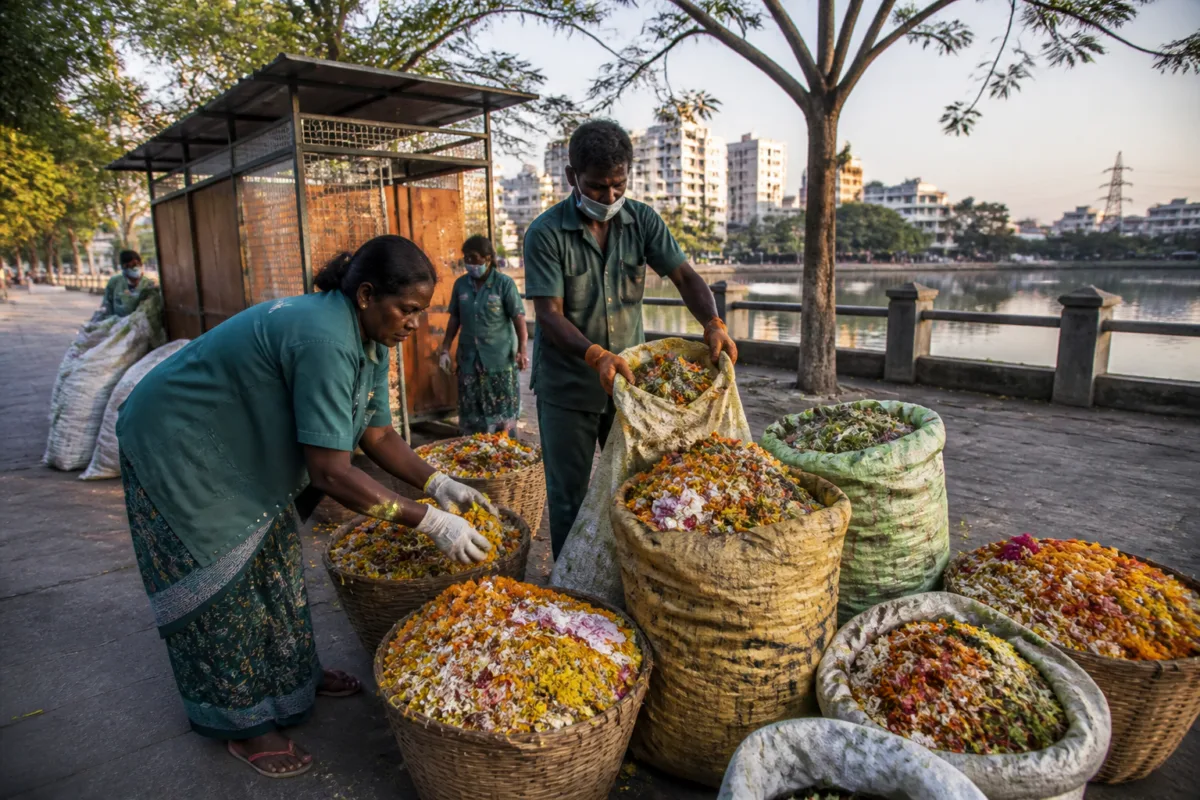
Malkajgiri Municipal Corporation has processed nearly 7,000 metric tonnes of floral waste generated during Ganesh immersion events and Bathukamma celebrations into incense and dhoop sticks, offering a municipal recycling model for festival waste in Hyderabad.
MMC Additional Commissioner (Sanitation) Raghu Prasad said more than 6,400 metric tonnes of the waste came from Ganesh immersion events, while nearly 400 metric tonnes were collected during Bathukamma celebrations. The floral waste was collected separately rather than being mixed with regular municipal garbage.
The corporation worked with Pakka Organics to establish dedicated collection kiosks at major immersion points, including Safilguda Lake, according to MMC Commissioner Vinay Krishna Reddy. The kiosks collected flowers used during religious rituals as well as floral waste brought along with Ganesh idols.
The separate collection system allowed the corporation and its partner to direct the material into processing instead of sending it into the regular waste stream. Pakka Organics dried the flowers and converted them into powder, which was then blended with herbs, natural resins, wood powders and plant-based binders to manufacture incense and dhoop sticks, Reddy said.
The quantities reported by the civic body show the scale of waste generated during two major festival periods. Ganesh immersion-related collections accounted for the overwhelming share, while Bathukamma collections contributed nearly 400 metric tonnes. The municipal operation therefore depended on collection points located where festival-related waste was concentrated.
For the civic body, the initiative links festival sanitation with material recovery. The flowers were gathered at designated kiosks and processed into organic products, rather than being handled as mixed waste after collection. Reddy said the scientific collection and repurposing of floral waste supported environmental protection and reduced pressure on municipal waste-management systems.
The corporation’s reported next step is the continuation of separate collection and recycling arrangements for floral waste generated during major religious events. The available details do not specify the number of kiosks, the quantity of incense and dhoop sticks produced, or the operational cost of the programme.

