


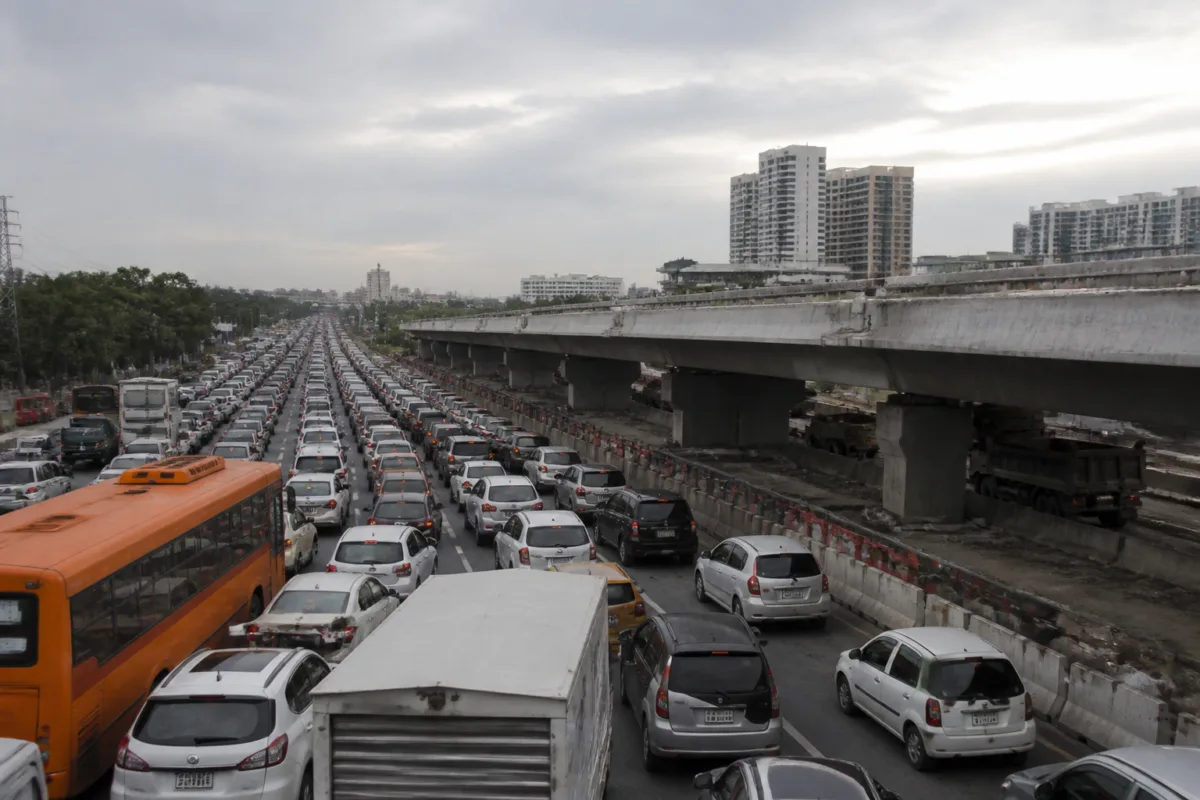
The RTR flyover in south-west Delhi is expected to reopen by Monday after repairs to cracks on one of its carriageways, but the closure triggered a traffic queue of nearly five kilometres on Friday and disrupted journeys between Gurugram, the airport and south Delhi.
The affected carriageway was closed as a precaution after cracks were found at two locations. The Public Works Department has completed the repair work, but the road surface is being allowed to dry before traffic is permitted to use the flyover again. A final decision will be taken after safety checks, according to the report by Live Hindustan – NCR.
The closure created severe congestion on NH-48, with vehicles backed up from near APS Colony towards Vasant Vihar. Commuters were reportedly stuck for more than two hours. The disruption particularly affected vehicles travelling from Gurugram into Delhi and passengers heading from Indira Gandhi International Airport towards Vasant Vihar, RK Puram, Munirka and other parts of south Delhi.
The impact extended beyond the immediate flyover approach. Traffic was also reported on the Dhaula Kuan route, the Northern Access Road, the Mehrauli-Gurugram Road, the Mehrauli-Mahipalpur Road, the Dwarka Expressway and parts of Sardar Patel Marg. As vehicles were diverted to alternative routes, congestion spread across several links connecting the airport, Gurgaon border and southern parts of the capital.
The incident also exposed the operational effect of unclear traffic information during a major road closure. Vehicles travelling from Delhi towards Gurugram through the Dwarka Expressway reportedly slowed before entering a tunnel after digital display boards showed information indicating that the tunnel was closed. The report said the message led to confusion and a temporary queue near the tunnel entrance.
A commuter identified as Pawan Kumar attributed the difficulty to negligence by National Highways Authority of India staff. The report carries this as a commuter’s allegation; it does not include a response from the NHAI. The available information also does not establish whether the display-board message was incorrect, outdated or intended to refer to another traffic restriction.
For people using the corridor, the disruption has had both time and cost consequences. Longer journeys affected airport-bound passengers, office commuters and vehicles travelling between Gurugram and south Delhi. Cab passengers were also reported to have paid additional fares because trips took longer, while the concentration of vehicles on alternative roads increased pressure on already busy routes.
The episode illustrates how the temporary closure of a single grade-separated link can affect a much wider urban network. The RTR flyover connects important movement corridors rather than serving only local traffic, so a safety-related closure quickly transferred demand to roads serving the airport, Dhaula Kuan, Vasant Vihar and the Gurugram route. In this case, the repair timeline and the quality of real-time traffic communication became as important to commuters as the physical roadwork itself.
The carriageway is expected to be considered for reopening by Monday, subject to the repaired surface drying and the authorities confirming that it is safe for traffic. Until then, commuters using NH-48, the airport approaches and routes towards south Delhi may face continuing delays.

