


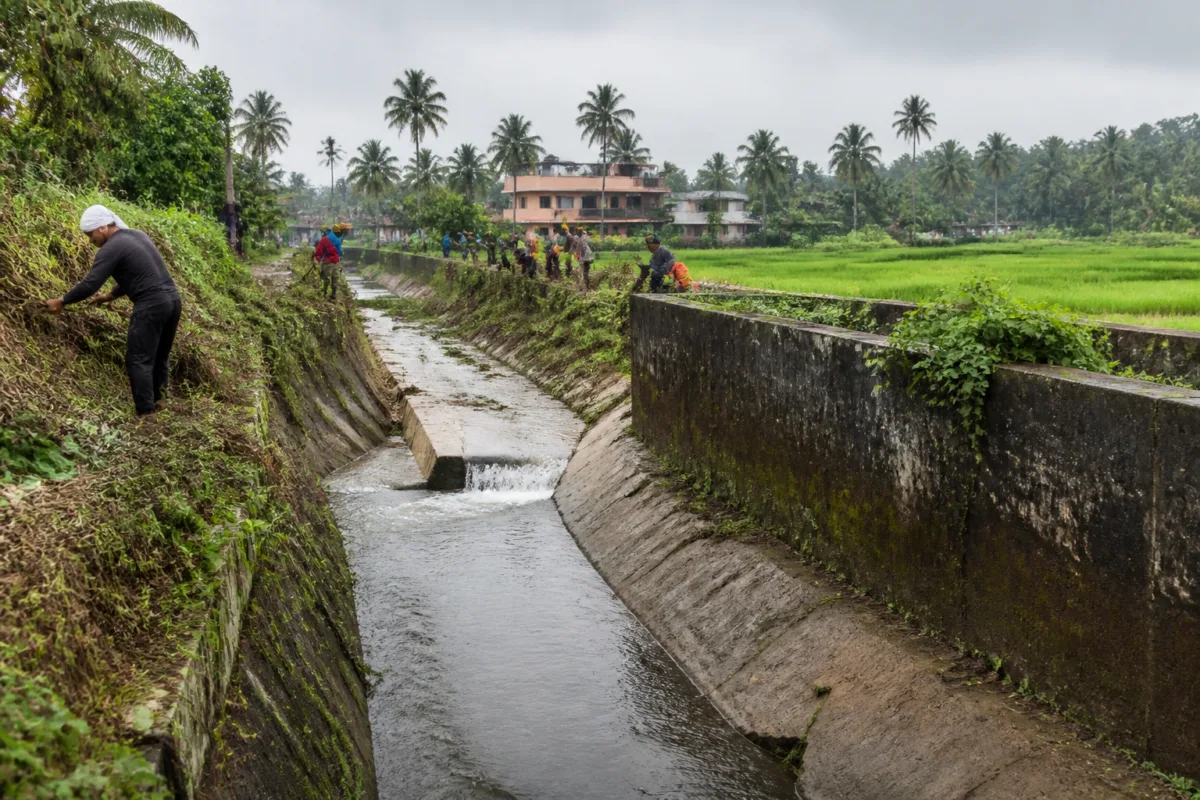
The Muvattupuzha Valley irrigation project has received approval for ₹6 crore to repair its ageing dams and canal network, improve water distribution and restore flow through channels that serve farming areas across central Kerala, MLA Dr Mathew Kuzhalnadan said.
The funding follows discussions between the MLA and Minister Mons Joseph. It will be used for 77 works covering main canals, branch canals, smaller distributaries that carry water directly to agricultural fields and cross-drainage structures, according to the information released by the MLA.
The Muvattupuzha Valley irrigation project distributes water through a 323-kilometre canal network. The water reaches the Malankara Dam after electricity generation at the Moolamattom Powerhouse and is then supplied to agricultural areas. The system covers 18,173 hectares, making the condition of its canals important for irrigation and drinking-water availability in the region.
The project serves farmers in the Thodupuzha, Muvattupuzha, Kothamangalam, Piravom, Kaduthuruthy, Ettumanoor and Kottayam areas. The need for repairs has become more urgent as rainfall declines and communities increasingly depend on canal water for both cultivation and household supply.
Several sections of the network have been weakened by age, flood damage, landslides, bank erosion and inadequate maintenance. Reported problems include broken lining, leakage, cracks, collapsed canal sides, damaged retaining walls and deteriorating cross-drainage structures. In some locations, large trees and overgrown vegetation have covered the canals, while silt and soil deposits on the canal beds have restricted water flow.
The condition of the network had already created operational difficulties during the previous year, when canal repairs were not completed on time and water failed to reach some areas. Local representatives, led by the MLA, had directly participated in repairing canals at several locations during that period.
The new allocation is intended to move repairs from local emergency interventions to a wider programme covering the main distribution system and its smaller links to farms. However, the effectiveness of the spending will depend on how quickly the individual works are technically approved, tendered and completed before water is required for irrigation.
Dr Kuzhalnadan said technical approval would be secured and tenders issued soon. The next formal steps are therefore the preparation of technical approvals and the tendering of the 77 repair and renovation works.

