


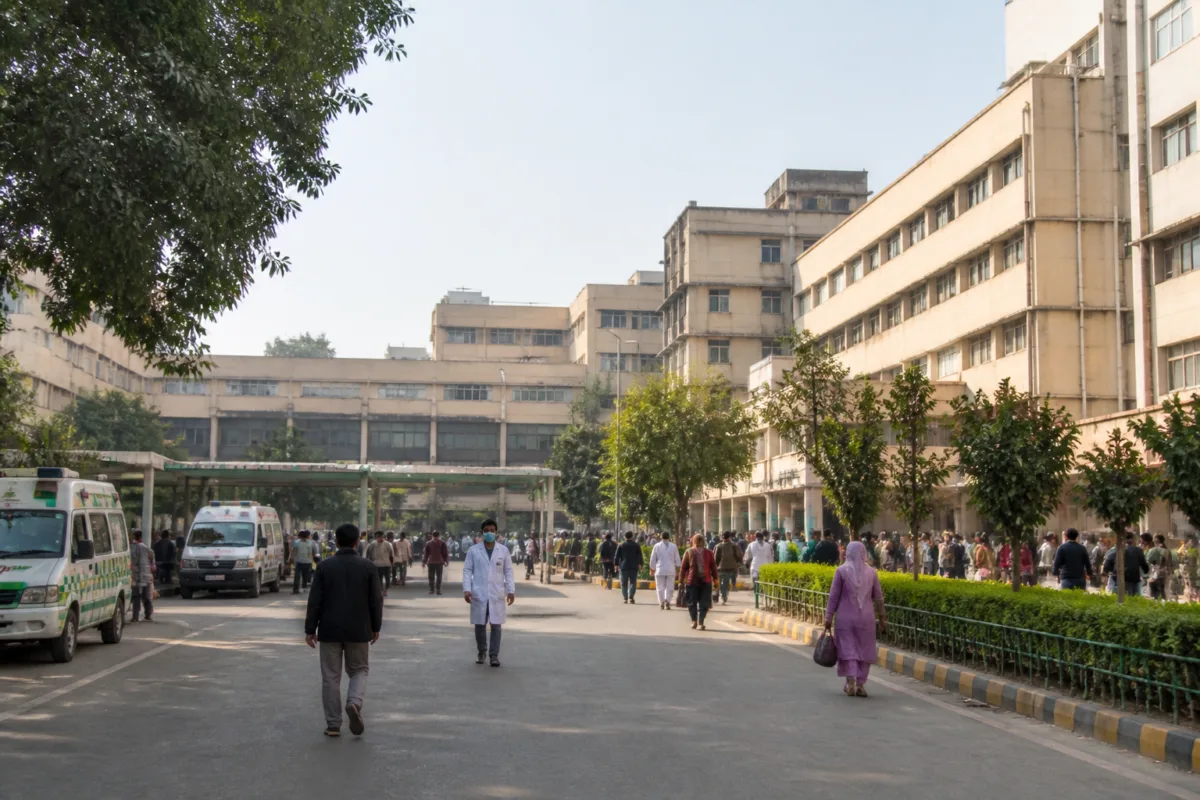
Delhi’s proposed merger of four major government hospitals in the Dilshad Garden area has received approval, clearing the way for the creation of a unified multi-speciality institution that the Delhi government says will function on the lines of AIIMS. The proposed institution is expected to serve around 60 lakh people in Trans-Yamuna Delhi.
Health Minister Pankaj Singh announced the approval on Thursday, according to Live Hindustan – NCR. The hospitals covered by the proposal are Guru Tegh Bahadur Hospital, Delhi State Cancer Institute, Rajiv Gandhi Super Speciality Hospital and the Institute of Human Behaviour and Allied Sciences.
The proposal approved by Lieutenant Governor Taran Sandhu seeks to place the four hospitals under a single institution. The separate organisations currently responsible for running the hospitals will be dissolved as part of the process, according to the report. The government is expected to issue tenders soon to begin implementing the merger.
Singh said the unified institution would provide a multi-speciality healthcare facility for residents of the Trans-Yamuna area. He said the merger would directly benefit around 60 lakh people and could later benefit residents from across Delhi. The proposal is intended to bring the existing facilities and staff under a common administrative structure rather than operate them through separate institutions.
The government’s stated objectives include reducing duplication in medical services and making better use of existing infrastructure and personnel. The four hospitals already offer different medical capabilities, and the merger is expected to allow patients to access these services through one institutional system.
The proposed structure could also change how patients are referred between the hospitals. The minister said patients would be able to move more easily from one unit to another after the merger, addressing the difficulties caused by referrals between separately administered institutions. The report did not provide details of the proposed administrative structure, the estimated cost, the tender schedule or the timeline for completing the merger.
The announcement places the focus on how Delhi manages large public hospitals serving a densely populated urban region. Bringing specialist, cancer, super-speciality and behavioural-health services within one institutional framework could alter coordination between facilities, but the practical outcome will depend on the implementation process and the responsibilities assigned to the new organisation. The next formal step identified by the government is the release of tenders for the merger process.

