


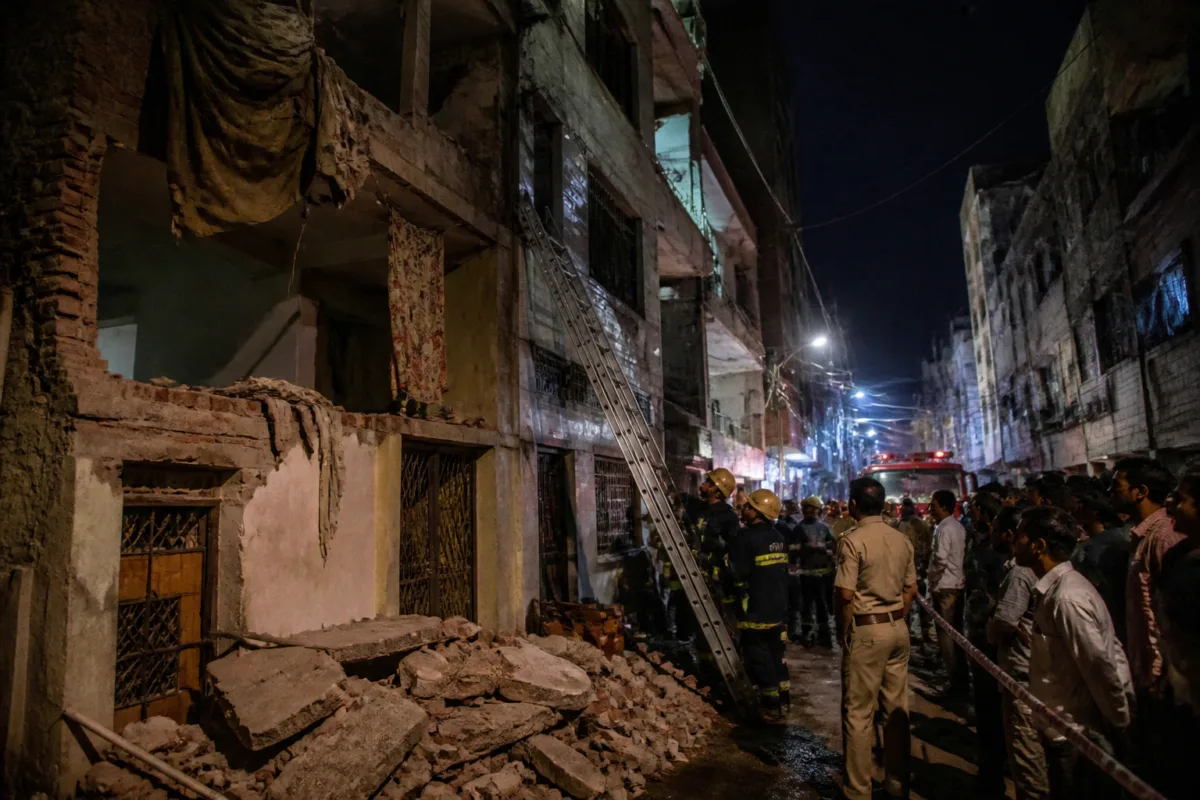
A balcony collapse at a dilapidated house near Photo Chowk in Welcome, East Delhi, injured a woman and a six-year-old girl, while two other women were trapped inside the building before firefighters rescued them using a ladder. The injured woman, identified as Zoya, and the child were taken to GTB Hospital, where they were receiving treatment, according to a report by Jagran – New Delhi.
The incident was reported at around 11 pm on Thursday after part of the balcony of the house gave way. The collapse blocked the occupants’ exit, leaving two women inside the building. Fire service personnel reached the location after receiving information about the accident and brought the trapped women out from the exterior using a ladder.
Police arranged for Zoya and the child to be taken to GTB Hospital by ambulance. The report described both as seriously injured, but did not provide details of their medical condition or the nature of their injuries.
Around 15 people were living in the house when the collapse occurred. The building had been described as dilapidated, but the Municipal Corporation had not declared it dangerous before the incident, according to the report. That detail places the immediate rescue operation alongside a wider question of how occupied older buildings are inspected and assessed in densely settled parts of Delhi.
An initial examination cited in the report indicated that a toilet had been built on the balcony. Dampness caused by the structure was identified as the apparent reason for the collapse. The report did not provide details of the building’s age, ownership, construction approval, previous complaints or whether any structural inspection had been carried out before the accident.
Balconies and projecting slabs in older homes can form part of the circulation and living space in tightly built neighbourhoods, but their condition can be difficult to assess from the street. In this case, the collapse also affected the building’s access, turning a structural failure into a rescue emergency for other residents. The presence of 15 occupants underlines the potential consequences of failures in buildings that continue to be used as homes.
The incident follows a pattern of urban safety concerns involving ageing or modified residential structures, although the supplied report does not establish whether the Welcome house had previously been inspected or reported to civic authorities. It also does not say whether the remaining portions of the building have been evacuated or whether the Municipal Corporation has ordered a further structural assessment.
The immediate response involved the police, the fire service and hospital staff. Further information is awaited on the condition of the injured woman and child, the safety of the house and any action by civic authorities after the collapse.

