


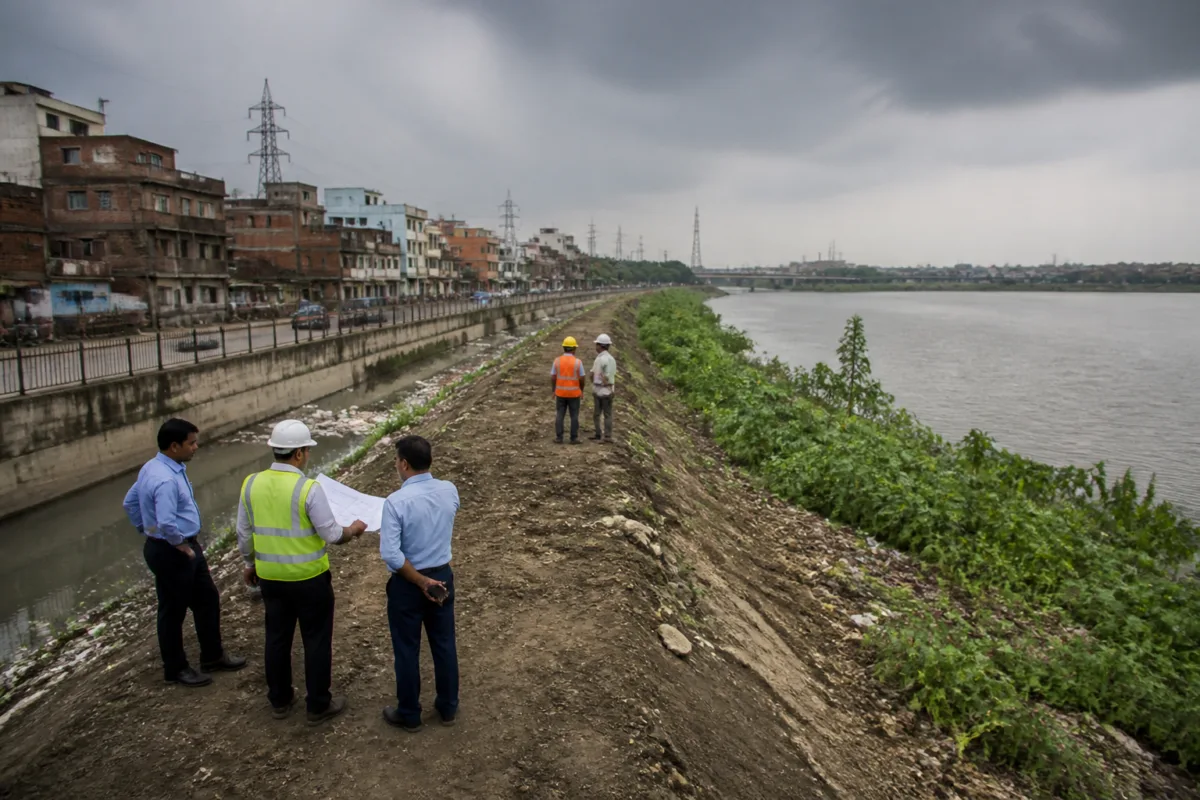
The Delhi government has approved a ₹99 crore Delhi flood wall project along a vulnerable stretch of the Yamuna near Wazirabad, with the proposed structure intended to protect low-lying areas from rising river levels during the monsoon. The 4.7-kilometre reinforced cement concrete wall will be built between Magazine Road drain and the old railway bridge.
The wall will be approximately 6 to 7 feet high and will run along a sensitive section of the Yamuna, according to information shared by Water Minister Pravesh Verma after chairing a meeting of the Irrigation and Flood Control (I&FC) department board. The project has received financial approval from the government.
Verma said the wall would protect low-lying neighbourhoods when water levels rise in the Yamuna. According to the minister, higher river levels during the monsoon can result in water reaching roads and homes in nearby areas. The project is therefore focused on strengthening protection along a specific vulnerable riverfront stretch rather than covering the entire floodplain.
The approval was part of a wider package of projects with a combined value of ₹622 crore. The package includes three biomining projects for processing and disposing of silt removed from Delhi’s drains. These projects have received in-principle approval and are estimated to cost ₹260 crore.
The I&FC department said the biomining work would particularly benefit the Najafgarh drain and other major drains where large quantities of silt accumulate. Silt disposal has remained a challenge during annual desilting operations, when substantial quantities of material are removed from the city’s drainage network.
The government also discussed improving the edges of drains across Delhi on the model of the Barapullah drain. The proposed work would include pedestrian paths, green belts, plantation, lighting and protective fencing along selected drain corridors. The stated aim is to turn neglected and encroached spaces into cleaner, safer and more usable public areas.
Verma said the city’s drains should not remain visually neglected and that the government intended to make their edges green, clean and secure. He referred to the work undertaken around the Barapullah drain as the model for similar improvements elsewhere in Delhi.
The projects combine flood protection, drainage maintenance and public-space improvement, but the immediate construction timeline for the flood wall was not specified in the report. Details on the exact alignment, tendering process, construction schedule and the areas expected to receive direct protection have also not been announced. The next stage will depend on the I&FC department’s implementation process following the financial and in-principle approvals.

