


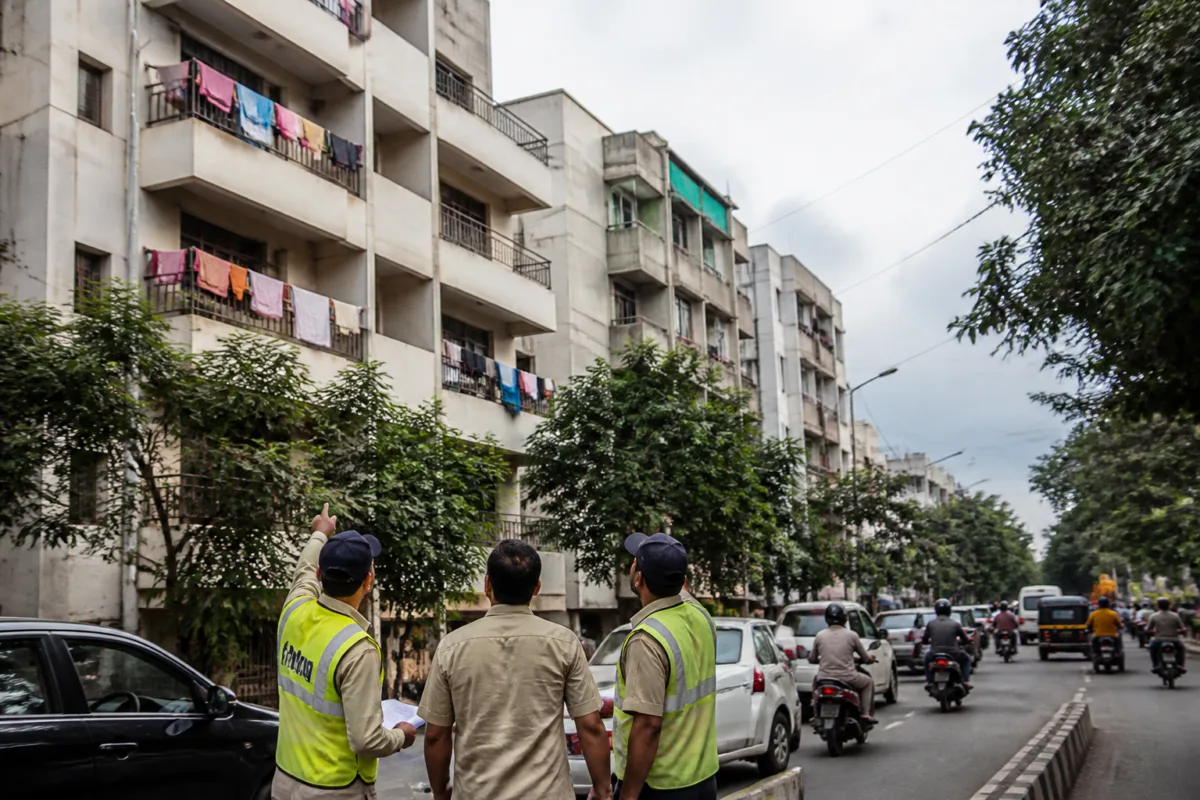
The Pune Municipal Corporation is preparing a policy to restrict residents from drying clothes on balconies facing main roads, arguing that laundry visible from major thoroughfares contributes to “visual pollution” and affects the city’s appearance. The proposal has triggered objections from residents and civic activists, who say the measure is intrusive and that the civic body should prioritise sanitation, footpaths, illegal hoardings and other infrastructure gaps.
Municipal Commissioner Naval Kishore Ram announced the proposed restriction during the PMC’s ‘Swachh Samvaad’ programme organised by its Solid Waste Management Department. He said the civic administration was evaluating a regulatory framework to preserve Pune’s “visual character” as the city expands.
“The administration has the authority to implement measures necessary for preserving urban beauty and order,” Ram said, according to the report. “Hanging laundry in front-facing balconies along principal thoroughfares degrades the city’s visual harmony. We are evaluating a strict regulatory framework to curtail such practices.”
PMC officials said detailed guidelines covering implementation, public awareness campaigns and penalties for non-compliance are expected to be drafted within seven days. The proposal, as reported, applies to balconies facing principal roads and does not yet amount to an implemented citywide ban.
Residents questioned how the proposed restriction would work in high-density apartment buildings, where balconies may be the only practical space available for drying clothes. Ramesh Kulkarni, a Kothrud resident, said indoor drying options were limited in many homes and called the proposal unnecessary and intrusive. Ananya Deshmukh, a resident of Viman Nagar, said modern flats often have limited indoor sunlight and that residents depend on balconies for routine household needs.
Deshmukh also urged the PMC to address what she described as more visible sources of urban clutter, including illegal hoardings, oversized banners and tangled overhead cables along main roads. Civic activist Quaneez Sukhrani similarly called for greater attention to sanitation in informal settlements and the removal of encroachments from footpaths, saying pedestrians across Pune lacked safe walking space.
The PMC is simultaneously preparing guidelines for vacant plots, which frequently become dumping sites for household waste and construction debris. Under the proposed directive, owners may be required to install green protective nets and proper fencing to prevent unauthorised dumping and improve hygiene around their properties.
Ram cited Pune’s expanding footprint, a population nearing 80 lakh, a PMC budget of Rs 16,000 crore and a workforce of about 25,000 while outlining the administration’s civic management challenges. The civic body also expressed concern over poorly maintained public toilets and is evaluating free municipal sanitation and waste collection services in slum clusters where compliance with waste collection fees remains low.
The PMC’s next stated step is to prepare the detailed framework within seven days. Until those guidelines are drafted and formally implemented, the scope of any restriction, enforcement process and penalties for balcony laundry remain undecided.

