


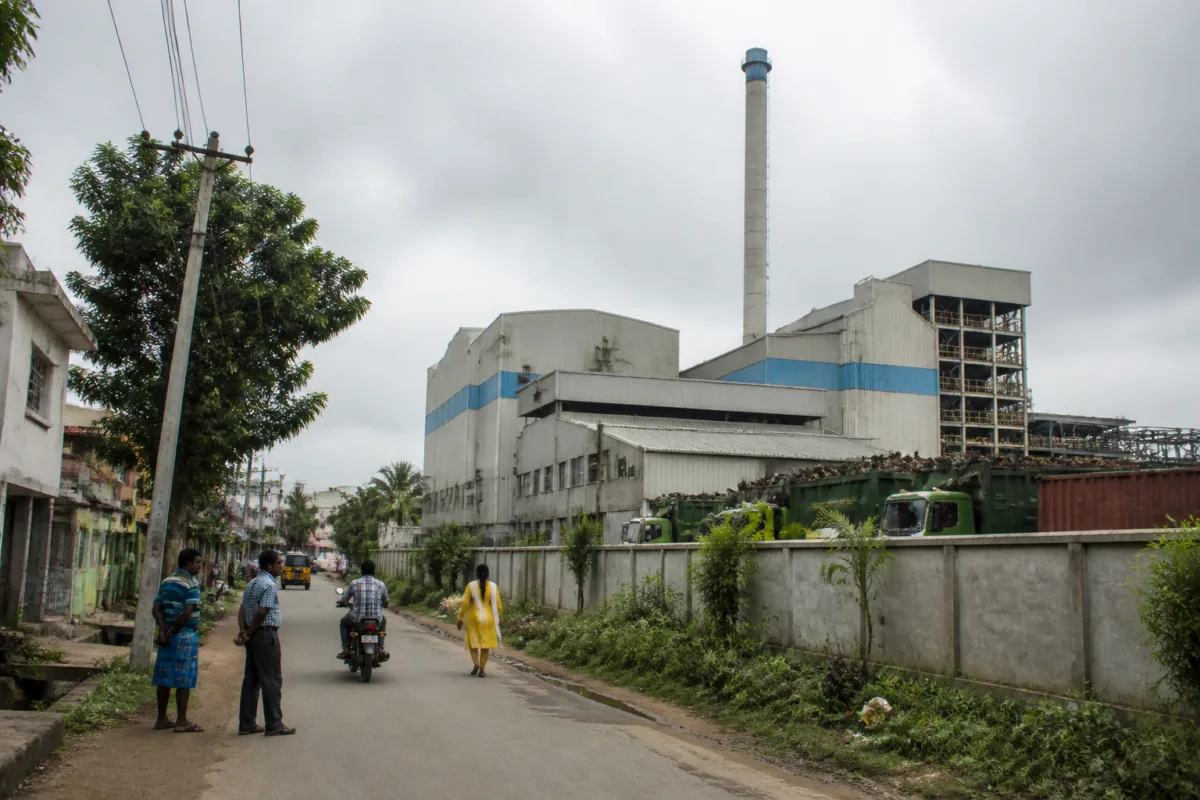
The National Human Rights Commission’s registration of a complaint over the Kodungaiyur waste incinerator has turned a local dispute about emissions, public health and plant operations into a wider test of how Chennai governs waste infrastructure. The complaint does not establish the allegations, but it places them before a national rights body and requires the concerned authorities to respond to claims involving environmental regulation, constitutional protections and the treatment of residents living near the facility.
The complaint follows a field study submitted by the Federation of North Chennai Residents’ Welfare Associations (FNCRWA). The study covered 415 families across eight residential areas in the Perambur and Radhakrishnan Nagar constituencies. Titled “Burning Human Rights: Hidden Costs of Human Lives by Waste-to-Energy Incinerators”, it alleges environmental hazards, health concerns and violations of constitutional rights linked to waste-to-energy operations in the area.
The report was submitted to the NHRC and the UN Human Rights Council in June. According to the supplied report, the UN Human Rights Council has published the complete study on its official portal, while the NHRC has now formally registered the findings as a complaint and initiated proceedings. The next stage therefore shifts the issue from resident documentation and advocacy to institutional examination.
That distinction matters. A complaint registered by the NHRC is a procedural development, not a final finding that the incinerator caused the alleged health or environmental impacts. The available account does not provide the NHRC’s conclusions, an order establishing liability, or an independent assessment confirming the claims. It does, however, establish that the concerns have been formally placed before a body mandated to examine alleged human-rights violations and that responses are expected from public agencies.
The plant at the centre of the dispute has an operating capacity of 50 metric tonnes. FNCRWA president TK Shanmugan told DT Next that the association had sought intervention from human-rights bodies and demanded the immediate closure of the facility. He said the Tamil Nadu Pollution Control Board (TNPCB), the Greater Chennai Corporation (GCC) and other concerned departments were expected to respond to the allegations following the complaint.
The residents’ federation has framed the issue more broadly than a question of pollution-control compliance. In its submissions to the NHRC and the State government, it sought recognition of waste-to-energy incineration as a violation of rights guaranteed under Articles 14, 15, 19 and 21 of the Constitution. It also called for human-rights, health, environmental and socio-economic impact assessments to become mandatory before State Pollution Control Boards approve incineration projects.
This framing exposes the institutional gap at the heart of the dispute. A waste plant is normally assessed through a combination of municipal waste-management decisions, pollution-control permissions and environmental safeguards. Residents’ groups are arguing that this process should also measure how facilities distribute health risks, economic costs and environmental burdens across neighbourhoods. Their submission treats participation, health protection and the conditions of nearby communities as central questions rather than secondary consequences of waste disposal.
The complaint also follows a reported regulatory episode involving the same plant. A joint inspection by TNPCB officials, the District Revenue Officer and the GCC had reportedly found serious environmental and regulatory violations, leading to the temporary closure of the 50-tonne incinerator in February 2026. The plant resumed operations within a few months, according to Shanmugan. The supplied report does not provide the inspection findings, the order authorising the restart or the specific conditions attached to renewed operations.
That missing administrative record is now one of the most important parts of the story. FNCRWA has filed a Right to Information application seeking details of the basis on which permission was granted to restart the facility. The response could clarify whether the restart followed remedial work, a fresh inspection, compliance with specified conditions or another administrative decision. Until those documents are available, the public record contains a clear sequence—inspection, reported violations, temporary closure and reopening—but not the full explanation for the transition between each stage.
For Chennai’s waste system, the dispute is also about scale. The federation has demanded the complete abandonment of a proposed 2,100-tonne waste-incineration facility in the region. The difference between that proposed capacity and the existing 50-tonne plant illustrates why the present complaint is being treated by residents as a precedent-setting matter. Their concern is not limited to the operation of one facility; it extends to whether large-scale incineration should become a central model for managing the city’s waste.
The available material does not establish the status, approval stage, design or implementation timetable of the proposed 2,100-tonne facility. It records only the federation’s demand that the project be abandoned. That distinction is important because opposition to a proposed project and a final government decision on that project are separate developments. The status of the larger facility will need to be established through official planning, environmental and municipal records.
The policy conflict is equally visible in the federation’s demand that the Union Ministry of Environment, Forest and Climate Change reverse the Central Pollution Control Board’s reclassification of waste incinerators from the “Red” category to the “Blue” category. The supplied report does not explain the regulatory criteria, date or consequences of that reclassification. It does show that residents view the classification as an important part of the regulatory framework governing incinerator operations.
The controversy therefore connects three layers of urban governance. The GCC is responsible for municipal waste-management functions and is among the bodies expected to respond. The TNPCB is involved in pollution-control oversight and was part of the reported joint inspection. The Union environment ministry and the CPCB shape the broader regulatory framework within which incineration facilities are classified and assessed. The NHRC adds a rights-based layer by examining whether the alleged impacts raise human-rights concerns.
These responsibilities can produce a fragmented public record. Municipal agencies may address waste handling and operations; pollution authorities may assess compliance; environmental regulators may determine permissions and categories; and a rights commission may consider impacts on affected communities. For residents, however, these are not separate experiences. Exposure concerns, health risks, compensation demands, operational decisions and access to information converge at neighbourhood level.
FNCRWA has sought medical camps for affected residents, monetary compensation and immediate suspension of operations at the Kodungaiyur plant. It has also called for sustained support for informal waste pickers and decentralised recycling systems as alternatives to large-scale incineration. These demands broaden the debate from the safety of a single technology to the structure of the city’s waste economy, including the role of informal workers and the location of processing infrastructure.
The supplied evidence cannot determine whether incineration or decentralised recycling would perform better in Chennai, nor can it confirm the health effects alleged in the residents’ study. It does establish that the study was based on 415 families in eight residential areas, that the NHRC has registered a complaint, that a joint inspection reportedly preceded a temporary closure, and that the plant later resumed operations according to the residents’ association. Those facts make official documentation and transparent responses central to the next phase of the dispute.
The larger urban question is how cities decide what happens to waste after it leaves households and streets. Facilities that promise to reduce the burden of waste can also concentrate regulatory, environmental and perceived health risks in specific neighbourhoods. When those communities believe that decisions were taken without adequate assessment or explanation, a technical waste-management project becomes a question of public trust and institutional accountability.
The NHRC proceedings will be significant because they may bring together claims that are usually handled separately: environmental compliance, public health, constitutional rights, compensation and the future of waste infrastructure. The immediate developments to monitor are the responses of the TNPCB, GCC and other departments; the information released through the RTI application; the NHRC’s examination of the complaint; and the official status of the proposed 2,100-tonne facility. Until those steps produce documentary findings, the allegations remain claims under examination—but the governance questions raised by Kodungaiyur are already firmly on Chennai’s public record.

