


The Karnataka Forest Department’s approach to afforestation is facing a deeper question than whether new machines can remove undergrowth or dig planting pits faster. An analysis published by Prajavani argues that plantation targets, fencing and mechanised work may be taking precedence over protecting existing forest growth, understanding local ecology and working with communities.
The argument is not about a single project. It concerns the institutional habits that shape how forests are managed: what officials measure, how budgets are spent, which interventions are treated as evidence of performance and whether natural regeneration is recognised as a legitimate form of forest recovery. The analysis, written by Shivanand Kalave, presents these questions through field observations, departmental practices and historical examples from Karnataka.
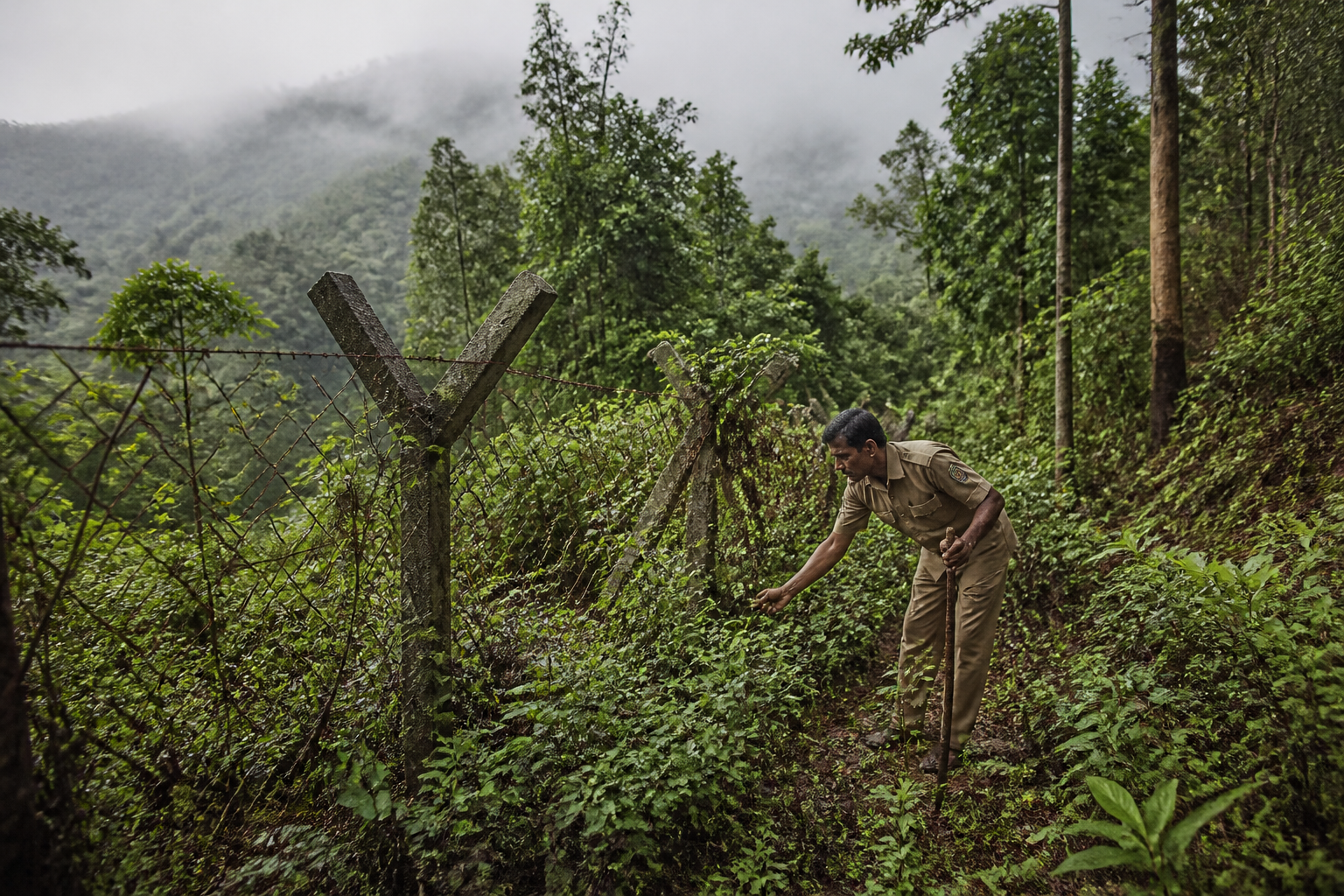
One of the central examples comes from Uttara Kannada district. The author recalls visiting the Chanagar area near Ankola in October 2011 and seeing large stretches of lower-level forest vegetation cleared before a plantation programme. The land, according to the account, had been prepared with fencing and was intended for planting the same broad type of forest vegetation that had been removed. The author questioned whether protecting the existing plants would have been more appropriate than cutting them and starting again.
Fifteen years later, the author revisited the location and found that the planted saplings were no longer visibly identifiable, while the roots of the earlier vegetation had regenerated. The fencing had rusted and become embedded in the soil. This account does not establish the formal outcome of the project or its expenditure, but it illustrates the gap between a plantation activity recorded at the time and the longer ecological process that determines whether a site actually recovers.
That gap is important because plantation numbers are easier to record than ecological health. A signboard can report how many saplings were planted. A fence can be counted by its length. Concrete posts, trenches and planting pits can be entered into work records. But these indicators do not by themselves show whether a forest has developed a functioning understorey, whether native plants have regenerated, or whether wildlife has regained food, water and habitat.
The Prajavani analysis says that fencing has become a recurring response in Karnataka’s forest administration. It refers to a plan announced several years ago to install wire fencing and concrete posts around degraded forest land, and says that about 500 kilometres of fencing was installed in Uttara Kannada, a district that already contains extensive forest areas. The article also describes opposition to the programme and recounts a senior official’s view that the work might not continue after the then principal chief conservator of forests retired. The account suggests that administrative continuity, rather than a clearly documented ecological assessment, influenced the project’s duration.
The larger issue is not whether fencing is ever necessary. Fencing can protect plantations or sensitive areas where specific threats are documented. The question is whether it becomes a default substitute for understanding the cause of degradation. If the main pressures are grazing, fire, invasive species, extraction or disputes over access, a fence addresses only part of the problem. It can also impose maintenance costs that become difficult to justify when the barrier deteriorates and natural regeneration proceeds without it.
The analysis also challenges the assumption that every plant competing with a plantation sapling is simply a weed. It refers to proposals to control forest undergrowth with machines and to the use of mini excavators for digging planting pits. In a natural forest, however, low-growing vegetation can provide habitat and cover for wildlife, retain moisture and support regeneration. The ecological value of such growth depends on the location and species involved; the supplied account does not provide a site-specific assessment. Its broader warning is that mechanical clearing can erase the distinction between unwanted invasive growth and native forest vegetation.
The history of plantation choices adds another layer to the debate. The article discusses the planting of acacia in the Malnad and coastal regions from around 1985 and notes that the department’s plantation densities and the species’ capacity to produce large quantities of seed contributed, in the author’s view, to its spread as a difficult-to-control plant. It also cites an 1887 Bombay government record while discussing how earlier state interventions to expand grazing areas were associated with the spread of lantana. These examples are used to argue that interventions designed for one administrative purpose can create ecological consequences that become visible much later.
The lesson presented by these examples is that forestry decisions cannot be assessed only at the moment of planting. A species may appear useful for timber, fuel, soil cover or rapid greening, yet behave differently across landscapes. Its effects may also change when fire patterns, rainfall, grazing, land use and wildlife movement change. The source does not offer a comparative assessment of different species or a verified evaluation of Karnataka’s plantation performance. It does, however, point to the need for longer-term monitoring rather than short project cycles.
The article connects forest-management decisions with the pressures experienced by farmers living near forests. It argues that when wildlife loses access to food, water and habitat, conflict with agriculture can intensify. It also refers to the death of wildlife and to concerns over delayed wages for daily-wage forest watchers in the Chamarajanagar region. These claims are presented by the author as examples of administrative and ecological problems that cannot be solved only through stricter action after an animal dies.
This is where the governance question becomes central. Forest protection is not only a matter of planting or policing. It also involves staffing, field knowledge, wage payments, maintenance, local participation, records and the ability of officials to observe changing ecological conditions on the ground. The analysis argues that the department has moved away from sustained engagement with residents and from valuing the experience of its own field staff. It calls for more attention to internal administration, file disposal and institutional knowledge, while also asking whether officers have enough time to work in forests rather than mainly in offices and meetings.
The source makes a similar point about farmers and teak. It describes a farmer from Ripponpet in Shivamogga district who allegedly became frustrated by delays and restrictive procedures relating to permission to fell teak trees. According to the account, the farmer eventually began burning one teak tree at a time in protest, and once asked the author to set fire to a tree. This is an individual anecdote, not evidence of a statewide pattern, but it illustrates how regulation can produce perverse outcomes when property, forestry and administrative permissions are not aligned in practice.
The department’s proposed or reported responses to forest problems therefore need to be judged against more than the immediate visibility of the work. A plantation can be inaugurated, a fence can be completed and a machine can clear land quickly. None of these actions answers whether the intervention restored a functioning ecosystem, improved protection for wildlife or reduced pressure on neighbouring farms. Those outcomes require site-level baselines, follow-up records and an explanation of what happened after the project period ended.
The analysis ultimately calls for institutional self-examination. Its criticism is directed at a mechanical mindset in which new schemes and physical outputs can overshadow local ecological knowledge. That criticism should not be read as a rejection of all technology or all plantations. Machines may be useful where a clearly identified task requires them, and plantations may have a role on genuinely degraded land. The unresolved question is whether the department distinguishes those situations from sites where protection of existing vegetation would be more effective.
For Karnataka, the evidence presented in the article points to three matters that deserve closer public scrutiny: how afforestation success is measured after planting, how the department decides between natural regeneration and plantation, and how spending on fences, concrete posts and mechanised works is evaluated over time. The source confirms that these concerns are being raised by a named writer with field-based examples. It does not establish the full performance of every cited scheme or provide official departmental responses. Those gaps matter, because a serious assessment of forest policy requires both the department’s records and long-term ecological outcomes.
The larger urban and regional question is how public institutions manage landscapes that support cities, farms and wildlife at the same time. Forest degradation does not remain confined to a forest boundary; it can influence water, livelihoods, crop protection and the resilience of settlements nearby. The immediate debate over machines and saplings is therefore part of a wider test of governance: whether administrative systems can value what is already growing, learn from past interventions and measure ecological recovery beyond the completion of a project.

