


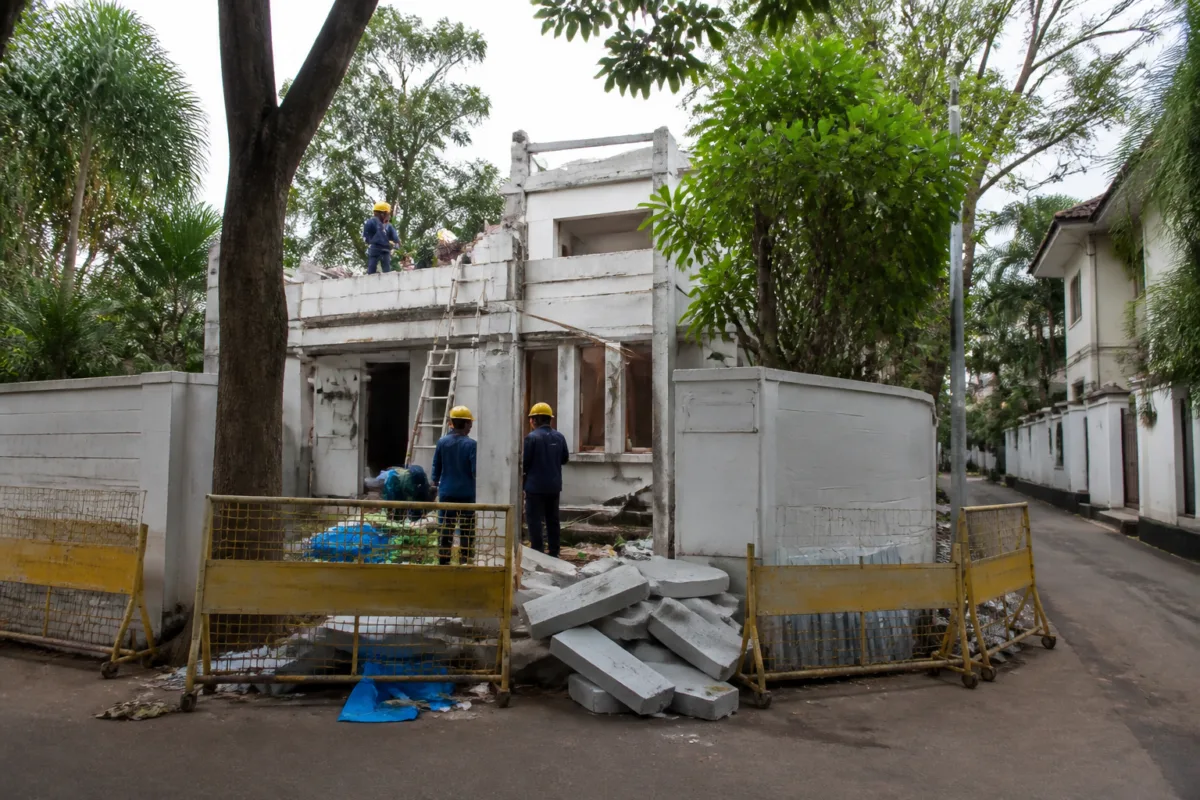
The BMC’s demolition of unauthorised portions at a Juhu bungalow linked to actor Ajay Devgn is more than a property dispute involving a celebrity owner. The action shows how Mumbai’s building-control system turns on a basic administrative question: whether ongoing construction can be backed by permission from the competent authority. In this case, the civic body said the owners did not produce those documents after receiving a stop-work notice.
The demolition took place on October 12 at a bungalow in Kapol Cooperative Housing Society in Juhu. The property is identified in the civic record as CTS No. 841, Plot No. 10, on N S Road No. 11, JVPD, Vile Parle (West). According to the report, the work involved unauthorised additions and alterations using Siporex blocks, a lightweight construction material.
The immediate enforcement action followed a speaking order issued on October 6 by the BMC’s K/West ward office. The order rejected a reply submitted by the owners on September 15 because it did not include documents establishing that the construction had been authorised or a copy of permission from the competent authority. The BMC had issued a stop-work notice under Section 354A of the Mumbai Municipal Corporation Act on September 10.
That sequence matters because the case was treated as ongoing construction rather than as a dispute over an old, completed structure. The civic body’s position, as reported, was that owners carrying out ongoing work were required to possess permission before proceeding. Once the requested documents were not produced, the work was treated as unauthorised and the civic body proceeded with removal of the unauthorised portions and construction material.
The September 10 notice directed the owner or occupier to stop work immediately and submit the relevant permissions within 24 hours. It also warned that the unauthorised structure and construction materials could be removed at the owner’s risk and cost if the directions were not followed. Police were asked to keep watch at the site and, if necessary, remove people carrying out the work.
This is the institutional core of the episode. Municipal enforcement is not based only on what a structure looks like from outside. It depends on a chain of notices, replies, documents, orders and action. The BMC’s speaking order recorded why the owner’s response was not accepted. In practical terms, the dispute moved from an allegation of unauthorised work to an enforcement decision after the civic authority said the required proof had not been supplied.
The case also illustrates the importance of the distinction between ownership, occupation and permission. Ajay Devgn and his mother, Veena Devgn, own the bungalow, according to the report. A statement from Devgn’s office said the property was not the actor’s residence but a separate property that had been rented out. The statement added that the owners had applied to the BMC for the requisite permissions for one of their properties, were complying with applicable rules and guidelines, and had carried out the changes, alterations and modifications required by the civic body.
Those statements address the property’s use and the owners’ position, but the BMC’s action centred on a narrower administrative issue: whether approvals for the ongoing work had been produced when demanded. The report does not establish the final status of any later application beyond the statement that an application had been made and that the required changes had been carried out.
The intended use of the property added a second layer to the dispute. Sources cited in the report said the bungalow was to be rented to a salon. Residents of the cooperative housing society had objected, fearing that a private society premises could be opened to members of the public visiting the salon. That concern shifts the matter from construction control to the management of access and land use within a residential setting.
A housing society is not simply a collection of private homes. Its internal rules, the character of the premises and the movement of visitors can affect residents beyond the unit being rented out. In this case, the available report does not provide the society’s governing documents, the precise nature of the proposed salon, or a final decision on whether the proposed use was permissible. It does, however, show how a change in use can become a neighbourhood issue even before a commercial activity begins operating.
Mumbai’s building-control framework therefore appears in the episode through two related but separate questions. The first is whether physical additions and alterations have civic approval. The second is whether the proposed occupation or activity is compatible with the premises and the concerns of other residents. The BMC action described in the report directly addresses the first question. The residents’ objections raise the second, but the supplied material does not record a final adjudication on it.
The documents mentioned in the report also show why written permissions are central to municipal administration. The stop-work notice provided a short period for the submission of relevant approvals. The speaking order then explained why the reply was insufficient. Such records create an administrative trail: the authority identifies the work, gives the owner an opportunity to produce documents, considers the response and records the basis for enforcement.
That process is significant in a city where redevelopment, additions and alterations often take place within tightly built residential neighbourhoods. The available material does not provide data on how many similar cases the BMC handles, how often stop-work notices result in demolition, or whether the action at the Juhu property is part of a broader enforcement drive. Those questions cannot be answered from this report alone. What can be established is that the BMC applied its stated process to a specific property after the owners did not submit the documents the ward office requested.
The episode also underlines the limits of celebrity-focused reporting. The actor’s name brought attention to the property, but the civic issue is not dependent on the owner’s public profile. The same administrative test applies in the reported account: construction undertaken during the notice period required permission, and the BMC said the relevant proof had not been furnished. The public significance lies in that mechanism rather than in the identity of the owner.
There is also a practical distinction between an application and an approval. Devgn’s office said an application had been made for the requisite permissions. The BMC, meanwhile, said the response did not include documents proving authorisation or a copy of permission from the competent authority. The two positions are not necessarily identical: an application records a request for approval, while the civic body’s objection concerned evidence that approval had already been granted for the ongoing work. The report does not state whether the application was subsequently approved.
For residents, the immediate outcome was the removal of the unauthorised portions and associated work at the site. For the owners or occupier, the notice had warned that removal could occur at their risk and cost. For the housing society, the salon proposal raised concerns about public access to a private residential premises. Each consequence follows a different institutional path, even though all three are connected to the same property.
The remaining developments to monitor are administrative rather than speculative: whether the owners’ application receives a decision, whether any further permissions are produced, and whether the proposed salon use is resolved within the society and applicable civic framework. The supplied report records the BMC’s October 12 action and the owners’ stated position, but it does not establish the final approval status of the property or the outcome of the residents’ objections.

