


Telangana’s decision to prepare a dedicated inventory of tourism department properties for public-private partnership development signals a shift from treating tourism as a collection of destinations to managing it as a wider public-asset and regional-development system. The proposed list will include properties with existing buildings as well as vacant land, creating the basis for decisions on which assets can attract private investment while remaining under public oversight.
The proposal was discussed at a review meeting of the tourism and culture departments at Praja Bhavan, where Deputy Chief Minister Bhatti Vikramarka directed officials to prepare a comprehensive action plan to develop Telangana as a national and international tourist destination. Tourism Minister Jupally Krishna Rao also attended the meeting, according to a report by The Times of India.
The immediate administrative task is straightforward: identify the assets, assess their potential and determine the conditions under which private parties could participate. The larger question is more complex. Public tourism properties are not a uniform category. A vacant parcel, an existing government building, a heritage site and a location near a temple or hill destination carry different financial, operational and conservation requirements. A single PPP template would not address those differences.
The government has therefore asked officials to examine lease policies, financial viability and investor interest, while also identifying obstacles to private investment. These directions indicate that the proposed programme is still at the planning stage. The state has not, in the material reviewed, announced a final asset list, specific projects, investment commitments, lease durations or tender timelines.
That distinction matters because the quality of an asset inventory will shape the entire programme. A list that records only land parcels and buildings would provide an incomplete picture of tourism potential. The administrative exercise will need to distinguish between assets that can support commercial activity and those whose primary value is cultural, ecological or public. The meeting’s emphasis on revenue potential suggests that financial viability will be a central filter, but the government also directed officials to ensure conservation and maintenance of heritage sites.
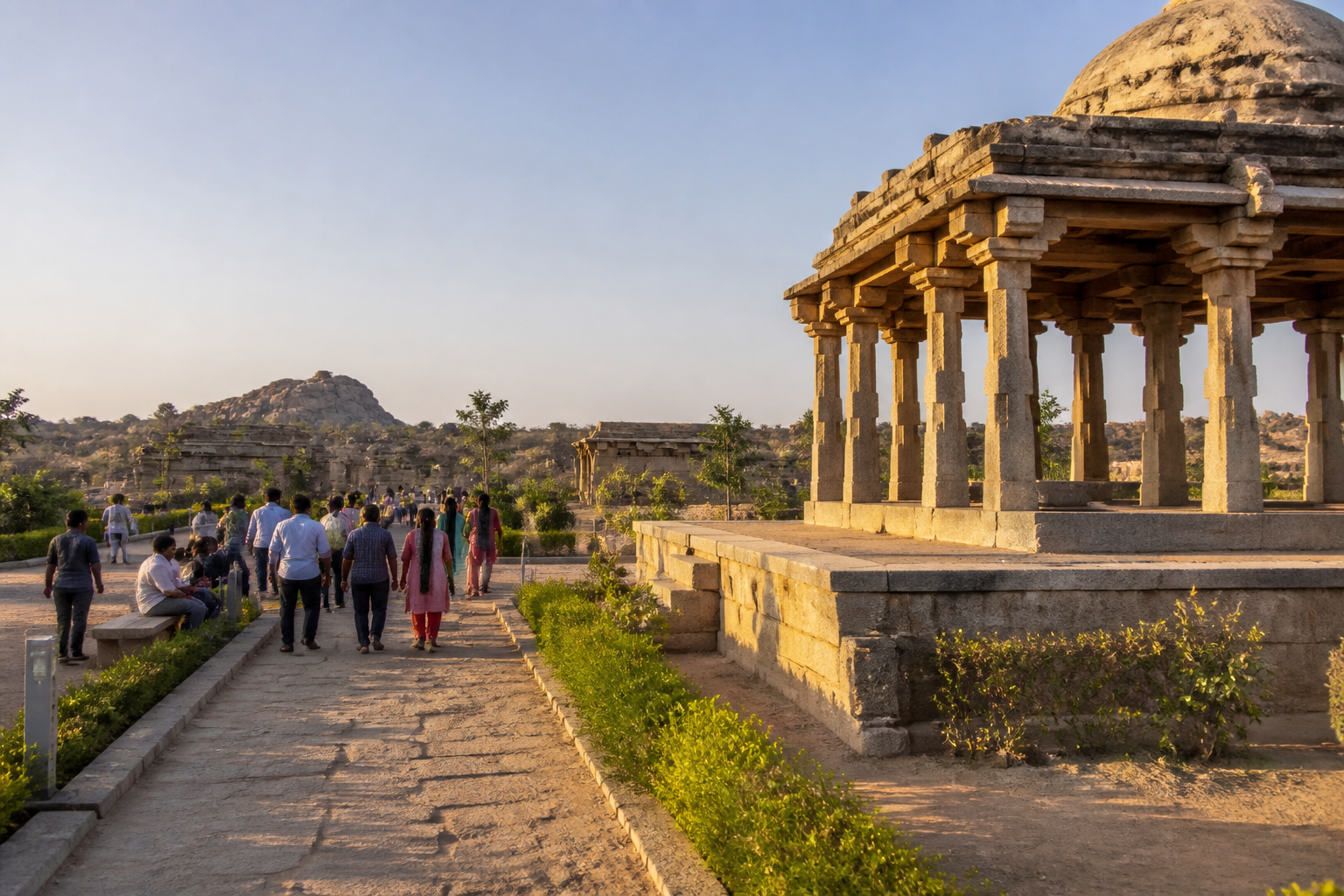
The proposal to explore revenue-generating tourism projects around heritage locations, including Ramappa, exposes the central balancing problem. Heritage assets can attract visitors and support local economic activity, but their physical character and cultural significance can restrict the kind of construction, commercial use or visitor infrastructure that is appropriate. The source material does not specify the conservation rules or institutional safeguards that will govern such projects. Those details will become important when individual assets move from planning to implementation.
The state’s proposed PPP push also reflects a broader institutional division of responsibility. Government investment is expected to continue, while private participation would be expanded alongside it. In practical terms, this places the public sector in the role of asset owner, policy setter and conservation authority, while private entities could potentially bring capital, development capacity and operating expertise. The meeting did not identify the precise allocation of construction, maintenance, revenue and risk responsibilities.
That allocation will determine whether a project is genuinely a partnership or simply a long lease of public property. The government’s direction to review lease policies and investor interest shows that the terms of participation are still being worked out. Financial viability will need to be assessed not only from the perspective of an investor but also in relation to public objectives such as access, heritage maintenance, employment and the distribution of tourism activity beyond Hyderabad.
The plan is also connected to the state’s attempt to spread visitor movement across a larger geography. Officials were asked to develop integrated temple, eco and hill tourism and create special circuits that encourage tourists visiting Hyderabad to travel to other parts of Telangana. This is a regional planning proposition: Hyderabad would function not only as a destination but also as an entry point to other tourism locations in the state.
The success of that approach would depend on how the circuits are designed and supported. The supplied material confirms the government’s intention to create them, but does not provide route maps, travel times, transport arrangements, visitor numbers or funding details. Without those details, the circuit concept remains an administrative objective rather than an operational network. Its eventual form will determine whether the programme creates connected destinations or merely groups them together in promotional material.
The urban connection is particularly visible in the relationship between Hyderabad and the rest of Telangana. The government wants visitors to the capital to explore other parts of the state, which implies that tourism demand is currently being viewed through a metropolitan gateway. This raises questions about the infrastructure required between the gateway city and regional destinations, including roads, visitor facilities, accommodation, public amenities and site management. None of those project-level requirements has yet been specified in the reported announcement.
The proposal also links tourism policy to public land management. Properties with existing buildings and vacant land can become dormant public assets when their use, maintenance or commercial model is unclear. Preparing a comprehensive list could make those assets more visible to government and potential investors. It could also expose competing objectives: generating revenue, retaining public control, protecting heritage and ensuring that tourism infrastructure serves visitors without displacing local needs.
The state’s own framing includes investment, employment and revenue opportunities, alongside the ambition to promote the Telangana brand globally. These are stated objectives, not outcomes established by the announcement. Whether they are achieved will depend on the assets selected, the transparency of the selection process, the terms offered to private participants and the government’s ability to monitor performance after projects are awarded.
The inclusion of the Telangana Darshini programme adds another dimension to the review. Under the programme, students visit heritage sites, museums and tourist destinations. This indicates that tourism assets are being considered not only as commercial properties but also as educational and public-cultural infrastructure. A site that supports student access may require a different operating model from one designed primarily for accommodation, retail or entertainment.
That distinction should remain visible as the PPP framework develops. Commercial revenue can support maintenance, but commercial use is not the only measure of public value. Heritage sites, museums and educational destinations can serve civic and cultural purposes even where direct revenue is limited. The meeting’s reference to both revenue-generating projects and the Telangana Darshini programme suggests that the tourism department is managing several objectives at once.
The evidence currently establishes a policy direction rather than a completed programme. Telangana plans to catalogue tourism properties, assess their development potential, review leases and financial viability, attract private participation, build tourism circuits and protect heritage sites. It has not yet established which properties will be offered, what safeguards will apply, how revenues will be shared or when projects will be tendered.
The next stage will therefore be more consequential than the announcement itself. The proposed action plan and asset inventory should reveal whether the state is building a transparent framework for public-asset management or simply assembling a pipeline of tourism projects. For Hyderabad and the destinations connected to it, the key test will be whether private investment expands access and improves maintenance while public authorities retain control over heritage, land use and the wider civic purpose of these assets.
