


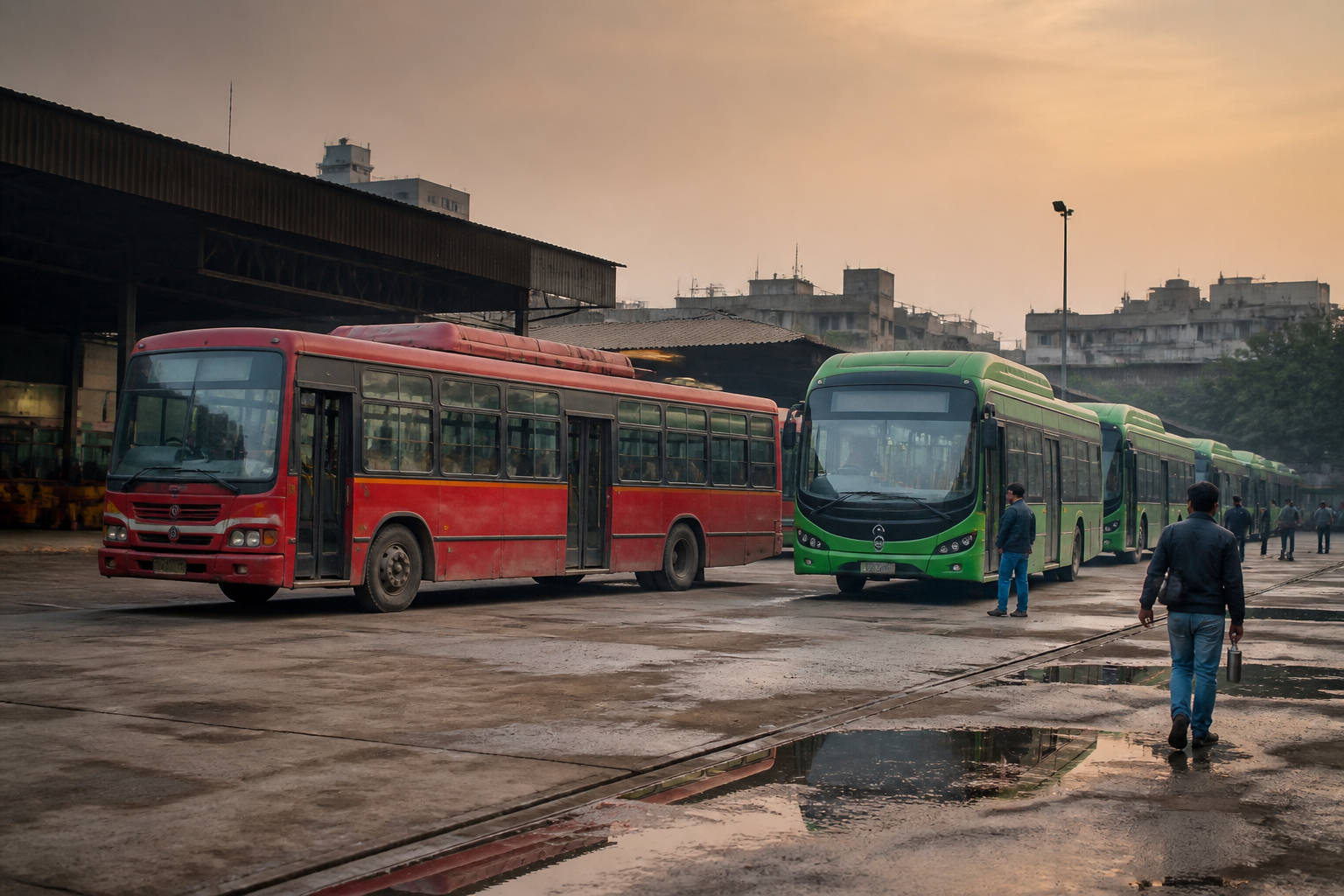
Delhi’s last DTC-owned bus has completed its scheduled service, ending the Delhi Transport Corporation’s own fleet and leaving the capital’s bus network dependent on privately operated services. Bus number 4038, operating from Rajghat Depot-1, was taken off the road on Tuesday after completing its service period.
The retirement means DTC no longer has a bus of its own available for passenger operations. The corporation’s services are now being delivered through around 17 private companies, which provide and operate approximately 5,088 electric buses and 1,700 CNG buses, according to a report by Jagran – New Delhi.
The change marks a significant shift in how Delhi’s public bus system is organised. Instead of relying on a fleet owned and directly operated by DTC, the current arrangement places the supply and operation of buses with private companies. DTC remains the public transport institution associated with the network, but the vehicles serving passengers are now supplied and run through contracted operators.
The last bus to leave service was part of the corporation’s older CNG fleet. Its retirement also closes a chapter associated with the red, low-floor buses that became a prominent feature of Delhi’s roads, particularly in the period around the 2010 Commonwealth Games.
DTC had purchased 2,500 buses in 2008-09, including 1,000 air-conditioned and 1,500 non-air-conditioned vehicles. A further 625 buses were subsequently acquired, taking the total from that procurement period to 3,125. Other studies cited in the report indicate that around 3,700 low-floor CNG buses were added to the DTC fleet between 2007 and 2011, with approximately one-third being air-conditioned.
The fleet expansion preceded the Commonwealth Games, when about 600 buses were assigned specifically to Games-related duties. The buses carried athletes, officials, journalists and other passengers, and were presented at the time as a modernisation of Delhi’s public transport system.
The end of DTC’s owned fleet does not mean that bus services have stopped. The city continues to receive bus services through the electric and CNG vehicles operated by private companies. However, the ownership transition changes the institutional relationship between the transport corporation, operators and commuters.
For passengers, daily service will continue to depend on the availability, maintenance and operation of buses supplied under the current private-company model. The report does not provide details of the contracts, performance standards, payment arrangements or monitoring mechanisms governing these services. Those details will determine how responsibility for reliability, maintenance and passenger-facing operations is divided between DTC and the private operators.
The retirement of bus number 4038 therefore represents both the end of a vehicle’s service life and the completion of a wider fleet transition. Delhi’s next public transport milestones will depend on how the existing electric and CNG fleet is managed and how the contracted operating system performs across the city.
