


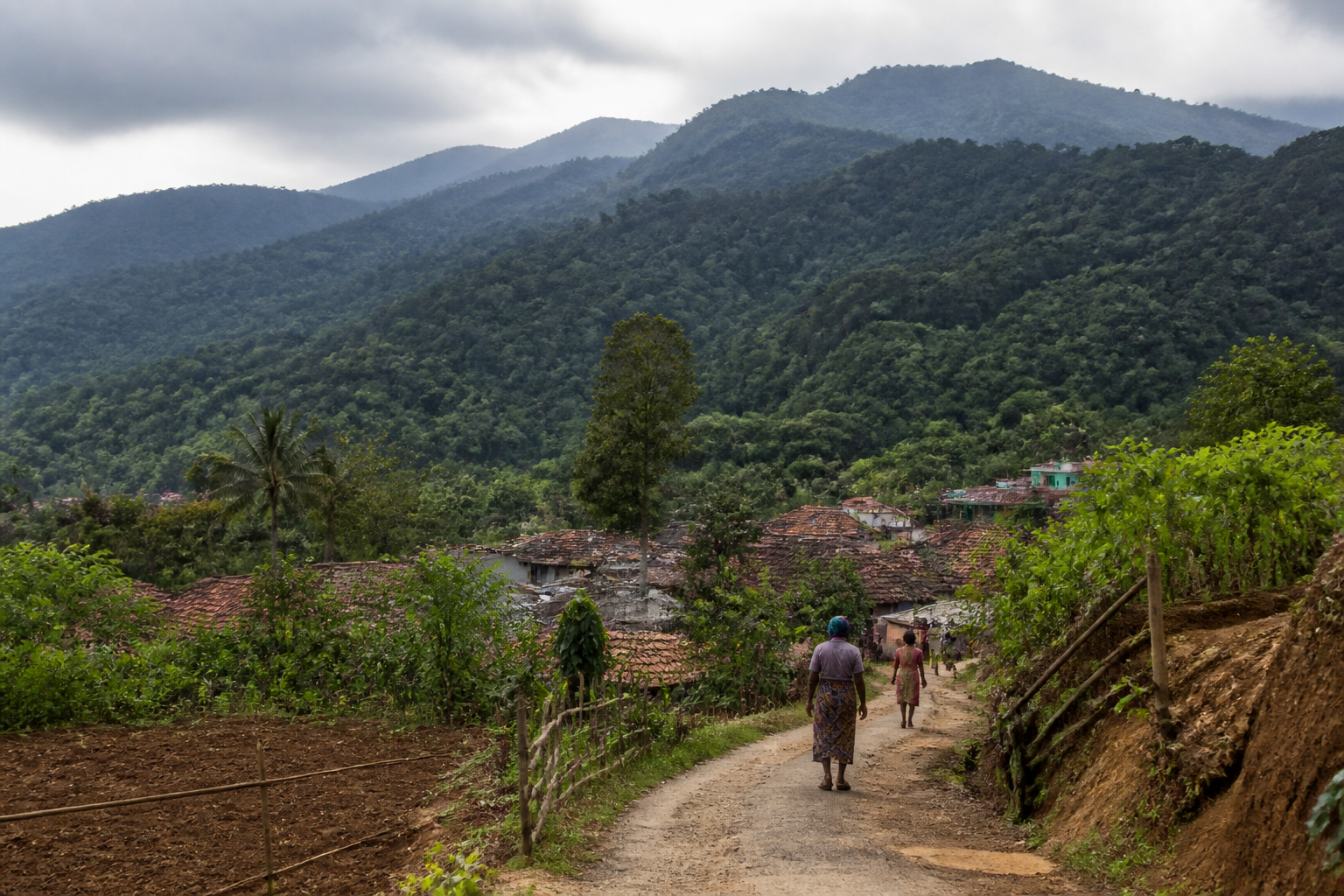
Karnataka minister Eshwar Khandre has urged the Centre to exclude 1,449 villages across 34 taluks from the areas identified under the Kasturirangan report, while calling for stronger protection of the Western Ghats and a special package for affected residents.
Khandre made the proposal during a discussion on the Kasturirangan report in the Karnataka Legislative Assembly on Monday. He said the villages were spread across 10 districts and that residents should not face hardship because of the proposed environmental-sensitive area framework.
According to the minister, the report identifies 20,668 square kilometres as an environmentally sensitive area in Karnataka. Of this, around 16,000 square kilometres is already covered by one or more protection categories, including tiger reserves, sanctuaries and reserve forests. Khandre said this represented about 80% of the area identified under the report.
He argued that the remaining areas containing the 1,449 villages should be excluded after a detailed review. The minister said a survey and consultation process should be conducted, referring to the reduction of Kerala’s environmentally sensitive area from about 13,000 square kilometres to 9,900 square kilometres as an example of a review that Karnataka could consider.
Khandre also cautioned that blaming forest department officials would not resolve the issue. He said both state and central laws governed forest conservation and would have to be followed. If the Centre and the state believed changes were necessary, amendments to the relevant laws would be required, he said.
The minister warned that finalising the notification in accordance with a court order could create difficulties. He proposed taking a delegation to the Centre and said the Assembly should work towards a consensus-based, permanent solution. The process, he added, should protect both the Western Ghats and the interests of people living in the affected villages.
The Western Ghats are the source of several rivers and are recognised as the eighth biodiversity hotspot, Khandre said. He also linked the range’s ecological role to the monsoon, saying it helps block rain-bearing winds and supports rainfall across the country. The minister referred to rising global temperatures and recent disasters as reasons to strengthen attention to ecological protection.
Khandre called for a special package for the region and said residents should be taken into confidence before a final decision. He also said large encroachers should not be given an advantage and that environmental conservation should remain separate from political considerations.
He criticised the Sanjay Kumar committee, which was appointed to examine suggestions from states on the Kasturirangan report. Khandre said the committee had not visited affected villages or sought the views of residents. He said that when he was forest minister, he had advised the committee to visit gram panchayats and inhabited areas to obtain local opinions, but alleged that it had not carried out that exercise.
The minister’s intervention places the next phase of the dispute between conservation requirements, village-level concerns and the legal framework governing the Western Ghats. Khandre said Karnataka should decide on a delegation to the Centre and pursue a permanent solution through consensus in the Assembly.
