


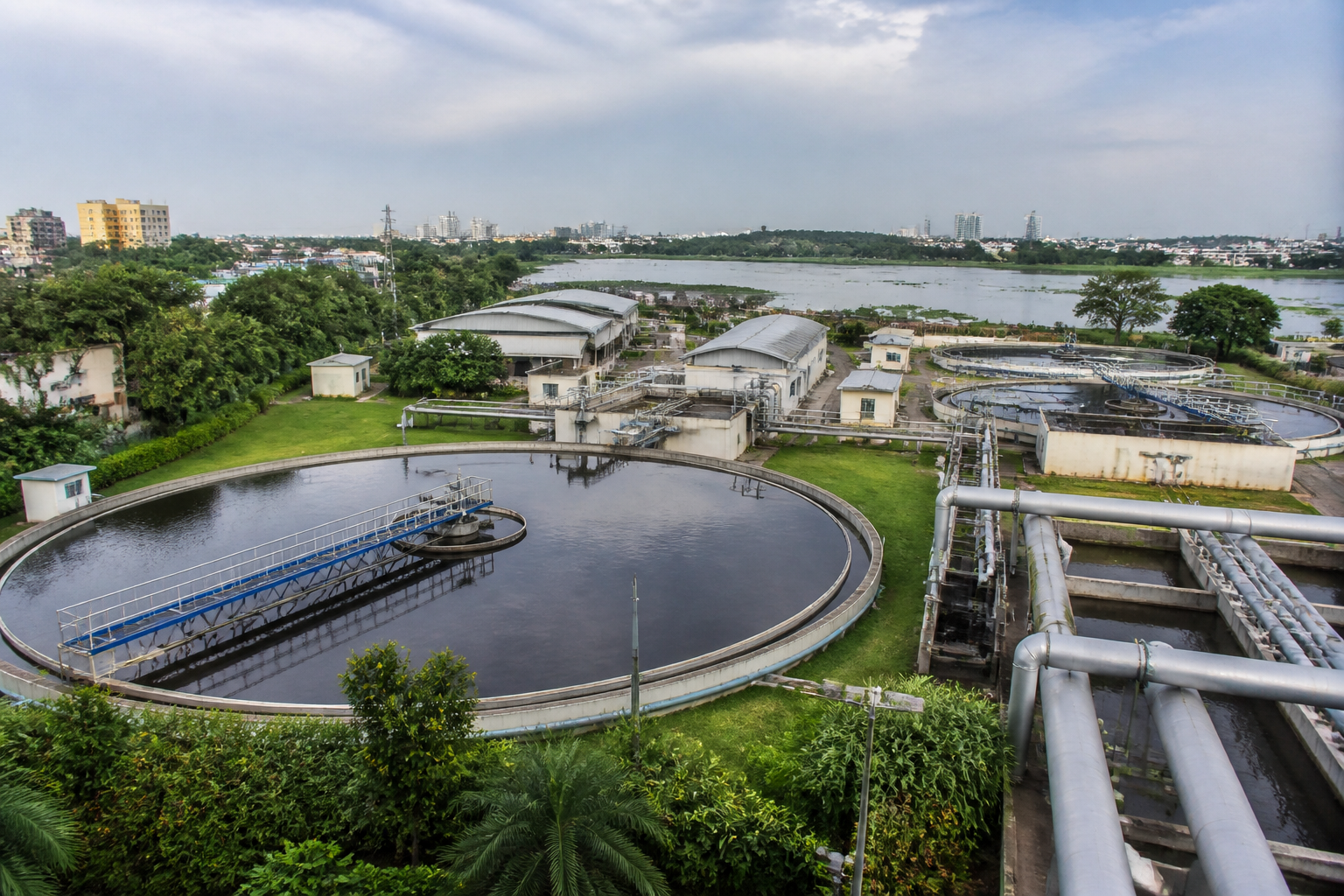
Bengaluru’s next wastewater investment is aimed at a gap that is larger than the capacity of the nine plants now being proposed. The Bangalore Water Supply and Sewerage Board (BWSSB) plans to establish nine sewage treatment plants (STPs) with a combined capacity of 475 million litres per day (MLD), at an estimated total cost of Rs 2,071.21 crore, according to a report by Vijay Karnataka.
The scale of the intervention reflects the mismatch between the city’s water use and its wastewater infrastructure. BWSSB currently supplies about 2,825 MLD, including Cauvery and borewell water, while daily wastewater generation is estimated at 2,580 MLD. The board’s existing 37 STPs have a treatment capacity of 1,364.5 MLD, leaving 1,215.5 MLD without treatment capacity on the figures reported.
That gap is not only a question of building more plants. It also involves the sewer network that carries wastewater to treatment facilities, the quality of treatment, the disposal or reuse of the treated output, and the financial structure required to operate the assets after construction. BWSSB is already undertaking 42 STPs with a combined capacity of about 1,147 MLD, the report said. The nine additional plants would therefore form another layer in an expanding treatment programme rather than a standalone response.
The proposed plants are divided into three packages. The first covers six locations—Madiwala, Kadubeesanahalli, Kadugodi, Koramangala, Bellandur and Basavapura—with a combined capacity of 175 MLD. This package has a reported capital cost of Rs 836.75 crore and an operations and maintenance allocation of Rs 119.92 crore, taking its total estimated cost to Rs 956.67 crore.
The second package covers Doddabele and Mylasandra. The two plants would together provide 200 MLD of capacity. Their capital cost is reported at Rs 629.81 crore, while operations and maintenance would account for Rs 92.91 crore. The total estimated cost of this package is Rs 722.72 crore.
The third package consists of a 100 MLD plant at Byramangala. It carries a reported capital cost of Rs 344.44 crore and an operations and maintenance cost of Rs 47.38 crore, for a total of Rs 391.82 crore.
Across all three packages, the capital cost is estimated at Rs 1,811 crore. Operations and maintenance account for Rs 260.21 crore, bringing the total to Rs 2,071.21 crore. The reported split places roughly 87.4% of the project cost in capital expenditure and 12.6% in operations and maintenance. That distinction matters because wastewater infrastructure does not deliver its intended public benefit when treatment plants are built but not consistently operated, maintained or connected to adequate inflow.
The financing plan also places the proposal within the wider constraints of urban infrastructure funding. According to an official quoted in the report, 25% of the capital cost would come from the state government and another 25% from BWSSB’s own resources. The remaining 50% is expected to be raised as loans from eligible financial institutions at favourable interest rates. The anticipated borrowing is about Rs 905 crore.
This structure gives the project a mixed funding base, but it also means that the future financial burden will extend beyond construction. Loan repayment, plant operation, maintenance, electricity and technical management will influence whether the proposed capacity becomes a reliable public service. The available report does not specify the lending institutions, repayment period, tariff structure or the procurement and implementation timetable.
The technological objective is broader than simply increasing the volume of wastewater treated. BWSSB sources cited by Vijay Karnataka said the new and proposed plants would use advanced treatment systems designed to significantly reduce pollutants including nitrogen and phosphorus. Existing plants are also expected to be upgraded in phases.
Nitrogen and phosphorus are important indicators of wastewater treatment quality because their presence in excess can affect receiving water bodies. The report links the proposed treatment expansion to Bengaluru’s lakes and to the reuse of treated water by industries, parks and construction projects. BWSSB also intends to use treated water for filling lakes.
That proposed reuse model could change the role of STPs in the city’s water system. Instead of treating wastewater as a material to be removed and discharged, the board is positioning it as a source that can be processed and supplied for non-potable uses. The report, however, does not provide projected reuse volumes, identified industrial customers, distribution plans or quality standards for each proposed use. Those details will determine how much of the treated output can actually substitute for freshwater demand.
The locations listed in the three packages also show how wastewater infrastructure is being planned across different parts of Bengaluru. Madiwala, Koramangala, Bellandur and Kadubeesanahalli are included in the first package, while Kadugodi, Basavapura, Doddabele, Mylasandra and Byramangala are covered in the other two. The source does not provide the catchment boundaries or the sewer flows assigned to each plant, so the relationship between each location and the city’s existing drainage network is not established in the available material.
That connection is central to the treatment gap. A plant’s installed capacity is not the same as the volume of wastewater it receives and successfully treats. The figures reported by BWSSB describe existing treatment capacity, while the city’s daily wastewater generation figure describes the estimated volume produced. The difference indicates a major infrastructure deficit, but it does not by itself show how much wastewater reaches each facility, how much is bypassed, or how much is lost through network limitations.
The city’s sewer system is reported to extend for more than 12,000 kilometres and to serve more than 11.50 lakh sanitary connections. These figures underline the scale of the network that must support treatment expansion. As Bengaluru’s water supply and connections grow, the volume entering the sewerage system also grows. Treatment plants therefore need to be planned alongside trunk sewers, pumping arrangements, local networks and outlets for treated water.
The proposal is being considered alongside the approved sixth phase of the Cauvery water supply project, according to BWSSB sources cited in the report. The connection is significant because additional water supply can create additional wastewater flows. A city that expands its water supply without equivalent sewerage and treatment capacity can shift the problem from scarcity at the tap to pollution after use.
Bengaluru’s reported numbers show why the board is pursuing multiple programmes at the same time. Existing plants provide 1,364.5 MLD of treatment capacity. The 42 plants under construction or development are expected to add about 1,147 MLD, while the nine newly proposed plants would add another 475 MLD. These figures indicate a planned expansion of capacity, but the source does not state whether all facilities will operate simultaneously, when the ongoing plants will be completed, or how the combined assets will be integrated.
The total proposed cost also shows that wastewater treatment is a long-term public investment rather than a one-time construction exercise. Of the Rs 2,071.21 crore estimate, Rs 260.21 crore is set aside for operations and maintenance. This allocation is spread across the planned plants and the reported cost period is not specified. Without a stated operating period, it is not possible to assess the annual maintenance provision or compare it with the expected cost of running the plants.
The central urban question is whether Bengaluru can turn treatment capacity into a functioning circular water system. The proposed plants are intended to reduce the amount of untreated wastewater entering water bodies, improve pollutant removal and supply treated water for lakes, industry, parks and construction. Achieving those objectives will depend on the completion of the plants, the performance of the sewer network, reliable operations and the creation of demand and distribution systems for reuse.
What is established from the reported plan is the scale of the intervention: nine plants, 475 MLD of additional proposed capacity and a total estimated cost of Rs 2,071.21 crore, supported by state funding, BWSSB resources and expected borrowing. What remains to be established is the implementation timetable, the plant-level catchment and reuse plans, the loan terms, and how the new assets will close the reported 1,215.5 MLD treatment-capacity gap. Those details will determine whether Bengaluru’s wastewater expansion becomes merely a larger asset base or a more dependable urban water system.
