


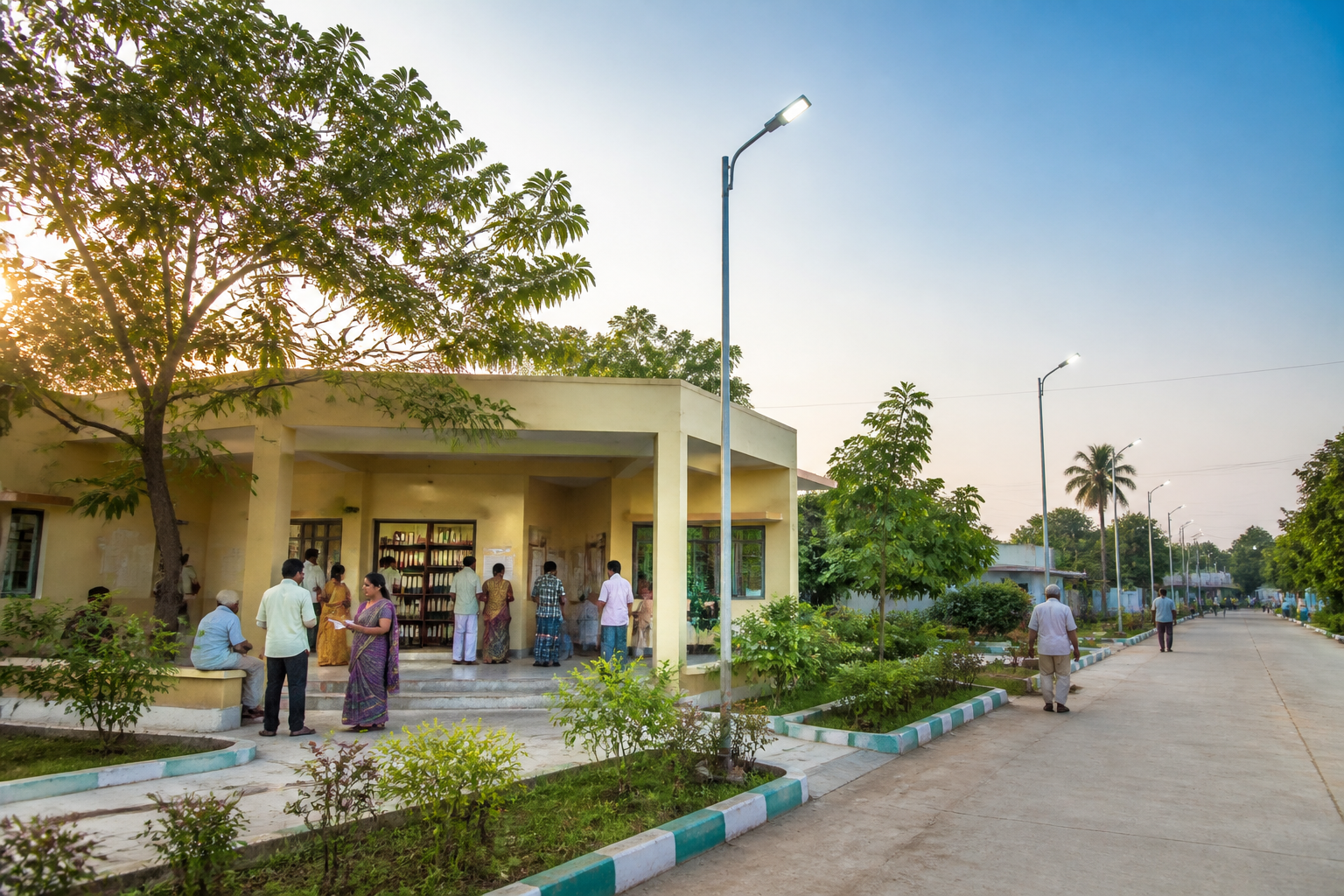
Narasingapuram village panchayat in Andhra Pradesh’s Chandragiri mandal has secured ISO 41001 certification for its infrastructure and facility management systems, public services and rural governance practices, according to the Deccan Chronicle. The certification recognises systems introduced to manage public assets, maintain service records and streamline delivery to residents.
The panchayat has created a digital inventory of public assets and introduced maintenance logs and registers for water testing and chlorination, waste collection, electricity supply, health services, school sanitation, farmer services and information technology equipment. Records covering tax collection and the utilisation of government grants have also been streamlined.
Narasingapuram panchayat caters to 755 families. It undertakes daily collection of wet and dry waste, while organic waste is used to produce vermicompost. The panchayat has reported tap water connections for all households and LED streetlights in all habitations.
The local infrastructure includes 1.68 km of cement concrete roads, an Ayushman Arogya Mandir, schools, anganwadi centres and a Rythu Seva Kendra. Through the Swarna Gramam Secretariat system, 32 types of government services are being delivered at the village level, the report said.
The panchayat has also introduced digital service delivery, time-bound grievance redressal and systems intended to maintain transparent financial records. Together, these measures place routine public administration—such as logging maintenance, tracking services and recording the use of public funds—within a documented management framework.
District collector Dr S. Venkateswar congratulated district panchayat officer D. Suseela Devi, Chandragiri Deputy MPDO Venkata Ratnam, Narasingapuram panchayat development officer Nagendra and other staff. He said the certification recognised the panchayat’s systems for managing public infrastructure and assets and delivering services to residents.
The certification comes as the panchayat continues to operate its existing water, sanitation, street-lighting, roads, health, education and farmer-service systems. The reported records and digital inventory are intended to support the ongoing management of those facilities and services at the village level.

