


The gang rape and murder of a teenage girl in Delhi’s Swaroop Nagar area has moved beyond a criminal investigation to become a test of how the capital’s institutions detect, investigate and answer for serious threats to women’s safety. Delhi Police have arrested a 19-year-old man and three juveniles, while the National Commission for Women has sought a time-bound investigation and preservation of forensic evidence. The case has also prompted Leader of Opposition Rahul Gandhi to question the Union Home Ministry’s responsibility for policing in the capital.
According to the report by Live Hindustan, the girl went to meet a 17-year-old acquaintance on 10 September. Police said that she was allegedly sexually assaulted by the accused, who were intoxicated. The following morning, the accused allegedly took her to a field, stabbed her repeatedly and attempted to conceal her body beneath soil and leaves. The body was recovered on 13 September. These details, as reported, are attributed to the police investigation and remain part of a case that will ultimately be tested through due legal process.
The account raises a basic urban governance question: how does a serious crime remain undetected for several days in a densely populated capital region? The supplied report does not establish when the girl was reported missing, whether a missing-person complaint was filed, how the police search unfolded or what enabled investigators to locate the body. Those details are important because the period between disappearance, discovery and recovery can determine the availability of evidence and the possibility of intervention.
That gap is central to understanding the case. Public safety is not delivered only through arrests after a crime. It also depends on the functioning of first-response systems, missing-person reporting, local police intelligence, communication between families and authorities, forensic capacity and the ability to identify vulnerable locations. The report establishes the recovery of the body and the arrest of four people, but it does not provide a complete account of each stage before those actions.
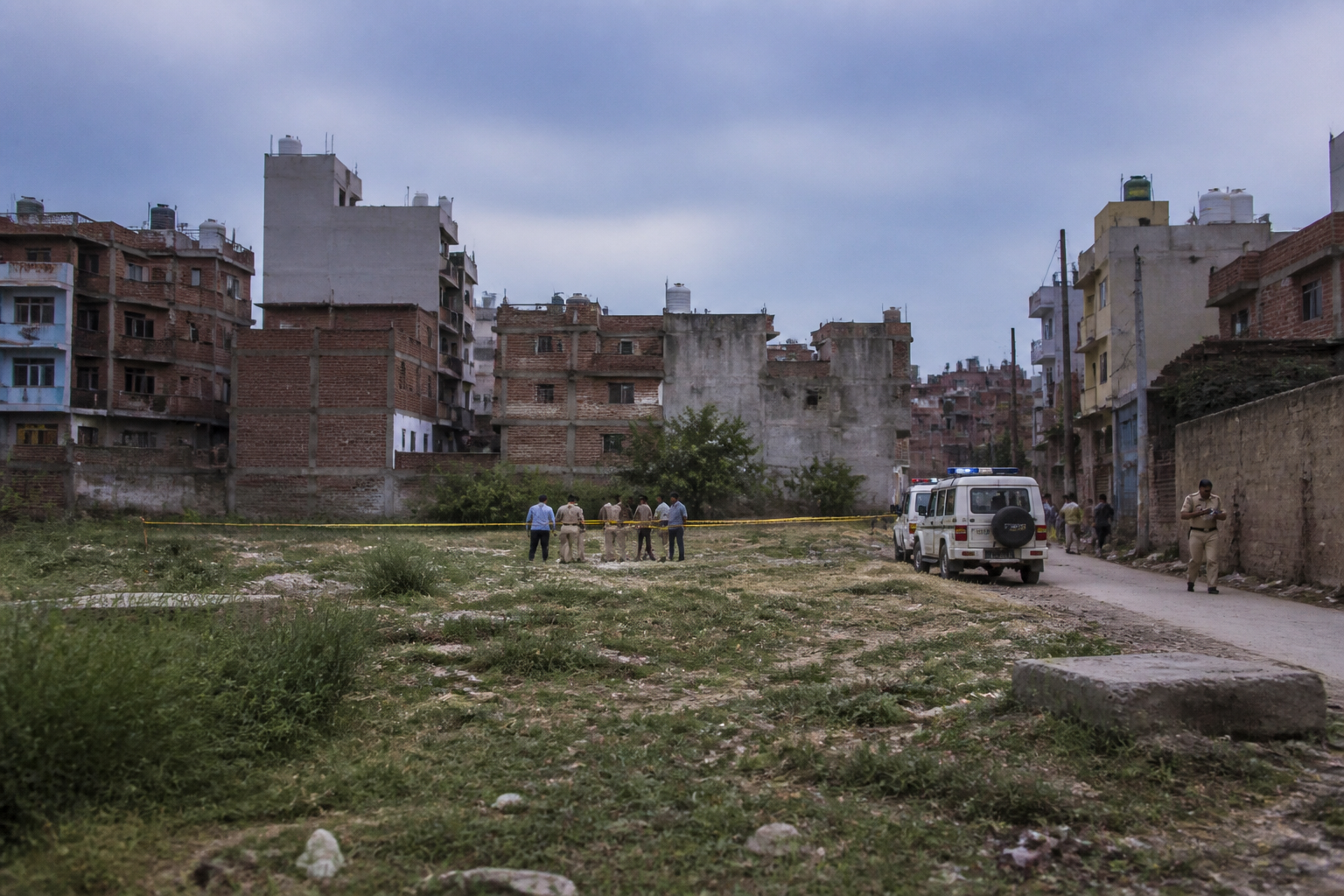
The reported location is also significant. A body was allegedly taken to and concealed in a field, indicating that the investigation involves not only residential or street-level spaces but also open land within the urban landscape. Vacant plots, agricultural pockets and poorly monitored edges can become difficult spaces for policing when ownership, access, lighting and surveillance are unclear. However, the supplied material does not establish the field’s exact ownership, lighting conditions, surveillance coverage or distance from the girl’s home. Those facts would be required before drawing conclusions about a specific site’s planning or security failures.
The National Commission for Women’s intervention adds an institutional layer to the case. Commission chairperson Vijaya Rahatkar wrote to the Delhi Police Commissioner seeking a comprehensive and time-bound investigation, strict legal action and the preservation of all forensic evidence. The commission also sought action under the Protection of Children from Sexual Offences Act and the Bharatiya Nyaya Sanhita, as reported by Live Hindustan.
The commission’s response matters because it places the case within a formal oversight process rather than leaving the investigation solely to public statements and political criticism. Its requests identify three immediate administrative priorities: completing the investigation within a defined timeframe, ensuring that evidence is preserved and applying the relevant legal provisions. The supplied report does not say whether the Delhi Police Commissioner has replied, whether the commission has been given an investigation update or whether a formal monitoring schedule has been announced.
The legal and administrative responsibility for policing is another important part of the case. Rahul Gandhi publicly asked Union Home Minister Amit Shah to answer for women’s safety, pointing out that Delhi Police functions under the Union Home Ministry. His statement described the incident as evidence of a wider failure to protect women and demanded immediate arrests, strict punishment and accountability. These are political claims and demands, not independent findings established by the report. They nevertheless identify the institutional chain that governs policing in the National Capital Territory.
That chain can make accountability difficult for citizens to follow. A crime may be investigated by a local police station, supervised through police command structures, reviewed by a statutory commission and debated by political representatives. Each institution has a different role. The police conduct the investigation and make arrests. The National Commission for Women can seek information and press for action. Political representatives can demand accountability in public forums. Courts determine guilt and punishment through judicial proceedings. A credible public record requires these roles to remain distinct.
The reported arrests are therefore an important development, but they are not the same as a completed investigation or conviction. Police have arrested one 19-year-old and three juveniles, according to the report. The material supplied does not provide the sections of the first information report, the status of remand proceedings, forensic findings, the precise roles allegedly assigned to each accused or the next court date. It also does not state whether additional suspects are being investigated. Those omissions do not negate the arrests, but they limit what can responsibly be concluded about the case.
The involvement of juveniles makes the legal handling especially consequential. The report says the National Commission for Women sought action under the POCSO Act and the Bharatiya Nyaya Sanhita. It does not explain how the age of the victim or accused has been established through official records, and the source itself gives conflicting ages for the victim in different parts of its report. For that reason, this account refers to the victim as a teenage girl rather than repeating a disputed age. Establishing age through official documentation will be important to the application of the relevant legal provisions.
The case also shows why forensic preservation is not a procedural detail. The commission specifically asked that all forensic evidence connected with the crime be preserved. In an alleged sexual assault and murder, physical evidence, the scene of recovery, medical examination records and digital or circumstantial evidence can shape the investigation. The report does not provide the forensic results, so no conclusion can be drawn about the strength of the prosecution case or the precise sequence of events beyond what police have reportedly stated.
At the ground level, the case reflects the dependence of urban safety on institutions that residents often encounter only during moments of crisis. Families need accessible channels to report a disappearance or threat. Police stations must record and act on complaints. Investigators must secure scenes and coordinate with forensic teams. Oversight bodies must obtain timely updates. These functions are connected, but the supplied report does not establish whether any particular link failed in this case. It does establish that the commission considered the investigation serious enough to warrant a formal intervention.
The political response has widened the question from the accused individuals to the performance of Delhi’s policing system. Rahul Gandhi’s criticism asks who is responsible for women’s safety and whether the police are sufficiently focused on preventing crime rather than only responding after it occurs. The report does not contain a response from the Union Home Ministry or Delhi Police to those questions. Without that response, the public record contains an accusation and an institutional request but not a complete official explanation.
The next stage should therefore be judged through verifiable milestones rather than statements alone: the police account of the investigation, forensic examination, the legal sections applied, progress before the court, and the response to the National Commission for Women. Information about the missing-person report, the time of police notification, the recovery operation and the security conditions at the field would also clarify how the incident unfolded within the city.
What the available evidence confirms is that a teenage girl was allegedly gang raped and murdered in Swaroop Nagar, that police have arrested four people, that her body was recovered after an alleged attempt to conceal it and that the National Commission for Women has demanded a time-bound investigation and evidence preservation. What remains unresolved is the full timeline, the evidentiary record, the institutional response before recovery and the accountability findings. Those facts will determine whether the case produces not only arrests, but a clear public account of how the city’s safety systems functioned and where they failed.
