


Telangana’s police restructuring has reportedly saved the state around ₹90 crore by changing how personnel, allowances and vehicles are deployed across specialised units and VIP security. The exercise is significant not simply because it reduces expenditure, but because it shows how a police organisation is reallocating resources as the operational conditions that justified earlier deployments change.
According to Director General of Police CV Anand, the restructuring covered the anti-Naxal Greyhounds and anti-terror commando OCTOPUS wings, as well as security arrangements for VIPs. The reported measures included withdrawing an additional allowance from 573 personnel, redeploying police staff to other wings, removing 376 excess security personnel from VIP duties and reducing the fleet assigned to VIP protection.
The largest specifically identified saving came from the withdrawal of the 60% additional allowance paid to personnel in the Greyhounds and OCTOPUS units. The allowance was linked to the risks associated with their duties and its withdrawal is estimated to save ₹28.16 crore. The figure indicates that personnel costs, rather than only equipment and vehicles, were central to the state’s expenditure on specialised policing.
The decision also reflects a shift in the security rationale behind the Greyhounds deployment. The report states that the Naxal problem has been largely eradicated in Telangana and that the number of personnel assigned to the Greyhounds has therefore been substantially reduced. Many of those personnel have been moved to other wings of the police department rather than removed from policing altogether.
That distinction matters for understanding the exercise. The reported saving does not arise only from cutting the police workforce. It also comes from changing the location and purpose of deployment. A specialised force created for a particular security threat can become expensive to maintain at its earlier scale when that threat declines. Redeployment allows the department to retain trained personnel while reducing the cost associated with a risk-specific structure.
The same logic appears in the changes to VIP security. The DGP’s office said 376 excess security personnel deployed for VIPs, including senior retired IPS officers, were withdrawn. This measure places the question of police capacity alongside the question of privilege and entitlement: every security posting has an administrative cost, and personnel assigned to protect individuals are not available for other duties during that period.
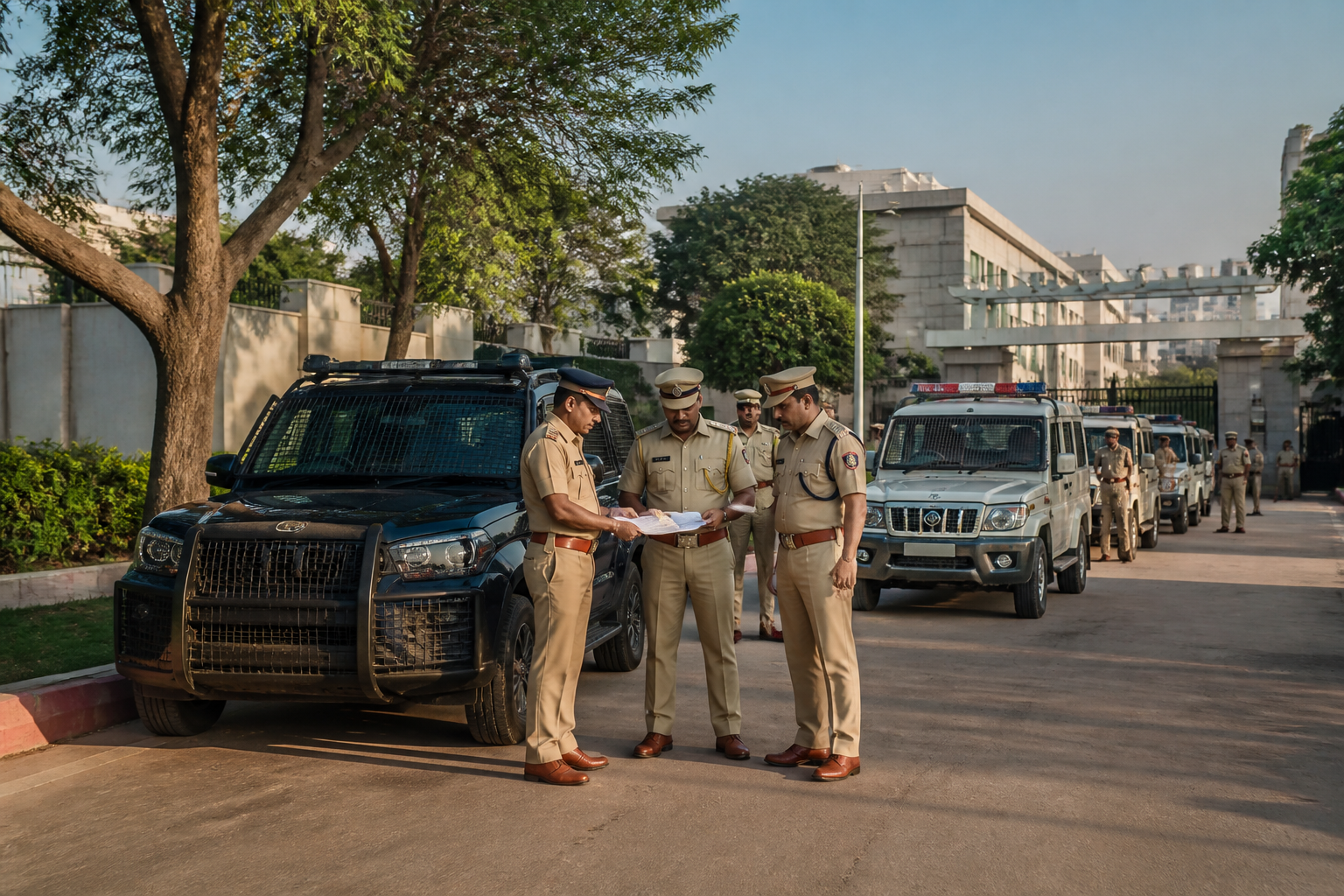
The report does not provide a detailed breakdown of the ₹90 crore total across allowances, salaries, vehicles and other operating costs. It does, however, identify a substantial reduction in the vehicles used for VIP security. The department withdrew 20 bullet-proof vehicles, seven Fortuners, 18 Innova Crystas and 58 other four-wheelers. Together, these changes removed 103 vehicles from the relevant fleet.
The vehicle reduction is important because a government fleet creates costs beyond the purchase price of a vehicle. While the supplied report does not quantify fuel, maintenance, driver deployment, insurance or replacement costs, the withdrawal of 103 vehicles would reduce the operational footprint of VIP security. It also indicates that the restructuring involved physical assets as well as personnel and allowances.
The available figures establish three separate layers of the exercise. First, the withdrawal of the 60% allowance from 573 Greyhounds and OCTOPUS personnel produced an estimated saving of ₹28.16 crore. Second, 376 personnel were removed from what the department described as excess VIP security deployment. Third, 103 vehicles were withdrawn from the VIP-security fleet. The DGP’s office placed the overall saving from the restructuring at around ₹90 crore.
The difference between the identified ₹28.16 crore allowance saving and the overall ₹90 crore figure suggests that the remaining savings came from multiple components of the exercise. The supplied report does not specify the exact contribution of redeployment, reduced personnel costs, vehicle withdrawal or other administrative changes. That limitation is important: the headline total is official, but its full accounting is not available in the material provided.
The restructuring also raises a broader institutional issue about how police departments review standing arrangements. Security deployments often expand in response to particular threats, public positions or individual assessments. Once established, these arrangements can continue even when circumstances change. A review that removes excess personnel and vehicles represents an attempt to align the security apparatus with current operational requirements rather than historical deployment patterns.
At the same time, the available information does not establish whether the restructuring has changed the security cover of any specific individual, nor does it detail the criteria used to determine which deployments were excess. It also does not state how many personnel remain in the Greyhounds, OCTOPUS or VIP-security units after the changes. Those details would be necessary to assess the operational scale of the reorganisation beyond its financial outcome.
The redeployment of Greyhounds personnel is particularly relevant to the question of institutional capacity. Specialised police units accumulate training and experience that may not be easily reproduced elsewhere in the department. Moving personnel into other wings can preserve that human resource, but the report does not identify the receiving units or explain whether the redeployed staff will retain specialised roles or move into general policing responsibilities.
Similarly, the withdrawal of the additional allowance creates a distinction between the risks attached to a post and the continuing employment of the personnel who held it. The report says the allowance was paid because of the risks involved in Greyhounds and OCTOPUS duties. It does not state whether the nature of those duties has changed for all 573 personnel, whether some personnel have moved to different assignments, or whether the allowance policy has been revised more broadly.
This makes the exercise a question of administrative design as much as budget control. Public spending on policing is shaped by decisions about who is deployed, for what purpose, under which risk classification and with what supporting assets. Changing one element, such as an allowance, without examining deployment patterns would produce only a partial saving. Telangana’s reported exercise combined these levers, although the source does not provide the detailed administrative order or financial statement behind the changes.
The VIP-security component also illustrates how policing resources can be distributed between individual protection and wider public functions. The report does not quantify the number of police personnel available for other duties as a result of the withdrawals. It therefore cannot establish how much additional capacity has been created for investigation, patrol, traffic management, emergency response or community-facing work. What it does establish is that personnel and vehicles previously assigned to VIP security have been taken out of those deployments.
For citizens, the immediate significance lies in the potential reallocation of public resources. The reported saving gives the state more fiscal room, while redeployment gives the police department the ability to use personnel elsewhere. But the supplied material does not say where the financial savings will go or whether the redeployed personnel will be assigned to areas facing a documented shortage. The public value of the exercise will consequently depend not only on the amount saved, but also on how the released capacity is used.
The report’s figures also show why manpower restructuring can have a larger effect than isolated procurement decisions. The department reduced allowances for hundreds of personnel, withdrew hundreds of security deployments and removed more than a hundred vehicles. These are recurring or system-linked commitments, and changing them can affect the cost structure of policing over time. The article does not provide a time frame for the ₹90 crore estimate, so it is not possible to determine whether the amount represents annual savings, cumulative savings or a broader projected figure.
That missing time frame is one of the central limits of the available evidence. A full assessment would require the period over which the savings are calculated, the baseline expenditure before restructuring, the post-restructuring staffing pattern and the financial treatment of the withdrawn vehicles. It would also require clarity on whether the 573 personnel continue to perform comparable high-risk duties under a different organisational arrangement.
The DGP’s other direction in the report was unrelated to the savings calculation but illustrates the continuing administrative demands on the police department. Anand instructed officials to make arrangements for a conference of DGPs of southern states scheduled to be held in Hyderabad in October. The event places the department in a coordinating and hosting role even as it reorganises specialised units and security resources.
Taken together, the reported changes show a police department attempting to match its organisation to a changing security environment. The evidence confirms a ₹90 crore overall saving claimed by the DGP’s office, a ₹28.16 crore saving from withdrawing the 60% additional allowance from 573 personnel, the withdrawal of 376 excess VIP-security personnel and the removal of 103 vehicles. It does not yet establish the full financial accounting, the post-restructuring deployment map or how the released resources will be used. Those details will determine whether the exercise remains primarily a cost-reduction measure or becomes a broader redistribution of policing capacity.
