


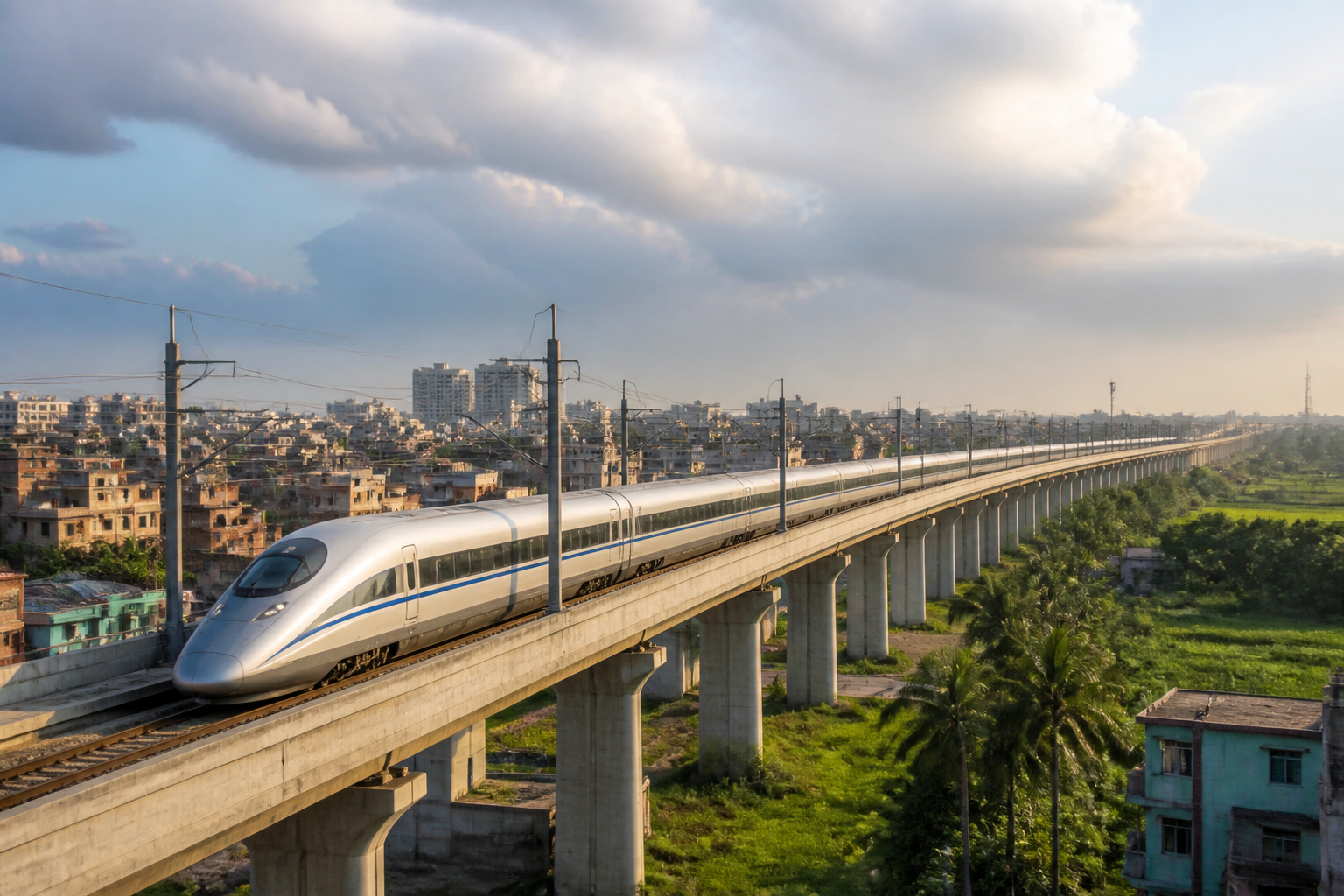
The proposed Delhi-Siliguri bullet train corridor has moved closer to formal consideration after the National High Speed Rail Corporation Limited (NHSRCL) submitted a detailed project report (DPR) to the Railway Ministry, according to a report by Aaj Tak Business. The proposed route through Varanasi and Patna could reduce the current 20-24 hour journey between Delhi and Siliguri to about 6 hours 45 minutes.
The corridor is planned to connect Delhi, Varanasi, Patna and Siliguri, creating a high-speed rail link between northern, eastern and northeastern India. The report describes the proposed route as approximately 865 kilometres long, while another reference in the same report puts the corridor figure at about 885 kilometres. The final alignment and project specifications will depend on the appraisal and decisions that follow the DPR submission.
Under the proposal, the Delhi-Varanasi section would cover about 756 kilometres in approximately 3 hours 50 minutes. The existing journey on this stretch takes around 11-12 hours, according to the report. The proposed Varanasi-Patna-Siliguri corridor is described as roughly 744 kilometres long, with Varanasi-Siliguri travel expected to take about 2 hours 55 minutes.
The report estimates that the proposed high-speed service could reduce the Delhi-Patna journey from roughly 12-14 hours to about 4 hours 41 minutes. Travel between Patna and Siliguri could take approximately two hours, while the full Delhi-Siliguri journey could be completed in around 6 hours 45 minutes. These are projected journey times under the proposal and are not an operating timetable.
The proposed alignment would enter Bihar from the Varanasi side and pass through or connect major cities including Buxar, Ara and Patna before moving towards Siliguri. That alignment would place Bihar at the centre of a high-speed rail link connecting the national capital with eastern India and the gateway to the Northeast.
The project follows the introduction of India’s high-speed rail programme in 2017. The country’s first bullet train is expected to operate on the Mumbai-Ahmedabad High Speed Rail Corridor from a possible 15 August next year, according to the report. The Delhi-Siliguri proposal is at an earlier stage: the submission of the DPR does not by itself indicate that construction has been sanctioned or that an opening date has been fixed.
Railway Board officials cited in the report described the proposed line as important for connectivity in eastern India and for access towards the Northeast. The report also linked the reduction in travel time to the possibility of increased economic and industrial activity in Bihar. The next significant step will be the Railway Ministry’s consideration of the DPR and any decisions on alignment, implementation and approvals.
