


Delhi-NCR’s urban safety problem is not limited to a fallen traffic signal pole, an illegal paying-guest accommodation, a road-rage case or a disrupted bus service. Taken together, the incidents reported across the region point to a more consequential governance question: can the systems responsible for identifying and reducing risk act before visible warnings become public emergencies?
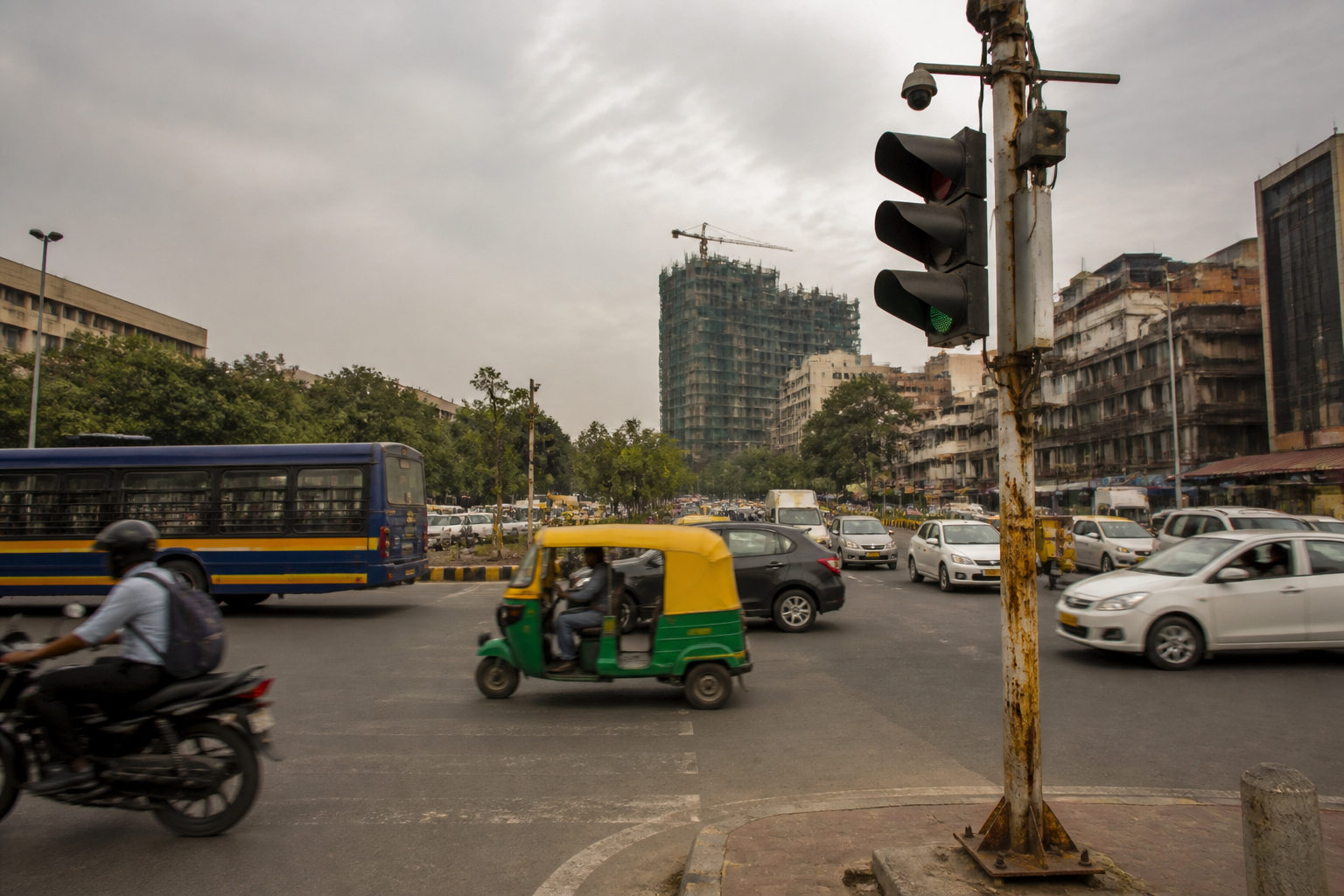
The question has gained urgency after a traffic signal pole crashed onto vehicles at Minto Road in central Delhi, injuring two people. The pole, installed in 2010, was reportedly showing rust around its base. According to the Times of India report, the agency responsible for its maintenance had been alerted about repairs roughly five days before the collapse. Police are investigating whether seepage and rust weakened the structure.
The central issue is therefore not only the engineering cause of the collapse. It is the gap between detection and action. A warning had reportedly entered the maintenance system, but the available account does not establish whether the complaint was formally recorded, assigned to a responsible official, inspected, repaired or closed after verification. Those steps are the basic operating chain of urban maintenance. When any link fails, a routine repair can become a safety incident.
This pattern is visible in many forms of city infrastructure. Rust, cracks, water seepage, loose fixtures, damaged pavements and non-functioning street lights are often observable before they become dangerous. Yet visibility does not automatically produce accountability. The presence of a defect is only the first stage. A functioning civic system must also establish who owns the asset, what level of risk it represents, how quickly it must be addressed and who confirms that the problem has been resolved.
That institutional chain is especially important in a region as interconnected as Delhi-NCR. Administrative boundaries divide responsibility among municipal bodies, development authorities, police departments, transport agencies, state governments and other public institutions. Residents, however, experience the region as a single urban system. A commuter may live in one jurisdiction, work in another and use roads, buses, metro services and commercial neighbourhoods governed by several agencies in a single day.
The enforcement actions in Gurgaon show a different version of the same challenge. The Department of Town and Country Planning resumed action in Sushant Lok-1 and South City-1 against unauthorised additional floors, commercial activity in residential buildings, illegal PGs and the misuse of stilt parking. More than 17 properties were sealed or faced demolition in the latest operation, following campaigns that had targeted about 27 properties.
In one reported case, a property containing 23 rooms allegedly being used as an illegal PG was sealed. These figures describe enforcement activity, but they also reveal the scale of the accumulated problem. A residential property that gains extra floors, is divided into multiple rooms and begins operating as a commercial accommodation facility does not become a different land-use category overnight. Such changes develop incrementally, creating a period during which authorities may be able to detect and stop them at lower cost.
Once the activity becomes established, enforcement becomes more disruptive. Residents, tenants, property owners and neighbouring communities may all be affected, while the authority must deal with a violation that has already become part of the built environment. The enforcement drive is consequently not just a question of how many premises are sealed. It raises questions about building-permission records, inspection capacity, complaint handling, occupancy monitoring and the speed with which planning violations are identified.
The report also links the issue to illegal colonies near the 900-metre restricted zone around the IAF ammunition depot. Long-standing restrictions have not prevented construction activity from becoming a recurring concern in the area. This points to a familiar urban-planning difficulty: regulations may exist clearly on paper, but their effectiveness depends on boundary surveillance, land records, field inspections and timely action before individual violations form a larger cluster.
Road safety presents the same problem at street level. In the Gurgaon road-rage case on Golf Course Road, footage recorded on the motorbike and CCTV footage helped investigators reconstruct events involving a woman who was allegedly chased and rammed by a car. Police formed a five-member special investigation team, arrested two accused and took them into custody for crime-scene reconstruction. The FIR was later enhanced to include charges related to stalking, outraging the modesty of a woman and attempt to murder.
In Greater Noida, a 32-year-old man suffered multiple fractures after being hit by a car at Ek Murti Chowk in the early hours of September 5, according to the report. Police later arrested the 24-year-old driver and impounded the vehicle. The incidents are factually distinct, but both show how ordinary movement through the region can become dangerous when speed, aggression or poor road discipline enters the equation.
Cameras and mobile-phone recordings are increasingly important after such incidents. They help police identify vehicles, establish sequences and locate suspects. But this is largely a response capability. Video evidence can improve investigation after harm has occurred; it does not by itself prevent dangerous driving, redesign a hazardous junction or ensure that enforcement is visible enough to deter violations.
The preventive challenge is broader than policing. Road safety requires the interaction of road design, traffic engineering, speed management, vehicle enforcement, pedestrian protection and emergency response. The supplied report does not establish which of these factors contributed to the Greater Noida crash or the Gurgaon incident. It does, however, show the difference between reconstructing an event and managing the conditions that allow an event to occur.
The pressure on Delhi-NCR’s safety systems is not confined to physical infrastructure. The report cites Haryana’s H1N1 count rising from 163 on August 26 to 378 on September 16. In Gurgaon, the count rose from 12 to 46 over the same period, while hospital admissions across the state more than doubled from 27 to 58. These figures represent a different kind of urban risk: one that is less visible than a collapsed pole or a sealed building but capable of placing pressure on hospitals, families and workplaces.
Public transport adds another layer of vulnerability. A strike by contractual Delhi Transport Corporation drivers over wages and social-security benefits reduced bus services in several areas, leaving commuters with fewer options and increasing demand for the Metro and app-based transport. The immediate effect of a disruption is felt by passengers, but the wider lesson concerns network resilience. When one mode loses capacity, the alternatives must absorb additional demand. If they cannot, overcrowding, congestion, longer travel times and higher costs are transferred to commuters.
This is why separate departments cannot be assessed only through their individual incident responses. A city’s safety net is made up of maintenance systems, planning enforcement, policing, public-health capacity and transport operations. Each has a distinct mandate, but failures can compound one another. A road incident can affect traffic flows; a bus disruption can increase pressure on the Metro and private vehicles; an enforcement action can expose long-standing planning weaknesses; and a health surge can test hospital capacity at the same time that the city is managing other emergencies.
The evidence in the report does not establish that Delhi-NCR has one unified system for tracking these risks. In fact, the incidents point to a fragmented operating environment in which information, responsibility and action may not move at the same speed. A maintenance warning may sit with an agency, a planning violation may remain visible for years, and a transport disruption may be experienced immediately by passengers without a clear regional mechanism for absorbing the shock.
The distinction between response and prevention is central. After the Minto Road collapse, the question is whether the reported warning led to an intervention. After the Gurgaon enforcement drive, the question is how unauthorised activity was allowed to become sufficiently established to require sealing or demolition. After the road-rage incident, the investigation may determine criminal responsibility, but the wider road-safety system must also be examined through its ability to deter dangerous behaviour. During a bus strike, the resilience of the network is measured by whether commuters retain reliable alternatives.
These are not arguments for treating every civic failure as identical. A corroded signal pole is an asset-maintenance issue. An illegal PG and unauthorised floor involve land-use and building enforcement. Road rage is a law-and-order and safety concern. Rising infections test public-health capacity, while a driver strike tests labour relations and transport contingency planning. Their common thread is the need for institutions to act on early signals rather than wait for visible damage, injury or disruption.
For citizens, the difference between prevention and response is practical. Prevention means a hazardous structure is repaired before it falls, a planning violation is stopped before it becomes a neighbourhood pattern, dangerous driving is deterred before a crash and public transport retains enough redundancy to keep people moving. Response begins after the risk has already imposed a cost.
The incidents reported across Delhi-NCR therefore leave two facts clear. Authorities are acting in several cases through investigations, arrests, sealing and demolition operations, and the use of CCTV and other recordings. But the available evidence also shows that action often becomes most visible after the warning has matured into an incident or an entrenched violation. The next test for the region’s institutions is whether they can make inspection, ownership, preventive maintenance and enforcement operate early enough to keep predictable risks from becoming public crises.
