


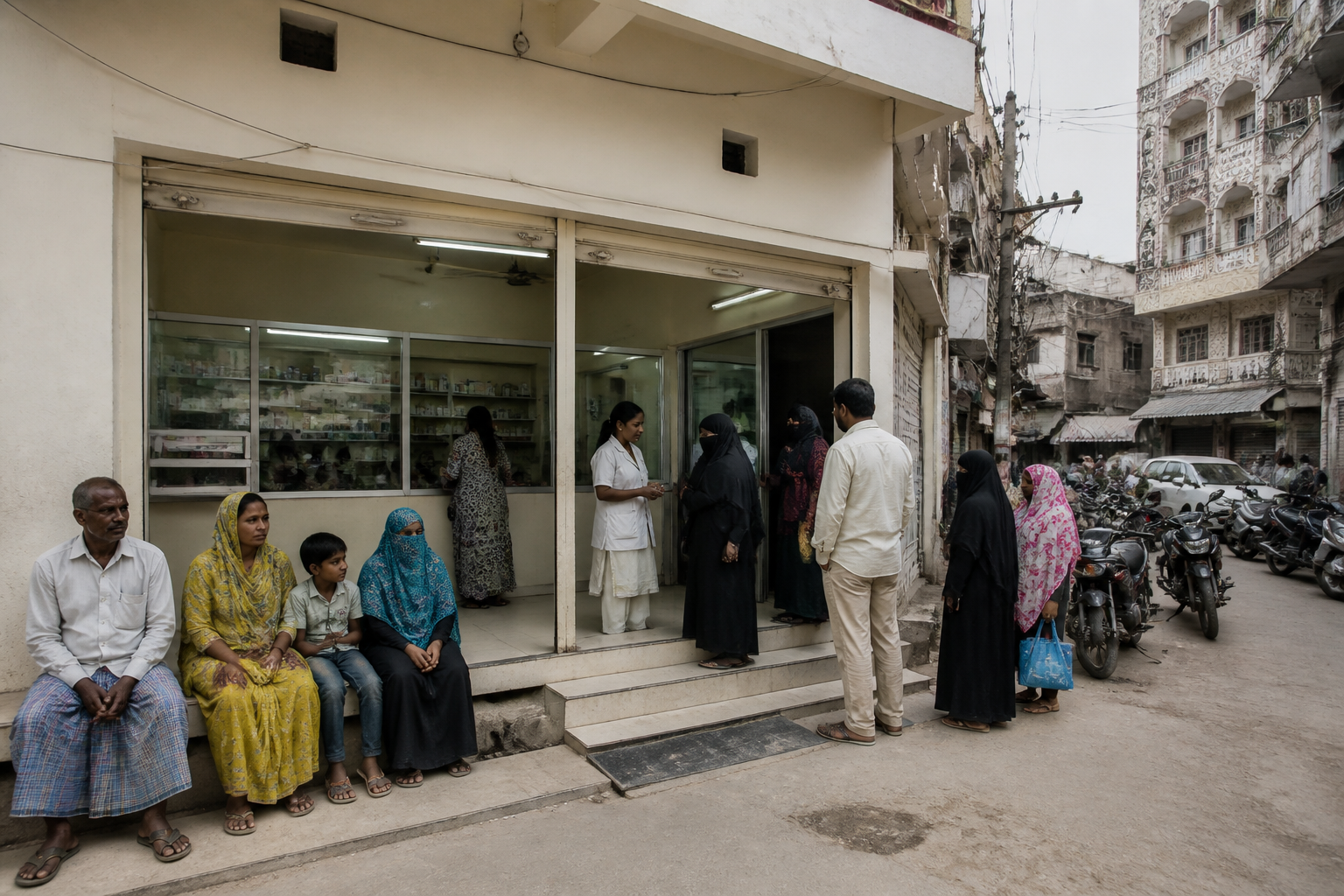
Telangana’s network of 476 Basti Dawakhanas is operating with 278 vacancies, leaving nearly one in five sanctioned posts unfilled and placing the greatest staffing pressure on nurses, according to health department data tabled in the state Assembly. The shortages are affecting urban primary-care centres that serve patients seeking basic treatment, medicines, diagnostics and chronic disease follow-up.
The centres have 1,428 sanctioned posts in total, with one doctor, one staff nurse and one supporting employee assigned to each facility. Of these, 1,150 positions have been filled, while 278 remain vacant, representing nearly 20% of the sanctioned strength.
Staff nurse vacancies are the largest category, with 135 posts unfilled, or more than 28% of the sanctioned positions. The shortfall accounts for almost half of all vacancies. There are also 97 vacant doctor posts, equivalent to about 20% of the sanctioned positions, and 46 vacancies among supporting staff, or 9.7%.
Hyderabad has the highest number of vacancies at 90, followed by Medchal-Malkajgiri with 56 and Rangareddy with 39. Together, the three districts account for 185 vacancies, or 66.5% of the statewide total. Their vacancy rates are lower than the state average because they also contain the largest number of Basti Dawakhanas.
Staffing levels vary sharply across districts. The health department data shows that nine districts, including Adilabad, Hanumakonda, Jagtial, Karimnagar and Rajanna Sircilla, have complete staffing at their centres. In contrast, seven districts, including Vikarabad, Suryapet, Nizamabad and Warangal, have most staff posts vacant.
Medak records one of the most severe gaps. Four of the six sanctioned positions across its two Basti Dawakhanas are vacant, leaving only two personnel in place and producing a vacancy rate of about 66.7%.
The staffing problem is accompanied by reported delays in salaries and gaps in medicines and diagnostic supplies. A nurse working in Hyderabad’s Old City told the Times of India that the centre had handheld devices and free Wi-Fi when it was launched, but had been without internet for more than a year. The nurse said the lack of connectivity affected app-based entries, telemedicine and the E-Aushadhi system used for medicine-related processes.
The nurse also said patients sometimes arrive to collect their monthly medicines only to find that supplies are unavailable. According to the source, medicine and test indents can remain unanswered for days with central drug stores.
The shortage of nurses has particular implications for the functioning of the centres because nurses handle patient assessment, basic procedures, health education and follow-up for people with chronic diseases. Dr Karthik Nagula, president of the Health Reforms Doctors Association, said the government should conduct regular, time-bound recruitment drives and maintain category-wise waiting lists to fill vacancies quickly.
Nagula also said recruitment would not be sufficient unless salary delays and shortages of essential medicines were addressed. The health department data establishes the scale and geographic spread of the vacancies, while the reported operational gaps indicate that staffing is only one part of the pressure facing Telangana’s urban primary-care network.
