


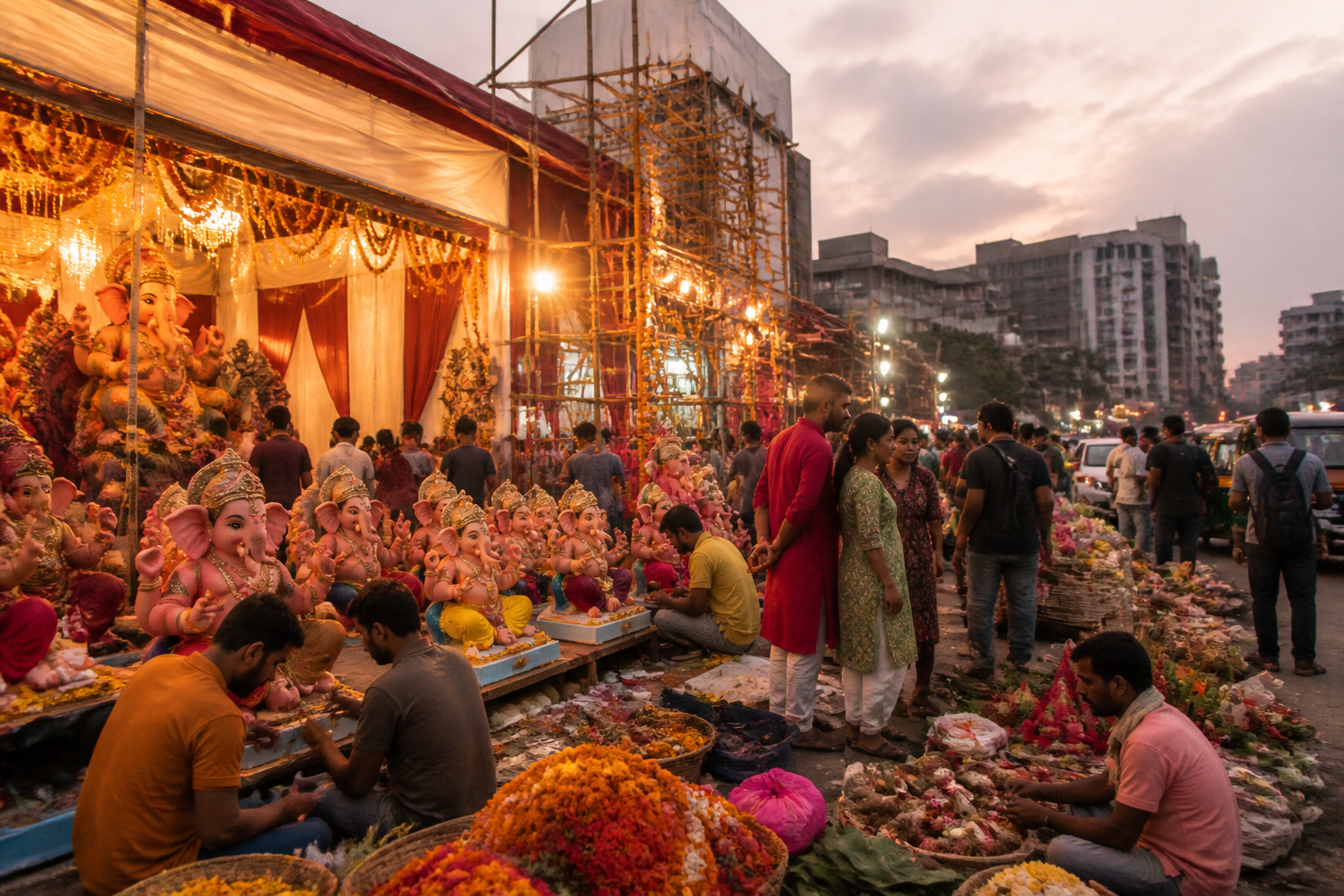
India’s Ganesh festival trade could cross ₹50,000 crore this year, according to an estimate by the Confederation of All India Traders (CAT), with local idols, decorations, catering, transport, tourism and event services driving activity across major cities.
The 10-day festival began with Ganesh Chaturthi and is scheduled to conclude with immersions on September 25, according to the report. CAT said consumer spending, the expansion of community celebrations, larger pandals, tourism, event management and rising demand for Indian-made products were contributing to the projected increase.
The estimate is substantially higher than the figures cited for previous years. CAT put festival-related trade at around ₹30,000 crore in 2024 and between ₹30,000 crore and ₹40,000 crore in 2025. The organisation based its current projection on discussions with trade bodies, markets and other stakeholders across different states.
The festival generates business across a wide network of urban and semi-urban suppliers. The sectors identified by CAT include idol-making, pandal construction, decoration and lighting, flowers, पूजा materials and prasad, sweets, dry fruits, food and catering, clothing, gifts, tourism, transport, hospitality, event management, advertising and sponsorship.
For cities, the festival economy is closely tied to temporary public activity. Large and small pandals bring visitors into neighbourhood markets, while the movement of materials, performers, food suppliers, artisans and visitors creates short-term demand for transport and logistics. The activity also supports sculptors, flower sellers, craftsmen, weavers, bamboo and fabric suppliers, tent-house operators, sound and lighting technicians, small traders and workers in the informal economy.
CAT said the festival is particularly prominent in Maharashtra, Karnataka, Delhi, Telangana, Andhra Pradesh, Gujarat, Goa, Uttar Pradesh, Madhya Pradesh and Tamil Nadu, as well as in several major metropolitan areas. The organisation said millions of people are involved directly or indirectly through manufacturing, retail, services and event-related work, although the report does not provide a separate employment count or an independently verified breakdown of the ₹50,000-crore estimate.
The trade body also reported stronger demand for locally made idols, decorative products, worship materials, textiles, handicrafts and gifts. This trend has been linked by CAT to the “Vocal for Local” and “Atmanirbhar Bharat” campaigns, with traders and consumers giving greater preference to domestic products during the festival season.
Environment-friendly pandals are another feature highlighted in the report. CAT said organisers are using banana leaves, marigold flowers, natural fabrics, clay lamps, bamboo and handmade materials. Themes based on Indian cultural heritage, temple architecture, rural India, traditional regional styles and the five elements were also reported to be attracting visitors.
The festival is part of a wider trading season that began with Raksha Bandhan and is expected to continue through Navratri, Durga Puja, Dussehra, Karwa Chauth, Diwali, Chhath Puja and the subsequent wedding season. CAT said the continuing sequence of festivals would support traders, artisans, micro, small and medium enterprises, women entrepreneurs, self-employed workers and service providers.
The ₹50,000-crore figure remains a trade-body estimate rather than an official national economic measurement. The next significant milestone in the current festival cycle will be the conclusion of public celebrations and idol immersions on September 25.
