


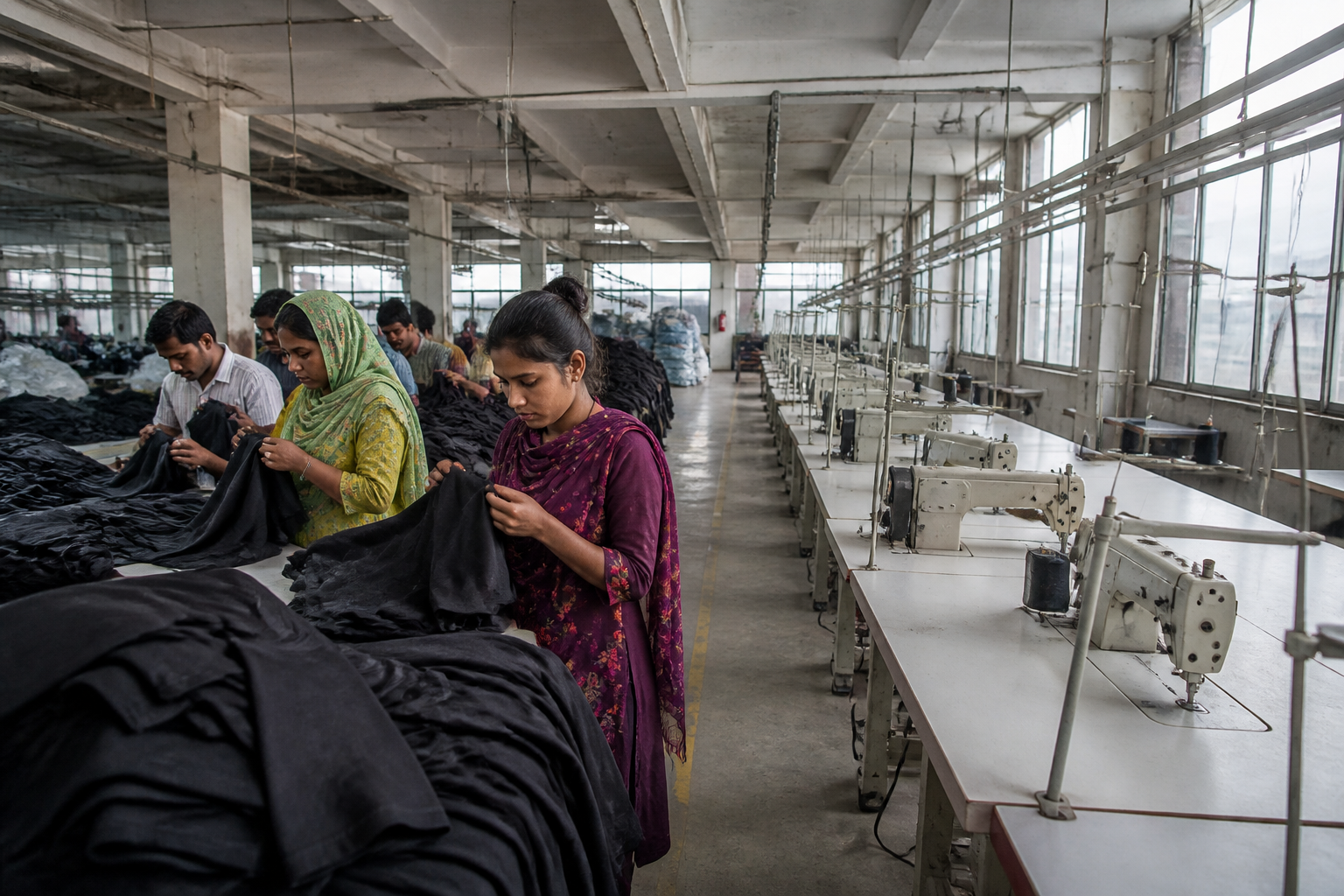
The Iran war is exposing a vulnerability in the global apparel supply chain: clothing prices are being shaped not only by factory wages and retail demand, but also by energy markets, freight routes, commodity speculation and the financial resilience of manufacturing cities. In Bangladesh, a factory supplying brands including Zara and Pull&Bear has left part of its production floor unused for three months after a buyer paused polyester orders. Across the sector, manufacturers are confronting higher input costs while retailers decide whether to raise prices, reduce quality or squeeze suppliers.
The disruption begins with the raw materials behind everyday clothing. Polyester, derived from fossil fuels, has risen sharply as crude markets strengthened. In China, polyester prices reached a near four-year peak, while Plummy Fashions reported that polyester yarn prices increased by as much as 25% within weeks of the conflict starting. Cotton has also become more expensive, reaching a two-year high as buyers sought alternatives and supplies tightened. Cotton futures later climbed to their highest level since March 2024 amid concerns about harvests and the possible effects of a strong El Niño.
That simultaneous pressure on polyester and cotton matters because apparel companies normally have some ability to substitute between fibres. Julian Hügl, a partner at McKinsey & Co., said the unusual feature of the current environment is that both major fibres are facing cost pressure at the same time. For manufacturers producing blended fabrics, the result is a narrower set of options and less scope to protect margins by changing the material mix.
The cost increase is spreading well beyond the fibre market. Textile producers are also paying more for yarns, dyes, chemicals, oil and gas. Kettelhack, a German fabric maker that largely uses polyester-cotton blends, reported a 5% to 8% increase in costs. Mohit Jain, executive vice chairman of Indian textile producer Indo Count Industries, said during an earnings call that there was not a single input cost that had remained untouched.
The structure of garment manufacturing makes those increases difficult to absorb. Raw materials account for about 60% of the cost of a basic T-shirt, according to Fazlul Hoque, managing director of Plummy Fashions. Factory margins typically average only 2% to 3%. When demand is weak, manufacturers cannot easily transfer higher costs to brands or consumers. Plummy has instead absorbed additional expenses, even as buyers retain the option to move orders to other suppliers.
This imbalance reflects the institutional structure of the apparel supply chain. Manufacturers control factories and labour-intensive production, but often have limited influence over cotton, polyester chips, petroleum or international freight. Retailers, by contrast, can change suppliers, redesign products, reduce orders or increase prices. The result is that a shock originating in energy or transport markets can be transmitted rapidly to factories while the companies closest to consumers retain more choices over how to respond.
The consequences are already visible in major Asian manufacturing centres. India accounts for about 4% of global textile and clothing trade, but its ready-made garment exports fell 4.5% in July from a year earlier. Shipments were down 10.5% in the first four months of the fiscal year, extending a period of decline. Bangladesh, another major apparel hub, exports approximately $800 million in garments annually to the Middle East. That trade is currently almost entirely suspended, adding a regional transport and demand shock to the rise in production costs.
These figures show why apparel manufacturing is also an urban economy issue. Export factories concentrate employment, logistics activity, warehousing, port traffic and supplier networks around cities and industrial districts. When orders are paused, the impact is not limited to a production line. It can affect transport operators, material suppliers, contract workers, warehouse activity and household incomes linked to factory employment. The supplied reporting does not quantify those wider employment effects, but the idle machinery at Plummy illustrates how quickly an international disruption can become a local industrial problem.
The timing of the pressure is also important. Apparel retailers often place orders as much as a year in advance. This creates a delay between a rise in commodity or freight costs and its appearance on store shelves. Manufacturers face the higher costs immediately, while brands and consumers may not experience the full effect until later seasons. The result is a prolonged squeeze rather than a single price adjustment.
Retailers are therefore weighing several responses. Swedish brand ASKET chose to raise prices rather than source elsewhere or reduce quality. Other companies may reduce fabric weights, simplify designs, alter material blends or remove product features. McKinsey’s Hügl estimates that price increases in basic apparel categories could eventually reach 10% to 20%, although the full effect could take up to a year to appear.
Inditex, the owner of Zara, said disruptions in the Middle East had increased transport and input costs and were expected to continue weighing on gross margins in the second half of the year. The company said it had adapted transportation methods and sourcing while relying on a supplier network spread across dozens of countries. That response points to the value and limits of geographic diversification: a broad network can provide alternatives, but it cannot fully insulate production from globally traded fibres, fuel and freight.
The pressure is arriving when consumers are already dealing with higher grocery and energy bills. Clothing is discretionary spending, and a household may delay replacing a garment when prices rise. Fritz Grobien, president of the Bremen Cotton Exchange, described the textile value chain as highly dependent on consumer sentiment and available cash. At the factory level, Plummy’s Hoque said revenue had already fallen and that consumers could simply postpone buying new clothes.
This creates a feedback loop across the apparel economy. Higher energy, freight and material costs raise production expenses. Weak demand limits the ability to pass those costs to buyers. Retailers then face a choice between higher prices and lower margins, while manufacturers remain exposed to order cancellations or demands for cheaper production. If consumers respond by delaying purchases, factories may experience further pressure even as the cost of keeping production running increases.
The episode also reveals the limits of resilience claims in global supply chains. Brands can change sourcing locations and transport methods, but the underlying system remains dependent on a small number of globally traded commodities and complex production steps spread across countries. The pandemic, US tariffs and earlier supply disruptions had already forced companies to adapt. The present shock is adding simultaneous pressure across energy, materials, freight and demand rather than testing only one part of the chain.
What happens next will depend on commodity prices, freight routes, consumer spending and the duration of the conflict, all of which manufacturers are monitoring. The evidence currently confirms a broad cost squeeze, but not a uniform outcome across every brand or factory. Some retailers may pass costs to shoppers, others may change product specifications, and manufacturers with limited bargaining power may continue absorbing losses. For cities built around export manufacturing, the central question is whether these factories can remain viable when the global system repeatedly transfers risk to the least powerful link in the chain.
