


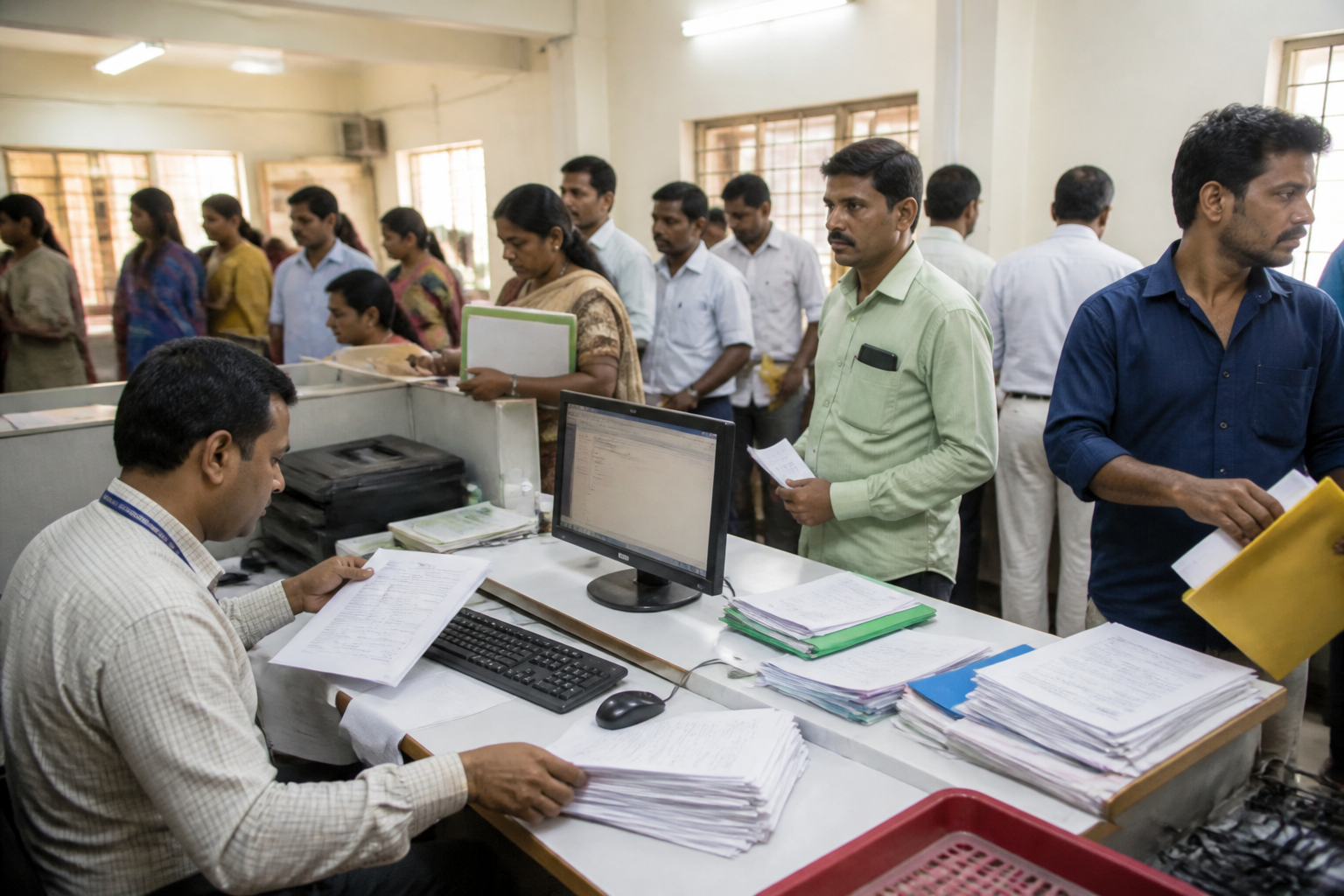
Tamil Nadu’s online property registration system is delaying citizens who arrive at sub-registrar offices with appointment tokens, as officials are required to prioritise documents submitted through the state’s digital platform, according to a report by Dinamalar.
The issue has emerged as the Registration Department expands the use of its STAR 3.0 software. Under the system, certain documents related to house and plot purchases can be registered without the parties visiting the sub-registrar office. The facility was introduced on August 17 and has received a positive response from the public, the report said.
The department has now extended mandatory online registration to mortgage-related documents used for housing loans. These include the memorandum of deposit of title deeds, commonly referred to as an MOD, which borrowers execute in favour of banks and financial institutions. Receipts issued after the repayment of loans are also included in the new process. The expanded arrangement is scheduled to take effect the following day, according to the report.
Under the online system, sub-registrars have been instructed to approve documents filed by the public within 24 hours. As a result, officials begin their working day by examining and processing digital submissions before registering documents brought directly to the office.
This sequencing has affected citizens who receive morning tokens for in-person registration. According to complaints cited in the report, people are being made to wait until noon, reducing the usefulness of tokens issued for a specific time. Property buyers and other applicants have urged the department to ensure that in-person registrations are not held up while online documents are processed.
A sub-registrar quoted in the report said the registration department’s website software has been designed to require online documents to be completed before documents presented directly at the office can be registered. The official said sub-registrars cannot change the order and register in-person documents first, even when they want to do so.
The development highlights an operational challenge accompanying the digitisation of property registration: a system intended to reduce physical visits can still affect people who continue to depend on office-based registration. The immediate dispute is not over the use of online registration, but over how the department’s software allocates priority between digital submissions and citizens holding physical appointment tokens.
The Registration Department’s next step, according to the report, is the implementation of the expanded online process for mortgage and loan-closure documents, alongside the existing requirement to process online filings within 24 hours.
